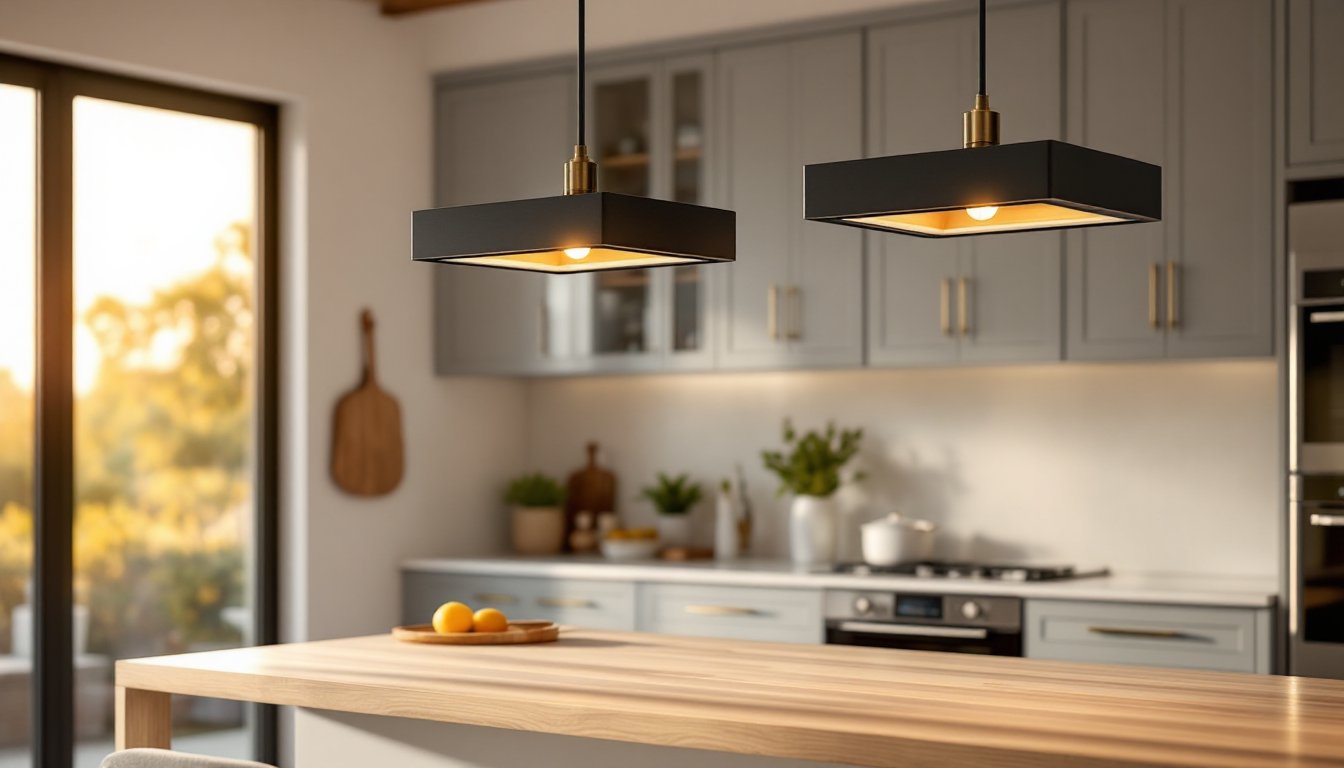
Square pendant lighting has become a go-to choice for homeowners and DIYers looking to add clean lines and contemporary flair to kitchens, dining areas, and entryways. Unlike round or elongated fixtures, square pendants command attention with their geometric form while blending seamlessly into modern and transitional spaces. They’re versatile enough to work over islands, in clusters, or as standalone statement pieces, and they’re far more forgiving to install than most people think. Whether someone is upgrading a tired kitchen fixture or starting fresh in a new space, understanding the design options, placement strategies, and installation basics will ensure they get the look and functionality they’re after.
Table of Contents
ToggleKey Takeaways
- Square pendant lighting delivers visual impact through clean geometry and works equally well as single fixtures or clusters in kitchens, dining areas, and entryways.
- Sizing matters intuitively—a 6-inch square feels intimate over a bar stool, while 8 to 10-inch squares command presence over islands and dining tables.
- Material finishes like matte black, brushed brass, and white ceramic allow homeowners to match square pendants to contemporary, industrial, farmhouse, or Scandinavian design styles.
- Proper hanging height is 30 to 36 inches above kitchen island countertops and 60 to 66 inches from the floor above dining tables to ensure functionality and clear sightlines.
- Replacing an existing square pendant is a manageable DIY weekend project, but installing new ceiling junction boxes typically requires hiring an electrician.
- Matte and satin finishes on square pendants resist fingerprints and cooking oils better than polished chrome, making them ideal for long-term kitchen durability.
What Makes Square Pendant Lighting Stand Out
Square pendants deliver visual impact through their geometry. The four clean sides and defined corners create a sense of structure and order, qualities that resonate strongly in modern, farmhouse, and minimalist interiors. Unlike round pendants, which tend to feel softer and more traditional, squares announce themselves without being flashy.
The footprint matters. A 6-inch square pendant feels intimate over a bar stool, while an 8-inch or 10-inch square commands more presence over a dining table or kitchen island. This dimensional clarity makes sizing intuitive: bigger square equals bigger visual statement.
Another advantage is versatility in mounting. Square pendants work equally well as single fixtures over a sink or as clusters of three or five strung along an island. They stack visually without fighting each other the way some rounded shapes do. And because the sides are flat, they catch and reflect light differently than round fixtures, adding subtle depth to a room.
Material options also set squares apart. Metal (brass, steel, matte black), ceramic, or combinations thereof let homeowners dial in exactly the aesthetic they want. A brushed-nickel square pendant reads industrial-modern, while a white ceramic square skews Scandinavian or cottage. That flexibility is one reason square pendants have stayed in favor across design trends.
Design Styles and Finishes to Consider
Contemporary and Minimalist Options
Contemporary square pendants typically feature minimal ornamentation and single-color finishes. A matte black square cage pendant with exposed Edison-style bulbs exemplifies this approach, the fixture itself becomes part of the visual story. Metallic finishes like brushed brass or oil-rubbed bronze add warmth without fuss.
Minimalist designs often use understated proportions: slim edges, no extra detailing, and purposeful negative space. These fixtures let the bulb and the light itself do the talking. Pair them with dimmable LED bulbs for full control over ambiance. They’ll anchor a kitchen island or float above a bedside table without overwhelming the space.
White or cream ceramic squares work beautifully in Scandinavian and farmhouse settings. They diffuse light softly and pair well with natural wood or light-colored cabinetry. These tend to be budget-friendly options that don’t sacrifice on look.
Industrial and Transitional Designs
Industrial square pendants lean into raw materials and visible hardware. Expect steel frames, possibly Edison bulbs or Edison-style vintage filament bulbs, and finishes like matte black or gunmetal. A square iron caged pendant is quintessentially industrial and works especially well in converted lofts, garages-turned-studios, or kitchens with exposed brick or ductwork.
Transitional designs split the difference. They borrow the clean geometry of modern squares but add subtle details, a decorative finial, a woven texture, or warm metallic accents, that soften the severity. These often pair brass hardware with matte finishes or combine wood and metal. They integrate easily into homes that aren’t strictly “modern” or “industrial” but want contemporary elements.
Finish longevity matters. Matte black and brushed nickel hide fingerprints and dust better than polished chrome. In kitchens, where steam and cooking oils circulate, satin or matte finishes stand up longer without looking dingy. Brass finishes can develop a natural patina over time, some find this charming, others want to prevent it with occasional wax.
Where to Hang Square Pendants for Maximum Impact
Kitchen islands are the classic perch for square pendants. Most guidelines suggest hanging pendants 30 to 36 inches above the countertop surface. If an island is 3 feet wide, one pendant centered works fine. For islands 4 to 6 feet long, two pendants spaced evenly (about 18 inches apart) create balanced lighting without dark spots. Islands longer than 6 feet might need three pendants.
Dining tables follow similar logic. Hang a single large square pendant or a cluster of three over the center of the table, keeping the bottom of the fixture 60 to 66 inches from the floor (or about 12 to 18 inches above the table surface if it’s a taller table). This height lets people see each other without the fixture blocking sightlines.
Kitchen sinks benefit from a square pendant if the sink isn’t directly under the main ceiling fixture. One pendant placed 3 feet out from the edge of the sink, hung at the same height as island pendants, adds task lighting without creating glare on the water.
Entryways and mudrooms are underrated spots. A single square pendant or two flanking an entry table draw the eye upward and create a sense of arrival. The geometry complements console tables and modern entry hardware.
Avoid placing square pendants directly over open circulation areas where people walk. The geometric form can feel heavy if someone’s head is at eye level with it. Position them offset or higher in those zones.
Installation Tips and Spacing Guidelines
Most square pendants ship with a mounting bracket (also called a canopy), a nipple (the short threaded rod connecting the bracket to the fixture body), and wire nuts for electrical connections. Installation requires turning off power at the breaker, not just the switch. Confirm the power is off with a non-contact voltage tester before touching any wires.
If there’s no existing fixture to replace, someone will need to install a ceiling junction box (a metal or plastic box recessed into the ceiling where electrical connections happen). This almost always requires cutting into drywall and routing wire through ceiling joists. Many DIYers hire an electrician for this step, especially if the circuit isn’t nearby.
Replacing an existing pendant is simpler. Turn off the breaker, disconnect the old fixture’s wires (typically black, white, and bare copper or green ground), remove the mounting bracket, and install the new bracket in the same hole. Connect the new fixture’s wires using wire nuts, tucking them carefully into the junction box. Secure the canopy and bulb holder to the bracket, install a dimmable LED bulb (not incandescent: the heat is wasted in a pendant), and test at the switch.
Spacing between multiple pendants should feel even. For three pendants over a 5-foot island, space them roughly 18 to 24 inches apart, with the outer two pendants about 18 inches from the ends. Step back and look before tightening everything, it’s easier to adjust before everything’s locked down.
Wire length varies by fixture. If the supplied cord seems too long or too short, it’s sometimes possible to shorten or extend it, but this requires opening the fixture body and rewiring. Standard pendant cords are typically 36 to 48 inches long: order a longer or shorter model if that doesn’t work.
PPE for installation: Wear safety glasses to protect against falling drywall dust or debris. Work-gloves aren’t necessary, but having a sturdy step ladder or stool (not a chair) is essential. Never stand on a toilet or sink to reach the ceiling.
Conclusion
Square pendant lighting bridges the gap between function and form, delivering reliable task lighting while adding contemporary character to any room. Whether choosing minimalist metal frames, industrial cage designs, or transitional ceramic styles, the key is matching the fixture’s size and finish to the space and mood. Proper placement, whether over an island, dining table, or entryway, amplifies both the light and the design impact. For straightforward replacements, installation is a manageable weekend project: for new locations, enlisting an electrician to run the circuit and junction box is the professional move. Start with good placement and sizing, add a quality dimmable bulb, and a square pendant becomes a fixture someone reaches for every single day.