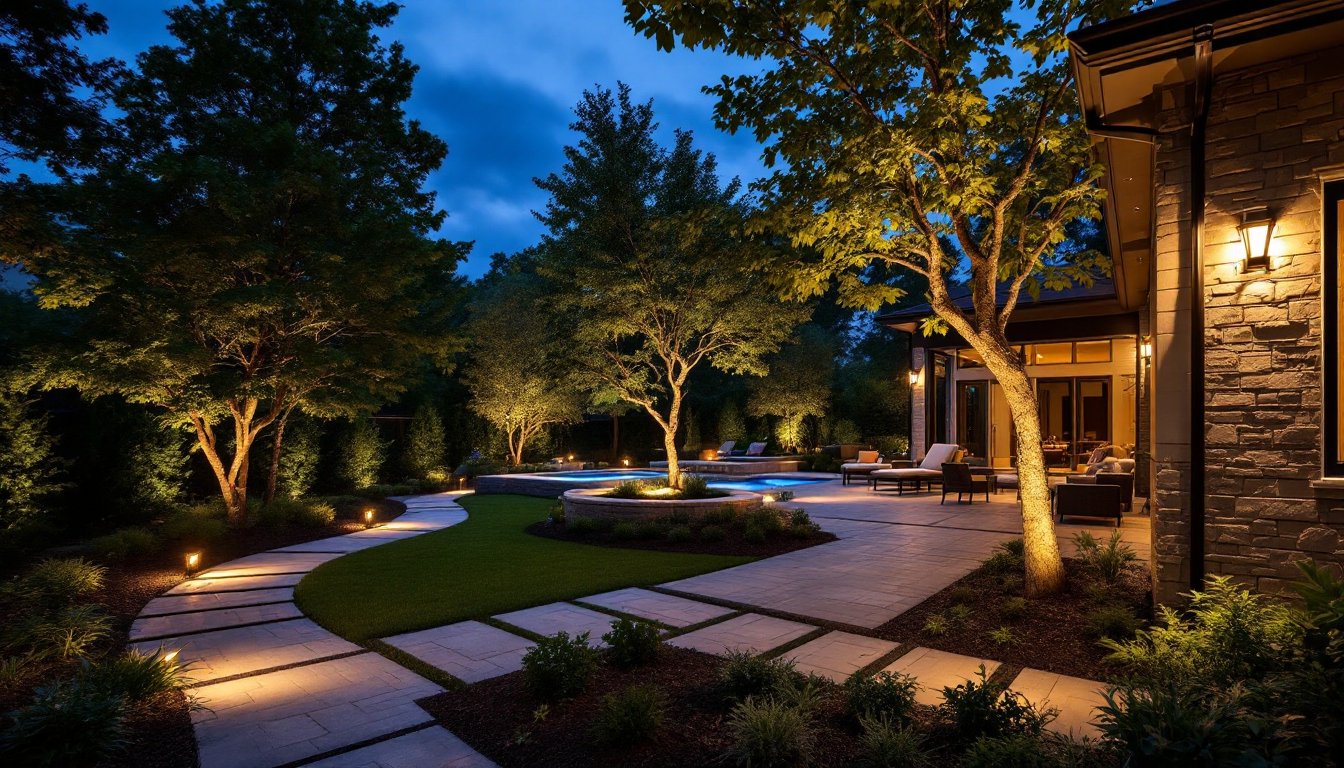
FX Luminaire landscape lighting delivers professional-grade performance without the contractor markup. Whether someone’s designing uplighting for a prized tree, path lighting for safe nighttime navigation, or accent lighting for hardscaping, these fixtures bring precision engineering and durability to residential outdoor spaces. Unlike big-box alternatives, FX Luminaire systems are built to handle years of seasonal temperature swings, UV exposure, and moisture without dimming or failing. This guide walks through what makes these fixtures stand out, how to install them right, and the design moves that transform a dark yard into an inviting outdoor living space.
Table of Contents
ToggleKey Takeaways
- FX Luminaire landscape lighting uses low-voltage LED technology that consumes 80–90% less energy than incandescent alternatives while lasting 50,000+ hours.
- Professional-grade fixtures made from corrosion-resistant materials like cast brass and stainless steel withstand freeze-thaw cycles, salt air, and UV exposure for years of reliable performance.
- Strategic placement of path lights (4–6 feet apart), spotlights, uplighting, and wash lighting transforms outdoor spaces; most residential yards need 8–15 fixtures for balanced function and ambiance.
- Proper installation requires careful planning, 4–6 inch burial depth, waterproof connectors, and correct transformer voltage selection to avoid dimming and ensure system longevity.
- DIY-friendly landscape lighting installation eliminates contractor markups while maintaining professional results, with minimal seasonal maintenance beyond debris clearing and biennial connection checks.
What Is FX Luminaire Landscape Lighting?
FX Luminaire is a professional landscape lighting brand that makes low-voltage LED fixtures designed for permanent outdoor installation. Their catalog includes path lights, well lights, spotlights, wash lights, and linear systems, essentially everything needed to light a residential property from the ground up. Low-voltage systems run on 12V or 24V power delivered through buried cable from a transformer, not standard 120V household current. This approach makes installation safer and more forgiving: there’s no shock risk, and trenching costs stay reasonable. FX Luminaire fixtures are made from cast brass, stainless steel, or marine-grade composites, meaning they resist corrosion in salt air, freeze-thaw cycles, and sustained wet conditions. The company focuses on residential-grade systems that perform like commercial installations but fit a homeowner’s budget and DIY skill level.
Key Features That Set FX Luminaire Apart
Energy-Efficient LED Technology
FX Luminaire fixtures use integrated or retrofit LED modules rated for 50,000+ hours of operation, roughly 17 years of continuous nightly use. LEDs consume 80–90% less energy than incandescent landscape lights, cutting transformer load and electricity costs noticeably over time. Color temperature options range from warm white (2700K, mimicking incandescent) to cool white (4000K or higher), allowing fine control over ambiance. Many FX Luminaire models include dimming capability through standard landscape lighting controllers, so brightness adjusts with seasons or personal preference without replacing bulbs or rewiring.
Durable Construction and Weather Resistance
FX Luminaire builds fixtures with corrosion-resistant materials: cast brass bodies develop a natural patina but don’t rust, and stainless steel hardware resists salt air and chemical snow treatments. Gaskets and seals on all junction points use silicone or EPDM, rated for UV and ozone exposure. Lens elements are either tempered glass or polycarbonate: glass lasts longer but costs more, while polycarbonate handles freeze-thaw cycles better in regions with sustained cold winters. Each fixture is tested for ingress protection (IP rating), most path and accent lights meet IP65 or IP67, meaning they survive sustained spray and brief submersion. This durability matters: a $60 path light installed correctly outlasts three cheap aluminum knockoffs over seven years.
Applications and Design Possibilities
Path lighting remains the workhorse of landscape design, low-output fixtures (0.5 to 2 watts) line driveways and walkways without harsh shadows or glare. Spacing them 4–6 feet apart provides safe footing light without turning the yard into a parking lot. Accent lighting uses directed spotlights to highlight specimen trees, architectural details, or water features: a 10–20 watt fixture 6–8 feet away creates dramatic shadow play on bark or stonework. Grazing light (a fixture aimed horizontally along a wall or fence) reveals texture without flattening surfaces. Uplighting, placing a fixture at ground level pointing upward, silhouettes trees or walls against the night sky and works beautifully for multi-story homes. Wash lighting spreads soft illumination across a wide area, ideal for patios or seating zones where ambient light matters more than dramatic effect. Most residential installations blend three or four of these techniques: path lights for function, accent lights for character, and wash lights for livability. A typical two-story home with a moderate yard needs 8–15 fixtures and a 300–600 watt transformer to run everything comfortably without overwhelming the electrical load.
Installation and Maintenance Best Practices
Planning first: Sketch the layout on paper or use a landscape app, noting tree positions, hardscape edges, and viewing angles from main sightlines (patio, front door, master bedroom). Identify where the transformer will sit, usually near an existing outdoor outlet or in a garage or shed within 50 feet of the farthest fixture. Don’t undersell cable runs: measure twice. Low-voltage wire (typically 10 or 12 AWG) loses voltage over distance, so a fixture 100+ feet from the transformer will dim noticeably unless heavier gauge cable is used.
Trenching and burial: Landscape lighting cable runs 4–6 inches deep, deep enough to avoid damage from regular foot traffic or mowing, shallow enough that a shovel strike won’t be catastrophic (low voltage is forgiving). Curved spades work better than shovels for shallow trenches. In frozen ground, pre-soaking the path with water the night before makes digging faster. Skip the trench entirely by stapling cable to fence lines or running it under landscape edging: many installations blend buried and above-grade runs for cost and flexibility.
Fixture placement: Bury path lights at ground level with only the top visible. Spotlights and uplights sit above grade on adjustable stems or stakes. Angle spotlights so the beam hits the subject without spilling into neighbors’ windows or the roadway, this is both courteous and often required by local ordinances. Use a flashlight pointed at the same angle during daytime planning to visualize the effect.
Wiring and connections: All connections must use waterproof connectors rated for outdoor use, the push-together wire connectors that come with FX Luminaire fixtures meet UL standards and handle splicing low-voltage runs. Twist bare wire together, insert into the connector, and push down the locking tab: the connector grips the wire. Test continuity with a multimeter before burying cable.
Transformer setup: Mount the transformer on a weatherproof box, plug it into a GFI outlet (ground fault interrupter), and set it to the correct voltage for your system. Most residential FX Luminaire systems run 12V or 24V: check the transformer label and fixture specs, mixing voltages kills dimming and shortens LED life. Install a photocell or timer so lights don’t run all day in summer. Timer-only setups are simpler but waste energy: a photocell turns lights on at dusk automatically.
Maintenance: LED fixtures need almost no upkeep. Clear debris and leaves from lenses seasonally so light output stays clean. If a gasket leaks or lens cracks, most FX Luminaire components are field-replaceable, swap the lens or gasket without replacing the entire fixture. In salt-air climates, rinse brass fixtures with fresh water in spring to slow patina development if that’s a concern. Check wire connections every two years: thermal cycling can loosen connectors.
Conclusion
FX Luminaire landscape lighting solves the DIY dilemma: professional results without professional installation costs. The fixtures are tough, LEDs last for years, and low-voltage systems are straightforward enough for anyone comfortable with a shovel and basic electrical connections. Start small with path and accent lights, add more later if desired, and resist the urge to light every inch of the yard, restraint is what separates thoughtful design from a used-car lot. Proper planning, burial depth, and waterproof connections ensure years of reliable performance.