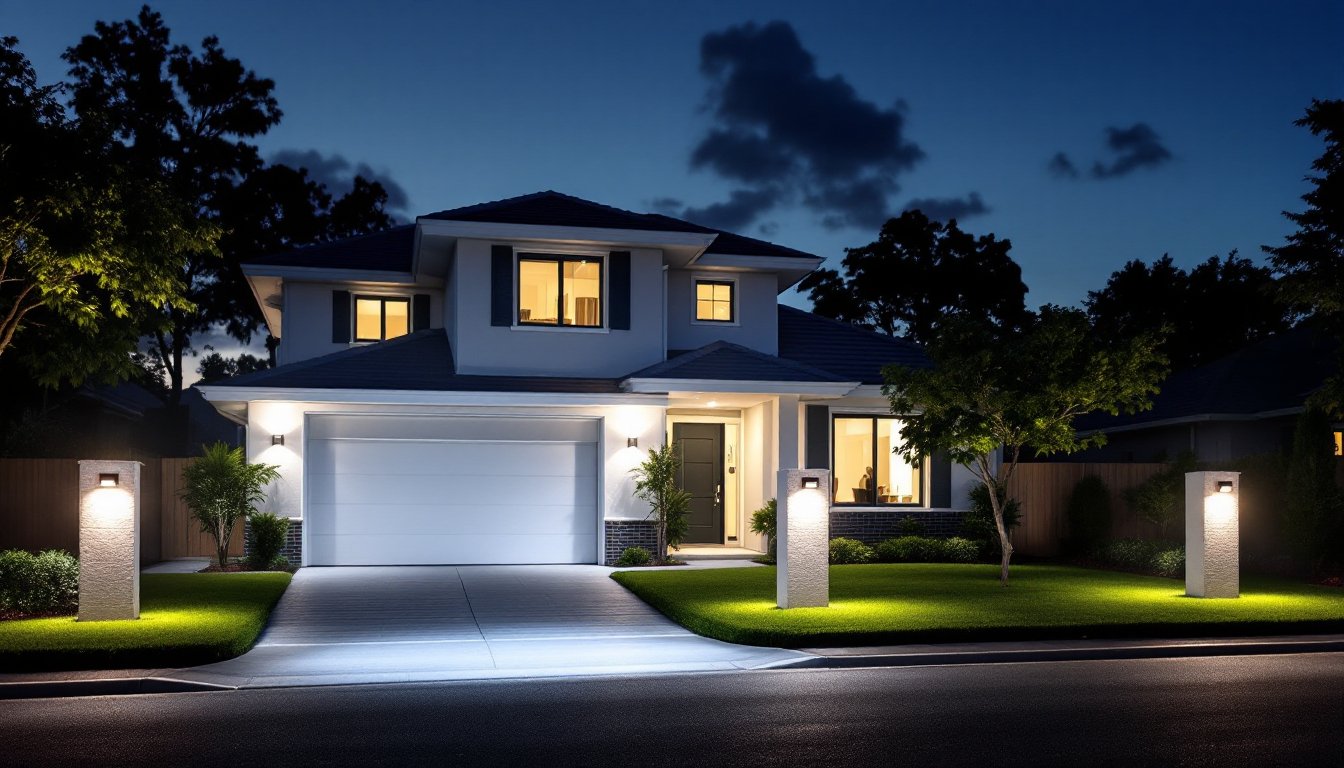
A dark property is an open invitation. Intruders hunt for shadows and blind spots where they can work unobserved, which is why security outdoor lighting remains one of the most cost-effective and practical deterrents available. Unlike expensive alarm systems or surveillance upgrades, proper lighting requires a modest upfront investment and minimal maintenance, yet studies consistently show it reduces break-ins and property crime significantly. The key isn’t just adding light: it’s placing it strategically and choosing the right fixtures for the job. This guide walks through the essentials of outdoor security lighting, from fixture types to placement strategies, so homeowners can transform their properties from vulnerable targets into well-lit, monitored spaces.
Table of Contents
ToggleKey Takeaways
- Security outdoor lighting is a cost-effective crime deterrent that reduces break-ins by eliminating dark spots where intruders hide, requiring only modest upfront investment and minimal maintenance.
- Motion-activated lights ($30–$150 per fixture) and LED floodlights (lasting 15–25 years) are the most practical fixture types, with motion sensors excelling at entry points and floodlights ideal for broad area coverage.
- Strategic placement at entry doors, driveways, corners, and fence lines is critical—position fixtures 8–10 feet high, aim motion sensors across approach routes, and use warm-white bulbs (2,700K–3,000K) to avoid glare and privacy issues.
- Smart outdoor lighting ($100–$300 per fixture) offers convenience and advanced features like human detection and occupancy simulation, but basic hardwired or battery-powered options provide reliable security at lower cost.
- Combine security outdoor lighting with cameras, visible locks, and yard maintenance for maximum effectiveness, as lighting deters casual criminals but works best as one layer in a comprehensive home security strategy.
Why Outdoor Lighting Is Your First Line of Defense
Darkness hides criminal activity. Burglars, vandals, and opportunistic thieves actively avoid well-lit areas because they increase visibility and risk of detection. When a home is surrounded by strategically placed lights, potential intruders lose their cover and are far more likely to move on to an easier target.
Outdoor security lighting also extends the usable perimeter of a property. Homeowners can see movement in driveways, walkways, and yards without stepping outside or peering through windows. It eliminates the uncertainty that comes with checking on unfamiliar sounds or vehicles at night.
Beyond crime deterrence, good outdoor lighting improves safety for residents and guests. Properly lit paths and steps reduce trip hazards, and clear sightlines around entryways make arrivals and departures safer. When combined with motion detection, lighting also serves as an early warning system, sudden activation can alert occupants to unexpected visitors or activity.
Types of Security Lighting Solutions
Motion-Activated Lights
Motion-activated (or motion-sensor) lights are the workhorses of DIY security. These fixtures detect movement and automatically illuminate, saving energy while creating the impression that someone is actively monitoring the property. Most models feature a passive infrared (PIR) sensor that triggers when warm objects, people or animals, move within a detection zone.
These lights excel at entryways, garage sides, and along fence lines. They’re relatively inexpensive (typically $30–$150 per fixture for wired units, less for battery-powered models) and easy to install for anyone comfortable with basic electrical work. Hardwired units tie into existing outdoor circuits: battery-powered versions mount directly to walls or posts with no wiring required.
Be aware of false triggers. Passing cars, blowing leaves, or animal activity can set them off repeatedly, which diminishes the deterrent effect if neighbors perceive constant flashing as a nuisance. Adjusting sensitivity and detection range (usually 20–60 feet) helps minimize false activations.
Floodlights and Spotlights
Floodlights cast wide, diffuse illumination across large areas, ideal for backyards, side yards, or the entire front facade. Spotlights focus light in a narrower beam and work better for highlighting specific features like doorways or driveway entrances.
LED floodlights have become standard because they consume far less power than older halogen or incandescent models, generate less heat, and last 15–25 years instead of 1–2 years. A typical 50-watt LED floodlight produces around 5,500 lumens and covers roughly 400 square feet effectively.
Floodlights don’t require motion sensors but work best on a timer or manual control for energy efficiency. Pairing them with smart switches (discussed later) gives homeowners remote control and automation without the constant “on” energy cost.
Strategic Placement for Maximum Protection
Placement determines whether lighting actually improves security or just wastes electricity. The goal is eliminating dark corners and creating visibility where intruders would hide or move.
Primary targets for security lighting:
- Entry points: Doors and windows at ground level. A motion light above each exterior door makes it impossible to approach unlit. Mount fixtures 8–10 feet high to minimize glare and maximize coverage.
- Driveway and garage: One fixture at the garage entrance and another mid-driveway or at the property edge where vehicles enter. This reveals arriving vehicles and discourages break-ins targeting parked cars.
- Corners and side yards: These are classic hiding spots. Lights here eliminate shadow zones that conceal movement.
- Fence lines and back corners: Rear yards are vulnerable because they’re often less visible to neighbors. Lights mounted on fence posts or back corners protect stored items and discourage trespassing.
Avoid lighting the inside of your home through windows and avoid pointing lights directly at neighboring properties, both create privacy and legal issues. Angle fixtures downward at least slightly and choose warm-white bulbs (2,700K–3,000K color temperature) rather than cool blue-white options, which appear harsher and less welcoming.
Place motion sensors 6–10 feet from the ground and aim them across probable approach routes (driveways, pathways, doors) rather than straight down. Test the detection zone during installation by walking the perimeter and confirming the light activates when and where you expect.
For older homes with limited existing outdoor outlets, running a new 15-amp or 20-amp outdoor circuit may be necessary. This is a code-compliance task that typically requires a licensed electrician and a permit in most jurisdictions. Never overload existing circuits or run outdoor wiring without proper GFCI (ground fault circuit interrupter) protection.
Smart Lighting Technology and Modern Features
Smart outdoor lights integrate with home automation systems and offer convenience that pure hardwired fixtures don’t match. These fixtures connect via WiFi or a dedicated hub and let homeowners control them from phones, schedule activation times, or integrate them with other smart devices.
Smart motion lights can distinguish between humans and animals (via advanced sensors) to reduce false triggers, and many allow customization of detection sensitivity and delay before the light turns off, typically 1–20 minutes depending on continued motion.
Color-tunable and dimmable smart lights let users adjust brightness (useful for reducing light pollution) and color temperature throughout the evening. Some models even simulate occupancy when the house is empty by randomly activating lights at different times, a subtle but effective psychological deterrent.
Battery-powered smart lights offer the easiest retrofit for renters and homeowners without electrical skills. Brands like Ring, Wyze, and Reolink make reliable solar or battery-powered options, though battery life, WiFi range, and app reliability vary. Research reviews specific to your region and router strength before purchasing.
The trade-off: smart lights cost more upfront ($100–$300 per fixture) than basic hardwired or battery models, require network connectivity, and depend on app ecosystems that companies may discontinue or change. For critical security areas, a combination of basic hardwired fixtures plus one or two smart lights often makes practical sense, redundancy matters when security is on the line.
Regardless of type, pair outdoor lighting with other security measures. Cameras, visible locks, window decals, and good yard maintenance (trimmed bushes, no hiding places) multiply the deterrent effect. Lighting alone stops casual criminals but won’t stop a determined burglar, it’s one layer in a complete security strategy.
Conclusion
Security outdoor lighting is approachable for most homeowners and delivers measurable results. Start by identifying dark zones around entry points and perimeter areas, then choose fixtures, motion-activated for high-activity zones, steady floodlights for comprehensive coverage. Position them strategically, ensure they’re installed to code, and consider adding smart controls for flexibility. Combined with basic security habits (locking doors, not advertising absences, maintaining clear sightlines), a well-designed lighting plan transforms a home from an attractive target into a protected one. The investment pays for itself in peace of mind and, statistically, in reduced property crime.