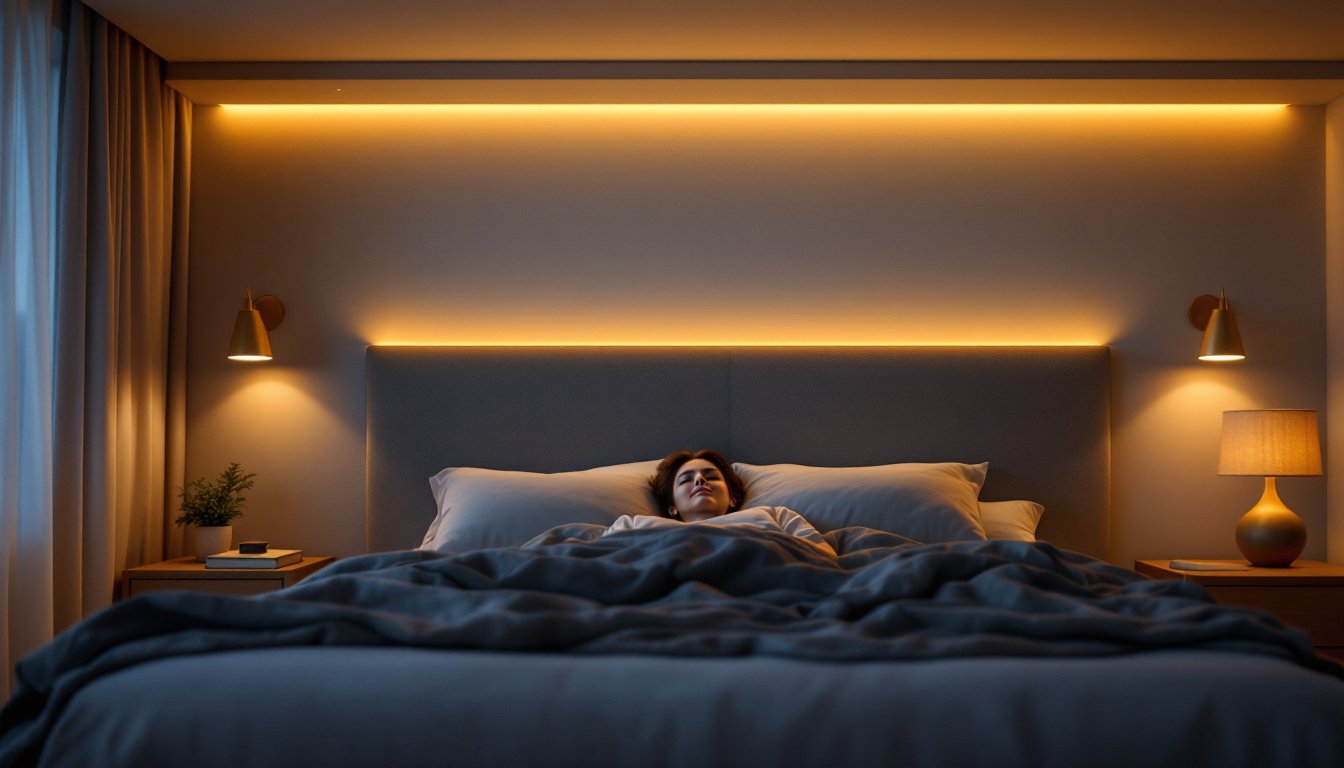
Sleep quality and relaxation don’t happen by accident. Lighting plays a surprisingly powerful role in setting the tone for better rest and unwinding after a long day. Poor bedroom lighting, harsh overhead fixtures or inconsistent brightness, keeps the body alert when it should be winding down. Mood lighting for the bedroom isn’t about creating a nightclub vibe: it’s about layering warm, adjustable light sources that signal to the body that it’s time to relax. By understanding fixture types, color temperatures, and placement strategies, any homeowner can transform their bedroom into a genuinely restful retreat without major renovation costs.
Table of Contents
ToggleKey Takeaways
- Mood lighting for the bedroom works by using warm, adjustable light sources that signal the body to produce melatonin and prepare for sleep, improving both sleep quality and relaxation.
- Layering multiple light sources—ambient (ceiling), task (bedside lamps), and accent (wall sconces)—creates a flexible bedroom environment that adapts to different activities and times of day.
- Use warm color temperatures of 2700K or lower for evening and nighttime fixtures, as cooler light (4000K+) suppresses melatonin and should be avoided 2-3 hours before sleep.
- Smart bulbs and dimmers are cost-effective solutions: replace standard bulbs with warm LEDs on dimmer switches, or invest in smart bulbs for app-controlled color and brightness adjustments.
- Wall scones installed at eye level (36-42 inches above the floor) on either side of the bed eliminate harsh overhead glare while providing balanced, soft illumination for reading and relaxation.
- Start small with mood lighting by swapping to warm LED bulbs and installing a dimmer switch, then add accent fixtures gradually—significant improvements don’t require major renovation costs.
Why Mood Lighting Matters for Better Sleep and Relaxation
The bedroom is where the body resets. The eyes are extraordinarily sensitive to light wavelengths, which trigger circadian rhythm hormones like melatonin. When bright, cool-white light floods the bedroom at night, it tells the brain to stay awake. Conversely, warm, dimmed light signals the body to produce melatonin and prepare for sleep.
Mood lighting addresses this biological reality. Studies from sleep research centers consistently show that environments with adjustable, warm-toned light improve sleep onset and quality. Beyond sleep, the right lighting creates a sanctuary, a place where stress melts away rather than accumulates. This isn’t cosmetic: it’s functional.
A bedroom with only a ceiling fixture is a missed opportunity. That single overhead light is typically too harsh for evening and too weak for getting dressed in the morning. Layered mood lighting solves this problem by offering flexibility: bright, energizing light when needed, and soft, warm light for nighttime routines.
Types of Mood Lighting Fixtures to Transform Your Space
Smart Bulbs and Color-Changing Lights
Smart bulbs (like Philips Hue, Nanoleaf, or LIFX) give the most control with minimal installation hassle. These screw into standard E26 or E27 sockets and connect to a smartphone app or voice assistant. Users adjust color temperature from warm 2700K (soft amber) to cool 5000K (daylight) and select specific hues, reds, blues, or anything in between.
The advantage is flexibility without rewiring. Install a smart bulb in a bedside lamp, and suddenly that fixture becomes a customizable accent light. Color-changing bulbs cost more upfront (typically $15–$50 per bulb versus $2–$5 for basic warm LEDs), but they replace the need for multiple fixtures. Dimming is built in, so even without smart features, many color-changing bulbs work with standard dimmer switches.
One trade-off: smart bulbs sometimes have slight latency when switching colors or dimming, and they require WiFi or Bluetooth connectivity. Test them before committing to a whole bedroom setup.
Dimmers and Warm Accent Lighting
Dimmers are the unsung hero of mood lighting. A dimmer switch replaces a standard on/off switch and costs $15–$40 plus installation. It’s a permanent solution that works with any dimmable bulb, incandescent, halogen, LED (check compatibility), or old-school bulbs.
Pair dimmers with warm-toned accent fixtures: wall sconces, table lamps, or strip lighting behind a headboard or floating shelf. These fixtures emit light at around 2700K (warm white) or lower, closer to candlelight than fluorescent. Install sconces on either side of the bed at roughly eye level when lying down (usually 36–42 inches above the floor). This creates balanced, soft illumination without the sleep-disrupting glare of overhead light.
Accent lighting doesn’t require smart bulbs or WiFi. A warm LED bulb in a sconce, controlled by a dimmer, works reliably and costs under $30 to install if the electrical outlet already exists nearby.
How to Layer Your Lighting for Maximum Impact
Layering means combining multiple light sources at different brightness levels and angles. It’s the difference between a bedroom that feels cave-like at night and a sanctuary that adapts to any activity.
Ambient lighting forms the base: the ceiling fixture or recessed lights that provide overall brightness. Keep this on a dimmer so it can fade to nearly nothing in the evening. Task lighting handles specific needs, a bedside reading lamp or vanity lights for getting ready. Accent lighting creates mood: wall sconces, a backlit headboard, or LED strip lighting behind floating shelves.
A practical bedroom setup might look like this: a dimmable ceiling light for daytime, wall sconces on either side of the bed for evening reading (also on dimmers), and a warm LED strip behind the headboard or under-bed for soft, ambient glow. If the room has a window, positioning accent lights to avoid direct wall reflection prevents glare.
Start with what you already have. A basic bedside lamp and ceiling light can work, just swap the bulbs for warm LEDs (2700K or lower) and install a dimmer switch. Add accent lighting gradually as budget and preference dictate. Most people find that wall sconces or a single well-placed accent strip makes the biggest immediate difference.
Best Color Temperatures for Evening Relaxation
Color temperature is measured in Kelvin (K). The scale runs from warm (low number) to cool (high number).
2700K (Warm White) mimics incandescent light and is ideal for evening use. It’s the “default” relaxation temperature. Most bedrooms benefit from 2700K ambient and accent lighting after sunset.
2200K and Below approaches candlelight and is excellent for 30–60 minutes before sleep. Some people use a special bedside light or dimmer set to near-minimum output at this temperature to signal the body that sleep is imminent.
3000K (Neutral Warm) works as a middle ground, still relaxing but slightly brighter for reading or tidying up.
4000K and Above is daylight-equivalent and should be avoided 2–3 hours before sleep. It suppresses melatonin production. But, if the bedroom has poor natural light during the day, a 4000–5000K light in the morning (or on cloudy days) helps regulate circadian rhythm and may improve evening sleep quality.
Practical guidance: Use 2700K or lower for all evening and nighttime fixtures. If a ceiling light is unavoidable, keep it dimmable and warm-toned. Smart bulbs allow easy temperature adjustment, but a simple warm LED bulb on a dimmer achieves the same effect at lower cost. Test a bulb before buying in bulk: not all warm LEDs feel equally “warm” depending on the manufacturer.
Conclusion
Mood lighting isn’t a luxury add-on, it’s a practical investment in sleep quality and daily relaxation. The key is layering warm, adjustable light sources and eliminating harsh overhead glare after sunset. Start small: swap to warm LED bulbs, install a dimmer, and add one accent fixture if the budget allows. The results, deeper sleep, easier relaxation, and a bedroom that feels intentional rather than generic, make the small effort and cost worthwhile. Take it one fixture at a time, and the transformation builds naturally.