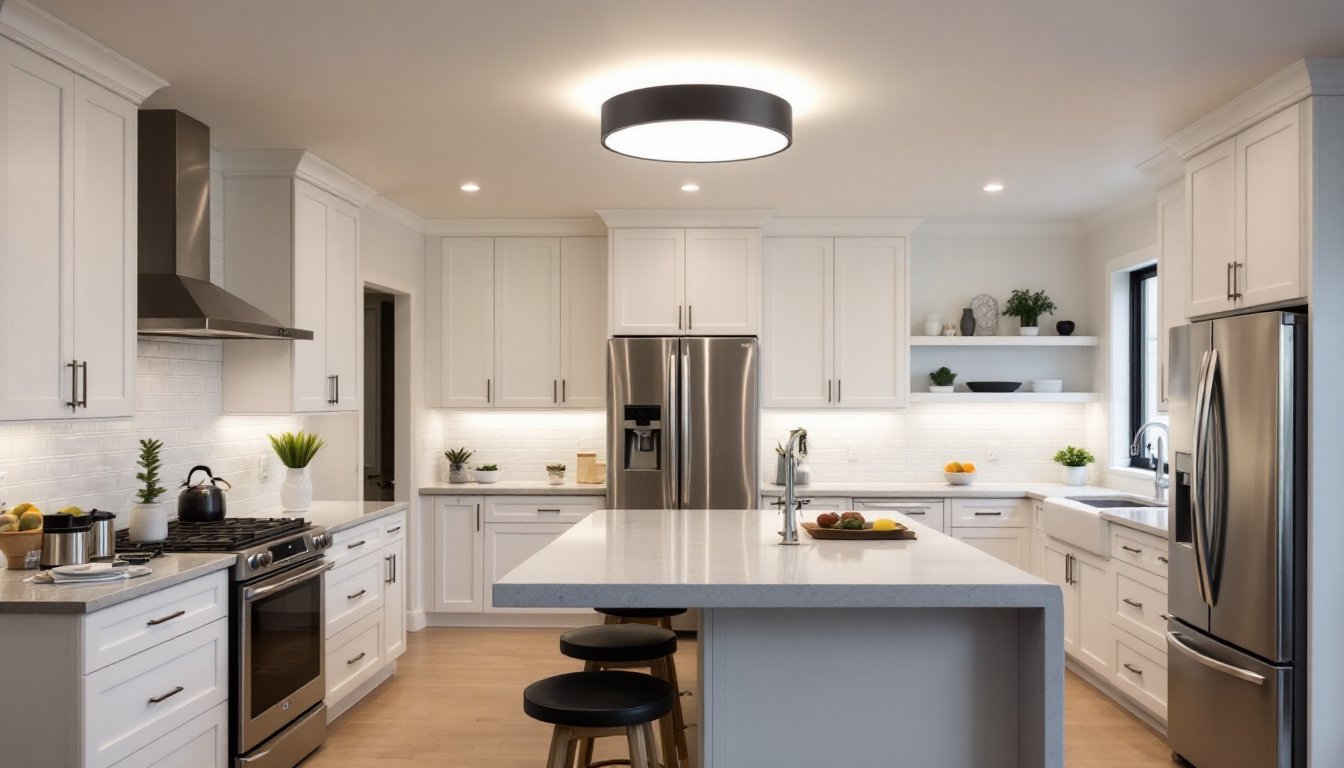
Homeowners upgrading their kitchens often overlook one critical element: the right overhead lighting. Flush mount kitchen lighting delivers a clean, polished look while providing the bright, even illumination kitchens demand. Unlike pendant lights or chandeliers that hang lower and eat up visual space, flush mount fixtures sit tight against the ceiling, making them ideal for kitchens with standard 8-foot ceilings or tight clearances. Whether someone’s renovating a full kitchen or just swapping out outdated fixtures, understanding the basics of flush mount lighting, from low profile kitchen lighting options to modern designs, can transform both function and aesthetics. This guide walks through what works, why it matters, and how to pick the perfect fixture for any kitchen layout.
Table of Contents
ToggleKey Takeaways
- Flush mount kitchen lighting sits 2 to 4 inches from the ceiling, making it ideal for kitchens with standard 8-foot ceilings where pendant lights would consume valuable headroom.
- LED flush mount fixtures use only 12–18 watts while delivering the brightness of 60–75-watt incandescents, resulting in significant long-term energy savings and a lifespan of 25,000 to 50,000 hours.
- Choose 4000K (cool white) color temperature for task lighting above islands and counters to mimic natural daylight and improve food prep visibility, or 3000K for softer ambient lighting in dining areas.
- Size your flush mount fixture at 14–16 inches for a standard 8-by-10-foot kitchen, or use multiple 12–14-inch fixtures spaced 4–6 feet apart in larger kitchens to avoid dark corners.
- Modern low profile kitchen lighting designs sit just 1 to 2 inches from the ceiling, providing a sleek, minimalist look that works perfectly with dropped soffits and contemporary kitchen layouts.
- Avoid placing fixtures directly above stoves to protect LED lifespan from heat and reduce grease accumulation, instead centering lights above counters, islands, or table areas for optimal task lighting.
What Is Flush Mount Kitchen Lighting?
Flush mount fixtures attach directly to the ceiling with minimal clearance, typically 2 to 4 inches between the fixture body and ceiling surface. This compact design sets them apart from pendant lights, semi-flush mounts, or recessed lighting. They’re available in countless styles, from sleek modern flush mount kitchen lighting designs to vintage reproductions, and they work equally well in contemporary kitchens or traditional spaces.
The fixture’s housing connects to a ceiling box via a mounting bracket, and the electrical connection is made inside the box, standard wiring for most home circuits. Flush mount lighting comes in various sizes, with diameters typically ranging from 10 to 24 inches, and modern options increasingly feature LED technology for efficiency and longevity. Unlike recessed lights that sit inside the ceiling cavity, flush mount fixtures are fully visible and serve as a design statement alongside their functional role.
Benefits of Choosing Flush Mount Fixtures
Flush mount fixtures offer practical advantages that make them popular in kitchens. They’re compact and work in spaces where hanging fixtures would create headroom issues, crucial for kitchens with soffits, beams, or standard 8-foot ceilings. Installation is straightforward for anyone comfortable with basic electrical work, and they don’t require the cutting or retrofitting that recessed lights demand.
Cost-effectiveness is another draw. Flush mount options range from budget-friendly to high-end, with LED versions lowering long-term energy bills significantly compared to older incandescent fixtures. A typical LED flush mount uses 12–18 watts while delivering the brightness of a 60–75-watt incandescent, savings that add up over months of daily kitchen use.
Aesthetically, modern flush mount kitchen lighting adds visual interest without bulk. Finishes like brushed nickel, matte black, or polished brass complement contemporary kitchens, while frosted or opal glass diffusers soften light and reduce glare on countertops and work surfaces. They also integrate seamlessly with open-concept layouts where pendant lights or chandeliers might compete for visual attention.
Types of Flush Mount Kitchen Lighting Options
LED Flush Mount Lights
LED flush mount fixtures dominate the market for good reason. They run cool, produce no heat buildup in the ceiling cavity, and last 25,000 to 50,000 hours, roughly 25 years of typical use. Integrated LED designs (where the LED module is permanent) are sealed and nearly maintenance-free, while replaceable-bulb models offer flexibility if someone prefers swapping technology later.
Color temperature matters in kitchens. Most cooks prefer 4000K (cool white) for task lighting above islands or counters, as it mimics natural daylight and makes food prep clearer. 3000K (warm white) works better in dining areas or softer ambient lighting. Modern LED fixtures also support dimming when paired with compatible dimmer switches, look for dimmable options if that’s a priority, as some cheaper LED models won’t dim smoothly.
Vintage and Modern Designs
Vintage-inspired flush mount designs bring character to farmhouse, cottage, or transitional kitchens. Think brushed bronze finishes, amber glass shades, or Edison-style bulbs. These still use LED technology inside, marrying nostalgia with efficiency. Many homeowners opt for vintage designs in dining areas adjacent to kitchens, creating cohesive lighting while maintaining the casual warmth a true vintage fixture provides.
Modern designs emphasize minimalism and clean lines. Matte black, polished brass, or satin nickel finishes pair with geometric glass or acrylic diffusers. A low profile kitchen lighting fixture, sometimes called a thin-profile or ultra-slim mount, sits just 1 to 2 inches from the ceiling, creating an almost flush-to-ceiling appearance ideal for contemporary kitchens or homes with dropped soffits. These modern options integrate seamlessly into kitchen lighting flush mount scenarios where space is tight and design simplicity is the goal.
How to Choose the Right Size and Placement
Size depends on room dimensions and existing fixtures. A standard 8-foot-by-10-foot kitchen pairs well with a single 14–16-inch fixture if it’s the primary overhead light, or two 12–14-inch fixtures for better coverage. Larger kitchens (200+ square feet) may need multiple fixtures spaced 4–6 feet apart to avoid dark corners. Bedroom flush mount lighting principles apply here too: fixture diameter should typically be 1/12th to 1/10th of the room’s width.
Placement is equally critical. Center a single fixture in the middle of the room, or stagger multiple fixtures along the length of a galley kitchen. For kitchens with islands, one fixture above the island and another above the main work area ensures even task lighting. Avoid placing a fixture directly above a stove if possible, heat can reduce LED lifespan, and grease accumulation is harder to clean. A flush kitchen lighting setup above counters or table areas is ideal.
Measure ceiling height and check clearance before buying. Standard fixtures need 7.5 feet minimum headroom from floor to fixture bottom. If ceiling height is under 7.5 feet, verify the fixture’s overall height (often listed in product specs) and confirm it won’t create a bump-hazard situation. Flush mount dining room lighting often works in open-concept kitchens too, so consider sightlines from adjacent living spaces when choosing finish and style.
Conclusion
Flush mount kitchen lighting delivers practical brightness and design flexibility without the bulk of hanging fixtures. Whether choosing LED efficiency, vintage charm, or modern clean lines, the right fixture transforms kitchen functionality and appearance. Start with accurate room measurements, confirm ceiling height and existing wiring capacity, and select finishes that complement cabinetry and counters. Proper placement, centered in single-fixture kitchens or strategically spaced in larger ones, ensures even light coverage where it matters most. With installation straightforward for most homeowners and energy savings substantial over time, a quality flush mount fixture is a smart, lasting kitchen upgrade.