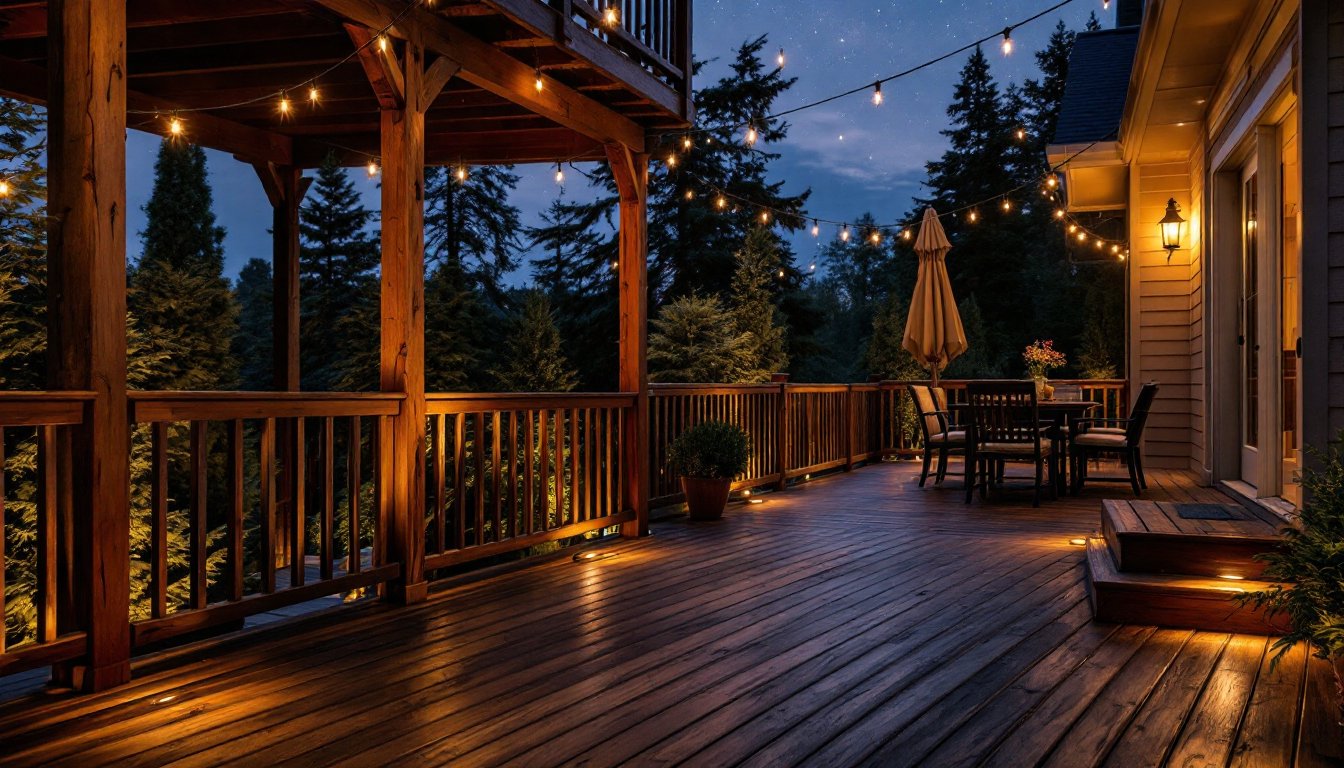
Outdoor deck lighting transforms a backyard from a no-go zone after sunset into a functional, welcoming outdoor living space. Beyond aesthetics, proper deck lighting improves safety, extends usable hours, and adds real value to a home. Whether someone’s planning a modest refresh or a complete overhaul, understanding the options, from low-voltage path lights to built-in railing fixtures, makes the difference between a job that looks amateur and one that feels intentional. This guide covers the essentials: how to choose fixtures that match a deck’s layout, brightness levels that work without glare, and installation approaches that don’t require an electrician (though some setups will).
Table of Contents
ToggleKey Takeaways
- Outdoor deck lighting improves safety by reducing trip hazards on steps and edges while extending usable hours into the evening and enhancing home value and curb appeal.
- Path lights, step lights, and recessed fixtures using low-voltage (12V) systems offer cost-effective, DIY-friendly deck lighting options starting at $100–$400 for complete systems.
- LED bulbs are the dominant choice for outdoor deck lighting due to durability, energy efficiency, and longevity (25,000–50,000 hours), with dimmable options providing flexibility for different occasions.
- Proper brightness (measured in lumens) prevents over-lighting; a typical 12×16-foot deck needs only a few 100-lumen path lights plus one 1000–1200-lumen overhead pendant to balance visibility and ambiance.
- Strategic placement of lights on stairs, railings, and gathering areas—combined with wet location-rated fixtures and waterproof connectors—ensures both code compliance and functional safety.
- Hybrid lighting solutions combining solar accent lights with low-voltage LED task lighting, plus motion sensors and dusk-to-dawn controls, deliver energy efficiency without sacrificing reliable illumination.
Why Outdoor Deck Lighting Matters
Deck lighting isn’t just about ambiance. It’s a practical safety tool. Well-lit steps and edges reduce trip hazards, especially in the evening when shadows hide deck boards or railings. A well-lit deck also extends the usable season, someone can host a summer gathering in June or a fall cleanup without fumbling for a flashlight.
From a value perspective, thoughtful outdoor lighting improvements can boost curb appeal and perceived functionality. Potential buyers (or guests) notice a deck that’s clearly illuminated and appears intentional rather than an afterthought.
Realistic talk: deck lighting doesn’t have to be elaborate. A few strategically placed fixtures often achieve more than over-lighting every square inch. The goal is to balance visibility with the atmosphere someone wants to create, not a parking lot, but not a pitch-black hazard either.
Types Of Deck Lighting Fixtures
Deck lighting options range from battery-powered spotlights to hardwired systems. Understanding the main categories helps narrow choices based on budget, deck layout, and electrical access.
Path And Step Lights
Path lights mount flush into deck boards or sit on the surface along stair treads and deck edges. Most run on low-voltage (12V) systems powered by a transformer plugged into a standard outlet, or standalone solar and battery options. Recessed deck lights (also called trim lights) sit nearly flush with the board surface, creating a clean look that doesn’t snag clothing or furniture legs.
Step lights are essential for safety. A 12-volt system with 5–10 step lights typically costs $100–$400 depending on quality and whether the homeowner already has a transformer. Solar step lights start around $30–$60 per fixture but deliver less consistent brightness on cloudy days and require seasonal battery replacement. Low-voltage hardwired systems offer reliability but demand running wiring underneath the deck or along the underside, doable for a handy DIYer with a staple gun and waterproof connectors, though not trivial.
Overhead And Pendant Options
Pendant and chandelier fixtures hang from deck pergolas, soffits, or overheads and provide broad illumination. These typically require standard 110V circuits and usually need a licensed electrician for proper installation and permit compliance, depending on local electrical codes. A waterproof outlet box and GFCI protection are non-negotiable here.
String lights (bistro or cafe-style) offer flexibility and atmosphere. They’re relatively easy to install, run a string between posts or across the deck overhead, but don’t provide task lighting for stairs or seating areas. Many modern string lights are LED and weatherproof: expect $50–$200 for a 50-foot run.
Recessed or wall-mounted uplights tucked under deck railings or behind posts create layered lighting without glare. These work well with low-voltage systems and cost $15–$50 per fixture.
Choosing The Right Brightness And Color Temperature
Brightness is measured in lumens. Path lights typically deliver 50–200 lumens: overhead pendants, 500–2000 lumens depending on size and purpose. A common mistake is assuming “brighter is better.” Over-lit decks create glare, wash out ambiance, and waste energy. For a typical 12×16-foot deck, a few 100-lumen path lights plus one overhead pendant (1000–1200 lumens) usually suffices.
Color temperature, measured in Kelvin (K), affects mood and visibility. 2700K feels warm and amber, classic deck lighting that doesn’t disturb nearby outdoor areas. 3000–4000K is neutral white, good for task lighting and safety without feeling harsh. 5000K+ is cool/daylight white: reserve it for working areas, not relaxation zones.
LED bulbs dominate now, which is good: they’re durable, run cool, and last 25,000–50,000 hours. Dimmable LED fixtures let someone adjust brightness for different occasions. When shopping, check the lumens and color temperature specs, packaging often lists both, rather than relying on wattage equivalencies (watts measure energy use, not brightness).
Another pro tip: wet location-rated fixtures are required by code for outdoor decks. Check the packaging label: it says “wet location” or “damp location.” Installation in unprotected areas without this rating is a code violation and a safety hazard.
Installation And Placement Best Practices
Prep work determines success. Measure the deck layout, identify stairs, railings, and seating areas, then sketch light placement. Stairs need at least one light per tread or every other tread: edges benefit from perimeter lights spaced 3–4 feet apart. Overheads go where people gather, conversation areas, dining tables, grill zones.
For low-voltage systems: a transformer sits near an outdoor outlet (GFCI-protected). Run wiring underneath the deck or along joist edges, securing it with staples rated for outdoor use (stainless steel or plastic, not copper). Use waterproof wire connectors at junctions. Keep wire runs under 100 feet: voltage drop degrades brightness on longer runs. Test the system before burying wires or permanent installation.
For hardwired 110V fixtures, stop here and hire a licensed electrician. Improper wiring is a fire and shock hazard. If a deck has no nearby outdoor circuit, running one from the home’s breaker box requires permits and professional inspection, don’t skip this.
For solar and battery fixtures: place them where they receive direct sun (6+ hours daily for solar). Battery-powered lights last 8–12 hours per charge, enough for evening use but not overnight operation. Clean solar panels seasonally: dirt reduces output.
Safety checklist: Wear gloves and safety glasses when cutting or drilling. Use a stud finder to avoid burying fasteners through hidden wiring or plumbing. Ensure all outdoor wiring and fixtures are rated for wet locations. If working at height on a tall deck, use proper fall protection or hire help.
Energy-Efficient Lighting Solutions
LED technology dominates the market for good reason. A 12-watt dimmable LED bulb produces light equivalent to a 60-watt incandescent while drawing a fraction of the power. Over a season, the energy savings and longevity (fewer replacements) justify the upfront cost.
Solar options eliminate electrical costs but come with trade-offs. Solar step lights work well in sunny climates and don’t require wiring, but they’re dimmer and weather-dependent. A hybrid approach, solar lights for accent areas, low-voltage LED for primary task lighting, balances cost and reliability.
Smart lighting (wifi-enabled, dimmable via app) is increasingly affordable. A smart outdoor bulb or fixture costs $20–$60 but lets someone adjust brightness and color temperature from indoors or on a schedule. Some systems tie into home automation or work with voice assistants. Useful, but not essential for basic deck function.
Motion sensors and timers cut unnecessary usage. A sensor-activated path light uses power only when needed. Dusk-to-dawn photocells run lights automatically, removing the “did I turn off the deck lights?” question. These add $10–$30 to fixture cost and pay for themselves in energy savings over a couple of seasons.