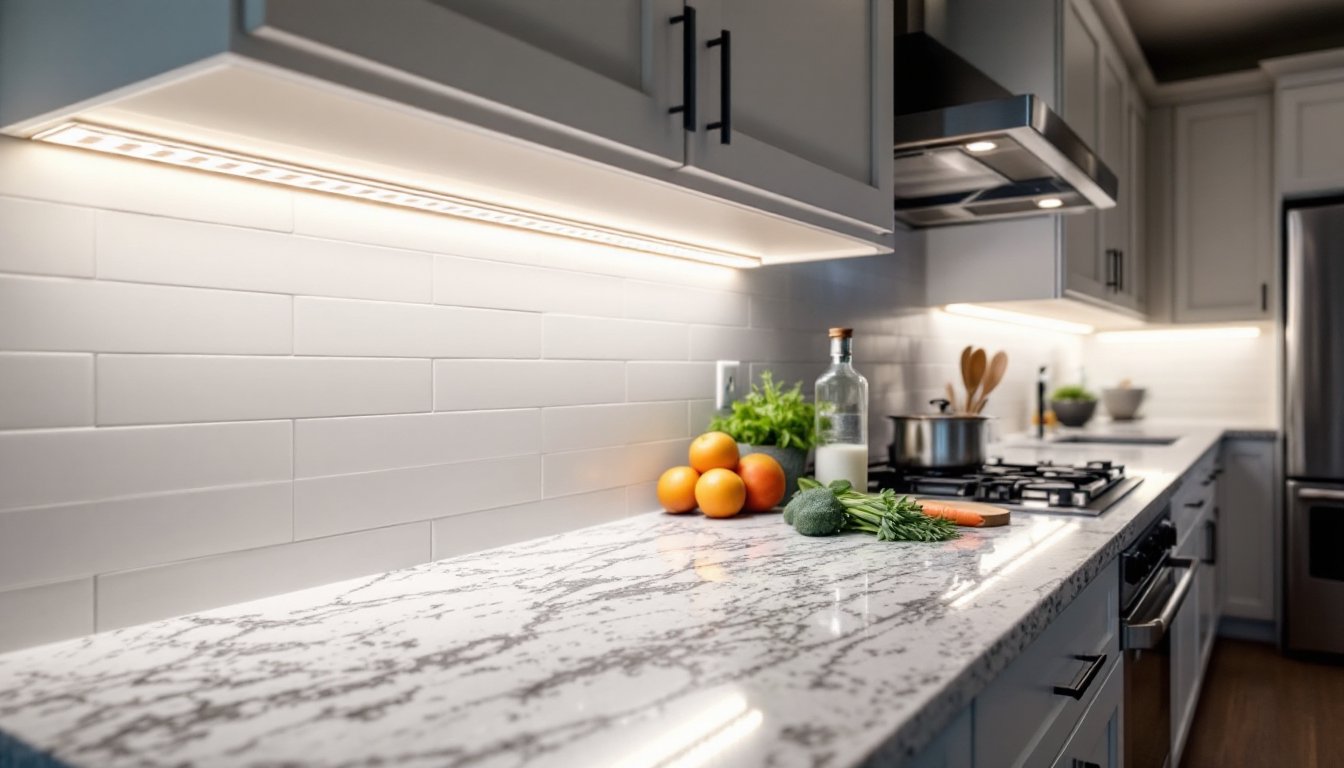
Under cabinet lighting used to mean hiring an electrician and running new circuits behind cabinets, a commitment most homeowners weren’t willing to make. Battery-powered under cabinet lighting has changed that equation entirely. Today’s options deliver genuine illumination without wiring, permanent installation, or the need to call a professional. Whether someone’s refreshing a rental kitchen, updating a workspace, or just tired of shadowed countertops, these battery-powered solutions are practical, affordable, and surprisingly effective. The technology has matured enough that there’s no real compromise on brightness or reliability, making battery-powered under cabinet lighting a genuine contender for any kitchen upgrade.
Table of Contents
ToggleKey Takeaways
- Battery-powered under cabinet lighting eliminates the need for electricians, permits, and hardwired installation, making it ideal for renters and homeowners seeking affordable kitchen upgrades.
- LED strip lights provide continuous illumination across long countertops, while puck lights offer targeted, flexible lighting at $15–$30 each, with strips averaging $1.50–$3 per foot.
- Look for systems rated at least 300–400 lumens with lithium-ion batteries, adjustable color temperature (3000K–5000K), and PWM dimming for smooth brightness control without color shifts.
- Proper surface preparation—cleaning with rubbing alcohol and using premium 3M VHB tape or mounting clips—ensures battery-powered under cabinet lighting stays securely fastened for years.
- Battery-powered systems can run 2–4 months on a single charge with typical 4–8 hours of daily kitchen use, with lithium-ion batteries providing superior reliability and runtime.
- Monthly lens cleaning and battery checks every 4–8 weeks keep battery-powered under cabinet lighting systems at peak brightness and performance for 5–7 years before noticeable LED dimming occurs.
Why Battery-Powered Under Cabinet Lighting Is Gaining Popularity
Battery-powered under cabinet lighting solves a real problem: most kitchens have shadow zones under the cabinets where countertop work happens. Traditional hardwired systems require running electrical lines, cutting into cabinetry, installing junction boxes, and pulling permits, all of which adds cost, mess, and time. Battery-powered alternatives skip that entirely.
They’re renter-friendly. Tenants can install them without landlord approval or risking security deposits. Homeowners benefit too: no wall damage, no permits required for cosmetic upgrades, and no permanent commitment if the kitchen layout changes.
The shift toward battery power also reflects improvements in LED efficiency and lithium battery technology. Modern LEDs draw far less power than they did five years ago, meaning battery runtimes have stretched from days to weeks or months. For a kitchen cabinet application, typically 4–8 hours of daily use, a quality battery-powered system can run 2–4 months before needing a recharge.
Types of Battery-Powered Under Cabinet Lighting Options
Two main styles dominate the market: LED strip lights and puck lights. Each has distinct strengths, and the right choice depends on cabinet layout and lighting goals.
LED Strips vs. Puck Lights: Which Is Right for Your Kitchen
LED strip lights are flexible, adhesive-backed ribbons of small LEDs mounted in a slim aluminum channel. They deliver continuous, diffuse light along the entire countertop, which is ideal for task lighting and visual appeal. Strips come in lengths up to 16 feet and can be cut to fit cabinets precisely. They’re typically 0.5 inches wide and mount flat against the underside of cabinet faces.
Puck lights are individual round or square fixtures, roughly 2.5–3 inches in diameter, that mount in a grid pattern. They’re better suited for targeted illumination of specific work zones and are simpler to install and reposition. Some homeowners like the clean, modular look: others find them spotty compared to strips.
For continuous, even illumination across a long counter run, LED strips win. For flexibility, targeted zones, or renters who want removable fixtures, puck lights are practical. Cost-wise, strips usually run $1.50–$3 per foot (installed), while puck lights average $15–$30 each. Both are significantly cheaper than hardwired systems.
Key Features to Look for When Shopping
Not all battery-powered under cabinet lights perform the same. Focus on a few critical specs:
Brightness and color temperature. Look for systems rated at least 300–400 lumens for meaningful task lighting. Color temperature matters too: 3000K (warm white) creates a cozy kitchen feel, while 4000–5000K (neutral to cool white) is better for actual work and task visibility. Some systems offer adjustable color temperature, which adds flexibility at minimal extra cost.
Battery type and runtime. Lithium-ion batteries are more reliable and longer-lasting than alkaline or NiMH: they hold charge longer and handle frequent on-off cycling better. Check the claimed runtime under actual conditions, marketing claims often assume minimal brightness. A system promising “90 days” typically means medium brightness: max brightness might drain in 30 days.
Dimming and controls. Most modern systems include remote controls or touch switches. PWM (pulse-width modulation) dimming lets users adjust brightness smoothly without color shifts, which is worth the small premium.
Installation adhesive. Strong, clean surfaces are critical. Premium 3M VHB tape or equivalent holds better on varnished or painted cabinets than basic foam tape. If the cabinet surface is particularly smooth or glossy, consider reinforcing with small bracket clips rather than relying on adhesive alone.
Warranty and replaceable parts. Seek systems with at least a 2-year warranty on the battery and fixtures. User-replaceable batteries are convenient: avoid proprietary battery packs that require buying new fixtures when power dies.
Installation and Setup Made Simple
Battery-powered under cabinet lighting is genuinely a no-tools job, but doing it well requires patience and clean prep.
Step 1: Measure and plan placement. Sketch cabinet layout and mark where lights go. For LED strips, run them along the front edge of the underside, roughly 3–4 inches from the cabinet face to cast light forward onto the counter. For puck lights, space them 18–24 inches apart for even coverage.
Step 2: Clean the surface. Adhesive fails when cabinets are dusty, oily, or damp. Wipe the underside with a tack cloth or slightly damp microfiber cloth to remove dust, let dry completely, then wipe with a cloth lightly dampened with rubbing alcohol. This takes 5 minutes per cabinet section but prevents reinstalls later.
Step 3: Remove backing and press firmly. Peel the adhesive backing slowly, starting at one corner, and press the light directly against the clean cabinet. Hold it for 10–15 seconds per section. For LED strips, work in 12-inch sections to maintain even contact and avoid wrinkles or gaps.
Step 4: Route wires neatly. If the system has connecting wires between fixtures (common for multi-strip setups), tape them to the cabinet underside using painters tape or cable clips. Avoid kinks or pinches that stress the wires.
Step 5: Install batteries and test. Insert batteries (usually AA or AAA, sometimes rechargeable 18650 cells), flip on the switch, and confirm all lights come on. If a light flickers or fails, check battery contacts for corrosion or poor seating.
Total setup time: 30–45 minutes for an average kitchen. No permits, no inspection, no risk to cabinetry if removal is needed later.
Maintenance Tips and Battery Longevity
Battery-powered systems need minimal care, but a few practices extend lifespan and prevent headaches.
Battery management. Replace or recharge batteries every 4–8 weeks, depending on daily use. Don’t wait for the lights to dim noticeably: batteries often fail suddenly once depleted. If using rechargeable batteries, invest in a quality smart charger, it extends battery life and prevents overcharging, which reduces lifespan. Label batteries with installation date to track age.
Cleaning. Dust and kitchen grime accumulate on light lenses and reduce brightness by 10–20% over time. Clean monthly with a soft, dry cloth or a slightly damp microfiber cloth. For stubborn spots, use a cotton swab with isopropyl alcohol. Avoid abrasive cleaners or scouring pads that scratch the lens or aluminum housing.
Adhesive refresh. Adhesive weakens over time, especially in warm kitchens with humidity. Check mounting every 6–12 months: if any fixture sits loose, remove it gently, clean both surfaces thoroughly, and reapply fresh tape or mounting clips. This is far easier than replacing a light that falls.
Wire inspection. For multi-fixture systems, inspect wires annually for kinks, pinches, or exposed conductors. Tape any loose sections or route them differently if they’re under stress. Heat and vibration from cabinet doors can degrade wire insulation, especially in tight spaces.
With these simple habits, battery-powered under cabinet lighting systems reliably last 5–7 years before LEDs begin dimming noticeably, and by then, brighter, cheaper options are typically available.
Conclusion
Battery-powered under cabinet lighting delivers real kitchen functionality without the contractor-grade commitment. Modern LED strips and puck lights offer genuine brightness, run for months on batteries, and install in under an hour with no tools or permits. The right choice comes down to kitchen layout and personal preference: strips for continuous illumination, puck lights for targeted zones. Either way, proper surface prep and reasonable maintenance habits ensure years of reliable performance. For renters, homeowners, and anyone tired of dark countertops, these systems are worth the modest investment.