Pendant lighting has evolved far beyond simple hanging bulbs. Today’s ultra modern pendant fixtures are sculptural focal points that blend form, function, and innovation. Whether upgrading a kitchen island, dining area, or entryway, contemporary pendant designs offer clean lines, unexpected materials, and smart lighting integration that complement minimalist and industrial aesthetics alike. This guide walks through what makes modern pendants tick, how to pick the right fixture for your space, and how to hang them correctly, no contractor required for most installs.
Table of Contents
ToggleKey Takeaways
- Ultra modern pendant lighting emphasizes clean lines, exposed structural elements, and minimal detailing that serve both form and function in contemporary interiors.
- Select fixtures with 750–1000 lumens for task-lit areas like islands and ensure a color rendering index (CRI) of 90+ to accurately display colors.
- Matte black, brushed brass, and anodized aluminum finishes are low-maintenance, durable choices that resist fingerprints and age gracefully in high-traffic kitchens.
- Proper pendant placement requires measuring ceiling height and surface width; aim for a 12-inch drop from the surface and space multiple pendants 18–36 inches apart to avoid visual clutter.
- Always turn off power at the breaker and use a non-contact voltage tester before installation; consult a licensed electrician for any rewiring work to meet safety codes.
- Invest in quality ultra modern fixtures ($80–$300+) with dimmable LED and smart-home compatibility rather than cheap imports, as they provide better longevity and reliability.
What Defines Ultra Modern Pendant Lighting
Key Design Characteristics
Ultra modern pendants ditch ornament and embrace geometry, negative space, and material honesty. Look for fixtures with clean silhouettes, exposed structural elements, and minimal detailing. Common defining traits include adjustable height mechanisms, monocolor or matte finishes, and integration with LED or smart-home systems.
These fixtures often emphasize form follows function. Cone shapes, spheres, or linear designs aren’t decoration, they serve the light distribution and help the fixture blend into contemporary interiors. The best ultra modern pendants reveal their construction: you’ll see the socket, wire, or mounting hardware as intentional design elements rather than hidden components.
Size and proportion matter. A statement pendant over an island or dining table typically spans 12–16 inches in diameter and hangs 12–18 inches below the ceiling or structural element. Multi-pendant clusters (three to five fixtures spaced 24–36 inches apart) work well for longer runs without overwhelming the space.
Brightness and color temperature are critical. Ultra modern designs often pair with dimmable LED bulbs rated 2700K to 3000K (warm white) for residential use, allowing occupants to adjust ambiance while maintaining energy efficiency. Look for fixtures rated for 750–1000 lumens per pendant in task-lit areas like islands: less-critical zones can run 400–600 lumens.
Popular Materials and Finishes
Contemporary pendant fixtures showcase materials that prioritize durability and minimal maintenance. Brushed metal finishes, aluminum, steel, or brass, dominate ultra modern design. These resist fingerprints better than polished options and age gracefully without showing wear patterns.
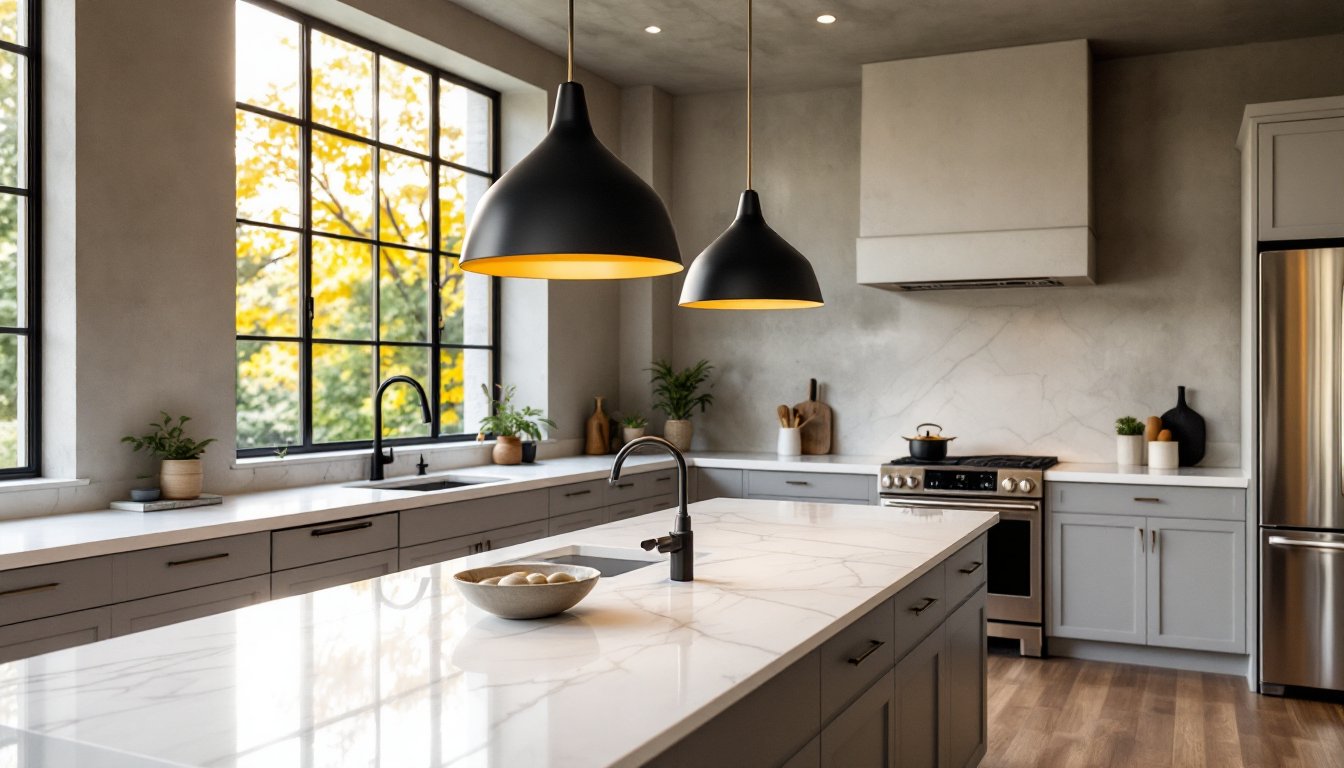
Matte black has become the go-to finish for minimalist spaces. It pairs well with natural wood, concrete, and neutral palettes and hides dust better than chrome or polished nickel. For warmer interiors, brushed brass or copper offers a subtle metallic tone without vintage pretense. These metals also develop a natural patina over time, which many DIYers appreciate as character rather than tarnish.
Glass and acrylic options range from frosted (diffuses light evenly, hides the bulb) to clear (shows the bulb and fixture, emphasizing transparency). Smoked or tinted glass adds visual depth without adding weight. Concrete, ceramic, or plaster shade materials have gained traction for sculptural, gallery-like effects, these are heavier, require sturdier hangers, and may need occasional dusting.
Avoid finishes that require frequent polishing in high-traffic kitchens. Powder-coated metal or anodized aluminum are low-maintenance and resist moisture and fingerprints effectively. Check product specifications for IP ratings (moisture resistance) if installing near sinks or in steamy bathrooms: a rating of IP54 or higher is safer for damp environments.
Top Style Trends in Contemporary Pendant Design
In 2026, ultra modern pendant design leans into minimalist geometry and material mixing. Expect flat-top or tapered cone shades paired with thin, often stainless steel wires or rods. Single, oversized pendants (16–24 inches) hanging over islands or tables create bold focal points without clutter.
Linear pendant systems are gaining ground in open-concept kitchens and dining areas. These fixtures mount to a low-voltage track, allowing flexible positioning and easy repositioning without rewiring. They’re ideal for non-standard layouts or renters seeking temporary solutions.
Smart integration is no longer optional. Many contemporary fixtures now come with dimmable LED compatibility and some with Bluetooth connectivity for voice control. This allows DIYers to adjust brightness and color temperature without adding wall switches or hiring electricians.
Monochromatic layering is another trend, pairing two or three pendant fixtures in the same finish and style at varied heights creates visual rhythm without clashing. Think three matte black cones at 18, 20, and 22 inches drop length over a 4-foot island, spaced 18 inches apart.
Natural material accents (wood dowels, rope, or woven shades) soften industrial designs. These work when quality is evident, cheap rope or paper shades cheapen the look. Invest in woven rattan or quality jute if mixing natural and metal elements.
Choosing the Right Pendant for Your Space
Start with task. Pendant fixtures over work surfaces (islands, bar counters, or desks) need 750–1000 lumens per fixture and should aim for a color rendering index (CRI) of 90 or higher to show colors accurately. Ambient or decorative pendants in living areas can run 400–600 lumens and focus on ambiance over task performance.
Measure your ceiling height, the width of the surface you’re lighting, and any existing architectural features. For islands or tables, a standard rule: pendant diameter should be 12 inches narrower than the surface they’re mounted above. A 3-foot-wide island works well with a 24-inch pendant or two 18-inch fixtures.
Drop height (distance from ceiling to fixture bottom) affects both function and scale. Task lighting should sit 12–18 inches above the surface to avoid glare and shadows. Ambient pendants can hang lower (6–12 inches) if they’re mostly decorative. Check whether your fixture allows adjustable wiring: fixed lengths limit flexibility if plans change.
Match finishes to your existing hardware. If your kitchen has stainless steel appliances, brushed aluminum or polished nickel pendants integrate seamlessly. Matte black fixtures work with black cabinet handles, countertops, or tile. Consistency builds cohesion: mixing too many finishes reads as unintentional.
Consider budget against longevity. Ultra modern fixtures from reputable makers (quality Amazon basics, West Elm, or design-focused brands) often cost $80–$300 per pendant. Higher-end Italian or Scandinavian designs run $400+. Cheap online imports ($20–50) may fail in wiring or dimming compatibility within 2–3 years. Spend on fixtures that live in high-visibility areas.
Installation and Placement Tips
Most ultra modern pendants are standard hardwired fixtures that require basic electrical work. If your ceiling already has a light box installed, you’re replacing a fixture, a 20-minute job. If not, you may need to run new wiring, which requires a permit in most jurisdictions and should be handled by a licensed electrician to meet National Electrical Code (NEC) standards.
Before you start: Turn off power at the breaker and test the circuit with a non-contact voltage tester. Wear safety glasses: plaster or drywall dust falls straight down.
- Remove the old fixture (if replacing) and disconnect wires, noting the black (hot), white (neutral), and bare copper or green (ground) connections.
- Install the mounting bracket to the ceiling box, ensuring it’s level with a torpedo level.
- Connect wires using wire nuts (sized for the wire gauge, typically 14–12 AWG). Twist wires together, screw on the nut, and wrap with electrical tape if the nut feels loose.
- Secure the fixture canopy (the metal plate covering the ceiling box) to the bracket and tighten screws evenly.
- Adjust hanging cable or rod length according to your desired drop height. Most modern pendants use adjustable braided cable: measure down from the canopy, cut cleanly with scissors or shears, and knot above the socket if needed.
- Install the bulb (LED recommended for efficiency and heat reduction) and test before closing the shade.
Spacing multiple pendants: For islands or bars, mark the center point of the surface, then measure out equal distances on either side. A 4-foot island works with pendants at 18 inches and 54 inches from one end (or at 12 and 48 inches for tighter grouping). Ensure pendant cords or rods don’t cross in a way that looks tangled.
Safety reminder: Modern pendant fixtures are low-voltage in the socket but operate on standard household current (120V in the US). Never attempt complex rewiring without a licensed electrician. Use a Lutron or equivalent dimmer-compatible LED bulb if installing on dimmer circuits to avoid flickering or buzzing.
Check the fixture’s weight rating on the bracket. Concrete, ceramic, and glass shades are heavier than metal: ensure your ceiling box and bracket are rated for the load (standard boxes handle 50 lbs, but custom installations may differ). If in doubt, reinforce with a ceiling fan brace rated for extra weight.
Conclusion
Ultra modern pendant lighting transforms functional necessity into design statement. By understanding materials, proportions, and electrical basics, you can select and install fixtures that anchor contemporary interiors with confidence. Prioritize quality finishes and reliable LED compatibility, they’ll age better than trends and serve reliably for years. Start with one boldly designed pendant over your island or entry, and let it set the tone for your space.