Recessed lighting, sometimes called downlights or can lights, has become the go-to choice for homeowners and DIYers looking to modernize their spaces. It’s clean, flexible, and works in nearly any room, from kitchens to bedrooms to basements. Lowe’s stocks a wide range of recessed lighting options that fit different budgets, ceiling types, and design preferences. Whether someone’s planning a full kitchen remodel or just refreshing a dated living room, understanding the basics of recessed lighting helps sidestep costly mistakes and ensures the job gets done right the first time.
Table of Contents
ToggleKey Takeaways
- Lowe’s recessed lighting options include LED, halogen, and incandescent technologies, with LED dominating the market due to 75% energy savings and 25,000+ hour lifespan.
- Choose between remodel housings for retrofit projects and new construction housings for fresh installations, based on your ceiling type and access requirements.
- Space recessed lights 4–6 feet apart and match color temperature to room function: 3,000–4,000K for task-focused kitchens and 2,700K for relaxing bedrooms.
- Standard 4-inch trims work best for bedrooms and living rooms, while 6-inch housings provide brighter, more focused light suitable for kitchens and bathrooms.
- Verify local building codes for IC-rated (insulation contact) housings, confirm electrical circuit capacity, and ensure dimmer compatibility before installation to avoid costly mistakes.
What You Need to Know About Recessed Lighting
Recessed lights sit flush with the ceiling, creating a streamlined look without dangling fixtures or visible hardware. They consist of three main parts: the housing (the can that sits inside the ceiling cavity), the trim (the visible ring and bulb holder around the opening), and the bulb itself.
Housing types matter. Remodel housings work in finished ceilings and clamp from below, making them ideal for retrofit jobs where opening the attic isn’t practical. New construction housings bolt to joists and require ceiling access from above. Lowe’s carries both, so check the project scope before buying.
Bulbs come in three main technologies. LED dominates the market now, they’re efficient, last 25,000+ hours, and generate less heat. Halogen bulbs offer warm light and work well in dimming applications but run hotter. Incandescent options are less common but still available: they’re the warmest-looking but use the most energy and have the shortest lifespan.
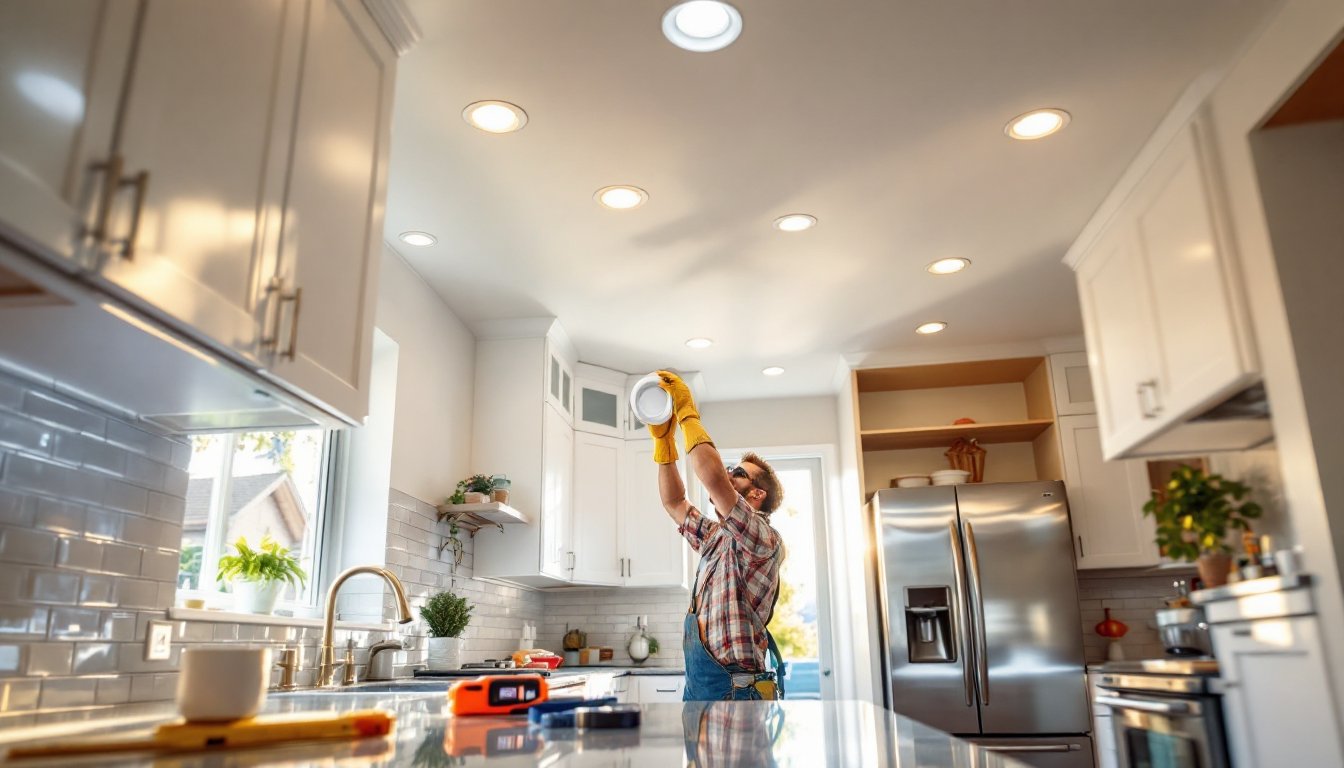
Spacing and placement prevent dark spots and shadows. Standard guidance calls for spacing fixtures roughly equal to the height between the ceiling and task surface. In a kitchen with 9-foot ceilings, for example, spacing lights 4–6 feet apart usually works well.
Why Recessed Lighting Matters for Your Space
Recessed lighting solves real design and functional problems. It eliminates clutter, no pendant cords, no flush-mount hardware catching dust, so rooms feel bigger and cleaner. That matters when selling a home or just enjoying a less-cluttered space.
Lighting quality directly affects how colors appear and how comfortable a room feels. Color temperature, measured in Kelvins (K), ranges from warm (2,700K, like old incandescent) to cool (5,000K+, like daylight). Kitchens often benefit from 3,000–4,000K for better task visibility. Bedrooms and living spaces usually prefer 2,700K for a relaxing feel. Lowe’s fixtures clearly label color temperature, so it’s easy to match the mood.
Recessed fixtures also improve room versatility. A bedroom with recessed lighting alone can feel dim: adding dimmers lets a homeowner shift from bright morning prep to dim evening relaxation. Many Lowe’s LED options come with dimmable ratings, so check that detail before checkout.
Structurally, recessed lights free up ceiling space. In basements with low ceilings or tight mechanical spaces, flush-mount fixtures preserve valuable headroom compared to pendant or track systems.
Key Types of Recessed Fixtures at Lowe’s
LED vs. Halogen vs. Incandescent Options
LED recessed lights are the market leader for good reasons. They use roughly 75% less energy than incandescent bulbs, generate minimal heat (important in insulated ceilings), and last 25,000 to 50,000 hours. Lowe’s carries integrated LED models (bulb built into the trim) and retrofit kits that fit older housings. Prices range widely, budget options start around $15–$25 per fixture, while higher-end dimmable or color-changing LEDs run $40–$80+. For a standard 4-inch trim in a living room or bedroom, a mid-range LED trim from Lowe’s ($25–$40) offers solid performance without premium markup.
Halogen bulbs deliver crisp, white light and work beautifully with dimmers for mood lighting. They do run hotter than LED, though, and last only 2,000–4,000 hours, making them pricier over time due to frequent replacements. Halogen suits accent lighting in kitchens or retail spaces where that bright-white aesthetic matters. Lowe’s stocks halogen trims in common sizes, but selection is shrinking as LED dominates.
Incandescent recessed bulbs are the warmest-looking and cheapest upfront, around $2–$5 per bulb, but they burn out fast (1,000 hours average) and use 5 times more energy than LED. They’re rarely the best choice for new projects, though Lowe’s keeps a few options for older homes or special requirements.
For most DIYers tackling a standard room, LED is the practical winner. It cuts energy bills, eliminates frequent bulb swaps, and works with existing dimmer switches if the trim is rated dimmable.
Sizing and Trim Styles Explained
Recessed light housings come in standard sizes, with 4-inch and 6-inch diameters accounting for the majority of residential installs. Four-inch is typical for bedrooms, living rooms, and accent lighting, it’s less obtrusive and spreads light more subtly. Six-inch housings suit kitchens, bathrooms, and larger spaces where brighter, more focused light helps with tasks. Lowe’s clearly labels housing size so there’s no guesswork.
Trim styles affect both appearance and light direction. Adjustable trims let homeowners angle the bulb to aim light where it’s needed, useful over artwork or task zones. Baffle trims have a reflective or dark interior ring that reduces glare and shadows, creating softer light. Gimbal trims rotate in multiple directions and work well for accent or general illumination. Recessed trims with flanged edges sit flush against drywall without a protruding ring, giving the cleanest look.
Color and material matter too. White and chrome finishes blend into most ceilings. Matte black or bronze trims suit contemporary spaces. Lowe’s color swatches help visualize how a trim looks in different lighting.
Voltage matters. Most residential recessed lights are 120V (standard household current), but some specialty fixtures run on 12V or 24V. Unless doing low-voltage accent lighting, stick with 120V for simplicity.
Installation Tips and Considerations
Before buying, determine whether the ceiling is new construction or a retrofit. For new construction, the housing bolts to joists before drywall goes up. This is straightforward, no attic crawling required. For remodel (retrofit) work, a remodel housing clamps into the cavity from below. It’s designed for this exact scenario and eliminates the need to cut and fish wires through closed ceilings.
Planning the electrical run is critical. Each recessed light draws power, and code limits the number of fixtures per circuit (typically 8–12 at 120V, depending on bulb wattage). Lowe’s staff can help estimate load, but confirm with a licensed electrician if running new circuits. Some jurisdictions require a permit for electrical work.
Spacing and layout matter before drilling. Use a stud finder and level to map out positions. Mark center points with a pencil, then measure carefully, a misaligned fixture ruins the aesthetic and wastes material. Spacing recessed lights 4–6 feet apart in most rooms prevents dark zones.
Insulation and fire-rating are non-negotiable in many areas. Check local building codes. If the ceiling has insulation, use IC-rated (insulation contact) housings, they’re designed to operate safely under insulation. Non-IC housings must stay 3+ inches below insulation or drywall, which limits options in tight spaces.
Wear safety gear during installation: work gloves, eye protection, and a dust mask if working in an attic. If running new wiring, wear electrical-rated gloves. Have a helper, holding a housing steady while fastening saves frustration.
Dimming compatibility requires planning. Not all LED trims work with old dimmer switches. If existing dimmers are in place, buy PWM-dimmable LED trims rather than older phase-cut designs, which can flicker. Lowe’s product descriptions specify dimmer type.
Conclusion
Recessed lighting transforms a room’s appearance and function without the visual bulk of pendant fixtures or track systems. By choosing the right housing type, bulb technology, trim style, and spacing, a DIYer or homeowner can achieve professional results. Lowe’s inventory makes it easy to find fixtures at different price points and with varying features, whether it’s budget-friendly LED basics or premium dimmable trims. Take time to plan layout, confirm electrical capacity, and check local codes before starting. The payoff is a cleaner, brighter, more versatile living space that works for years to come.