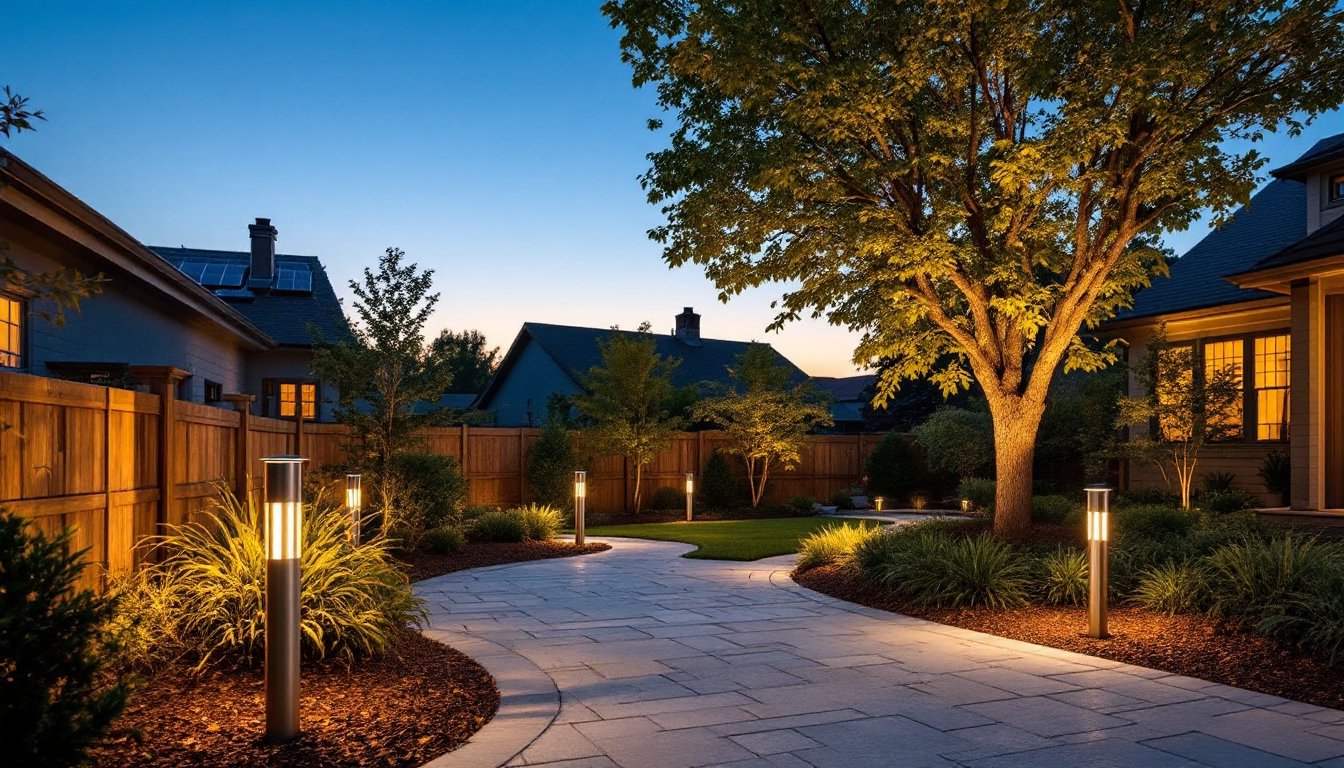
Solar landscape lighting has become a practical choice for homeowners who want to brighten outdoor spaces without wiring or monthly electric bills. Unlike traditional hardwired systems, solar powered landscape lighting operates independently, a solar panel absorbs sunlight during the day, stores energy in a rechargeable battery, and automatically lights up at dusk. Whether it’s solar path lights marking a walkway or solar spotlights highlighting garden features, these fixtures blend convenience with sustainability. The technology has matured significantly, delivering reliable performance even in partial shade conditions. For DIYers tackling landscape projects, solar power landscape lighting eliminates trenching, permits, and electrical work while offering flexibility to move fixtures seasonally or upgrade individual lights without disrupting the entire system.
Table of Contents
ToggleKey Takeaways
- Solar landscape lighting eliminates expensive electrical installation, trenching, and permits while delivering zero operational costs after the upfront investment is recovered.
- Modern solar powered landscape lighting uses LED bulbs lasting 25,000–50,000 hours paired with advanced batteries rated for 500–1,000 charge cycles, providing 3–5 years of reliable performance.
- Choose fixtures based on your needs: aim for 30–50 lumens for safety path marking and 100+ lumens for task areas, while accent lights can be dimmer for atmospheric effect.
- Solar panels require 6–8 hours of direct sunlight daily to charge fully, so assess your yard’s sun exposure and select shade-tolerant models with larger panels if needed.
- Invest in quality fixtures with IP65+ weather ratings, stainless steel housings, and clear product specifications; replacement batteries cost only $8–15 when needed after 3–5 years.
- Installation requires minimal tools and maintenance involves seasonal panel cleaning and occasional battery contact checks, making solar landscape lighting ideal for DIY homeowners seeking convenience and sustainability.
Why Solar Landscape Lighting Is Worth the Investment
The upfront cost of solar lights is typically higher per unit than traditional low-voltage fixtures, but the long-term savings justify the expense. First, there’s no electrical installation, no trenching, no voltage transformer, no licensed electrician required. That alone can save hundreds of dollars on a typical landscape project. Second, operational costs are nearly zero. Once installed, solar lights produce zero electricity charges and require minimal maintenance beyond occasional cleaning.
Reliability has improved dramatically. Modern solar landscape lights use LED bulbs (which last 25,000–50,000 hours) paired with lithium-ion or NiMH batteries rated for 500–1,000 charge cycles. This means a quality fixture should last 3–5 years before the battery degrades noticeably. Homeowners also gain flexibility: fixtures can be repositioned without electrical rework, making seasonal adjustments or design updates painless.
There’s an environmental angle too. Solar powered landscape lighting eliminates grid dependency for outdoor illumination, reducing your home’s carbon footprint. For many homeowners, that environmental benefit combined with zero monthly operating costs makes the upfront investment worth every penny.
Types of Solar Landscape Lighting Solutions
Solar Path Lights and Bollards
Solar path lights are the entry-level workhorse, small stake lights (typically 8–16 inches tall) that mark walkways, garden edges, or driveway borders. They’re simple: a solar panel sits atop a pole, the battery and LED sit below, and a stake drives into the ground. Most path lights emit 20–50 lumens, enough for safety marking rather than task lighting. They’re ideal for stepping-stone paths, perimeter borders, or accentuating landscaping beds.
Bollard lights are similar but taller (18–24 inches) and more decorative, often featuring stainless steel or plastic housings. They’re popular along driveways and patio edges where a more finished look matters. Both types cost $8–25 per unit and install in seconds, no tools required beyond a shovel or hard-packed soil.
Solar Spotlights and Accent Lights
Solar spotlights are adjustable fixtures that focus light on a specific feature: a tree, a garden sculpture, or architectural detail. They typically deliver 50–150 lumens and cost $20–50. The advantage is directional control, you tilt or rotate the light to highlight what matters. Some models include color filters (red, blue, green) for decorative effects.
Solar accent lights come in many forms: string lights, in-ground well lights, uplights, and stake-mounted spotlights. String lights work well for patios and pergolas, while in-ground solar lights create ambient floor-level illumination (useful around pools or deck edges). Uplights buried at the base of a tree or shrub project light upward, creating drama and depth. Accent lights typically run 30–100 lumens and cost $15–40 per unit. Choose accent lights when you want atmosphere rather than pure visibility.
How to Choose the Right Solar Lights for Your Space
Start by identifying the job: safety lighting (walkways, driveway edges) or aesthetic lighting (feature highlighting, ambiance). Safety lights need adequate brightness, aim for at least 30–50 lumens for path marking and 100+ lumens for task areas like steps or entry gates. Accent lights can be dimmer since their role is visual interest, not safety.
Next, assess sunlight exposure. Solar panels need 6–8 hours of direct or mostly direct sunlight daily to charge fully. If your yard is shaded by trees or buildings, look for high-capacity solar panels (6 watts or larger) and lights rated for partial shade. Some brands explicitly market “shade-tolerant” models with larger panels and improved battery capacity. Mounting height also matters: wall-mounted or elevated panels catch more sun than low stake lights in dense landscaping.
Consider the climate. In northern regions with shorter daylight hours or frequent clouds, oversized batteries and panels extend runtime. Hot climates may shorten battery lifespan, look for lights with cooling vents or heat-resistant materials. Check product specs: rechargeable battery capacity (measured in mAh) directly correlates to runtime. A 600mAh battery might run 8–10 hours, while 1200mAh runs 12–15 hours on a full charge.
Weather resistance matters too. Look for IP65 or higher ratings (ingress protection), this means sealed against dust and water jets. Avoid cheap fixtures with poor seals: water entering the battery chamber kills electronics fast. Stainless steel or marine-grade aluminum housings outlast painted plastic in wet climates.
Finally, buy from reputable brands or retailers with clear product specifications and return policies. Budget fixtures often have vague lumen ratings, unclear battery specs, and short warranties. Spending an extra $10–15 per unit usually gains you 2–3 years of reliable performance versus cheaper knockoffs.
Installation and Maintenance Tips
Installation is refreshingly simple. For stake lights, push the stake into soft soil, or use a rubber mallet on compacted ground. Don’t force it, bent stakes won’t sit level. On hard clay or rocky soil, drill a pilot hole first with a hand auger or small-diameter drill bit (roughly the stake diameter).
For wall-mounted or elevated fixtures, use stainless steel hardware rated for outdoor use. Galvanized screws corrode over time: stainless won’t. If mounting on brick or stone, use plastic anchors and corrosion-resistant fasteners, don’t trust regular drywall anchors. Apply a thin bead of paintable caulk around the mounting base to prevent water intrusion.
Position solar panels to face south (or southwest in northern climates) and avoid nearby shade from trees, structures, or other lights. Even partial shade in late afternoon reduces battery charge significantly. Check panels seasonally: in winter, you may need to angle them lower to catch lower sun angles.
Maintenance is minimal. Clean panels quarterly with a soft cloth and water, dirt and pollen reduce solar absorption. If lights stop functioning after 2–3 years, the battery has likely degraded: most manufacturers sell replacement batteries for $8–15, cheaper than buying new fixtures. Check battery contacts for corrosion every spring: a tiny bit of fine sandpaper or a battery terminal cleaner fixes poor contact.
Over winter in cold climates, consider removing batteries if lights will sit idle for months. Storing charged batteries in a cool, dry place preserves lifespan better than leaving them in the cold. Reinstall before spring and allow a full charge cycle before expecting night operation.
For fixture areas prone to foot traffic, anchor stake lights with a small stake or buried rock to prevent accidental tripping. Keep grass trimmed around path lights so mower blades don’t clip them. Finally, don’t expect deep midnight brightness from solar lights, they’re designed for dusk-to-dawn visibility and ambiance, not to replace a floodlight.
Conclusion
Solar landscape lighting solves a real DIY problem: how to illuminate outdoor spaces without electrical work, permits, or monthly bills. The technology is proven, affordable, and genuinely low-maintenance when you choose quality fixtures and install them thoughtfully. Whether you’re marking a pathway with solar path lights, accenting a garden bed with solar spotlights, or adding ambiance with solar accent lights, the flexibility and simplicity are hard to beat. Start small with a few fixtures, measure results over a season, then expand or adjust as needed. Your future self, and your utility bill, will thank you.