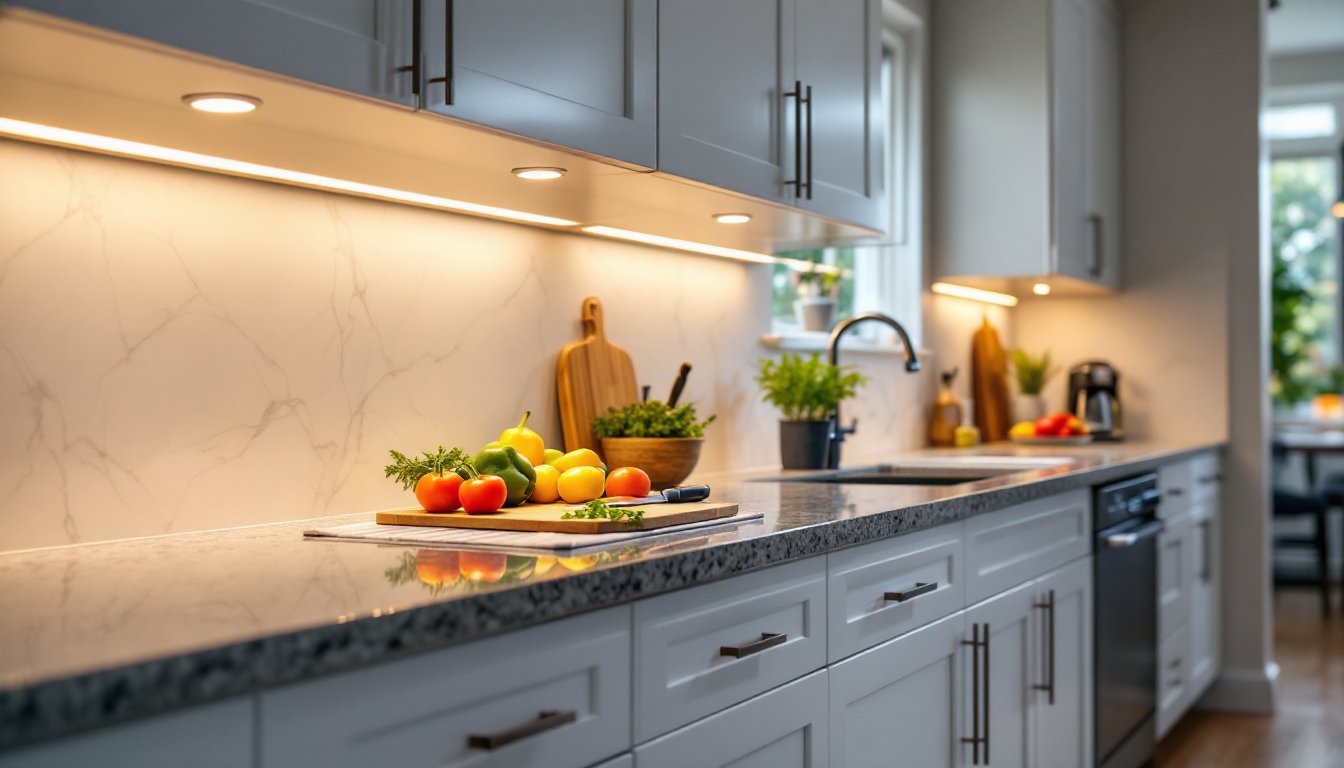
Under cabinet lighting has been a kitchen staple for years, but the rise of battery-powered options has changed the game. No more wrestling with hardwired circuits, hiring an electrician, or dealing with outlets placed in awkward spots. Modern battery-powered under cabinet lighting delivers the task illumination and ambiance of wired systems without the installation headaches or wall damage. Whether someone’s upgrading a rental kitchen, refreshing an older home, or simply adding function to dark countertops, battery-powered solutions offer flexibility and real value. This guide walks through what makes these lights practical, what features actually matter, and how to pick the right option for the job.
Table of Contents
ToggleKey Takeaways
- Battery-powered under cabinet lighting eliminates installation costs and complexity, saving $200–$500 compared to hardwired systems while requiring no electrician or wall damage.
- Brightness (300–500 lumens), adjustable color temperature (2700K–5000K), and smooth dimming are essential features that deliver task lighting and ambiance comparable to wired options.
- Quality under cabinet lighting requires proper adhesive prep (clean, dry surfaces with rubbing alcohol) or secure screw mounting with pilot holes to prevent sagging and ensure longevity.
- Lithium-ion batteries typically deliver 20–40 hours at 50% brightness and last 300–500 charge cycles (2–3 years), so monthly cleaning and regular maintenance preserve performance.
- Linear LED bars suit wide countertops, puck lights offer bright directional output, and smart-capable systems add app control—choose based on coverage needs and existing home setup.
- Battery-powered systems work perfectly for rentals, older homes, and temporary installations where hardwired solutions aren’t feasible or practical.
What Makes Battery-Powered Under Cabinet Lighting a Smart Choice
Battery-powered under cabinet lighting removes the most common barrier to installation: electricity. There’s no running wire through cabinets, no matching circuits, and no need for a licensed electrician. That translates directly to cost savings, often $200 to $500 less than hardwired setups when factoring in labor and materials.
These lights also work in rentals and older kitchens where running new circuits isn’t feasible or practical. Someone renting an apartment can install them without landlord friction: a homeowner in a 1950s kitchen avoids opening walls and ceilings. They’re also easier to remove and reinstall if redesigning the kitchen layout later.
Performance has caught up too. Today’s battery-powered units use LED technology with dimming, color temperature control, and run times that stretch 20+ hours per charge. For task lighting over a prep area or ambient lighting in a galley kitchen, they work just as well as wired options. The trade-off is that they need charging, typically monthly or every six weeks depending on use, but that’s a small price for the installation freedom.
Top Features to Look For in Quality Under Cabinet Lights
Brightness and Color Temperature Options
Brightness is measured in lumens. For under cabinet task lighting, aim for 300–500 lumens per fixture if lighting a standard 24-inch counter section. This provides enough light to chop vegetables or read a recipe without creating glare or harsh shadows. Overkill brightness (800+ lumens) wastes battery life and can feel like stadium lighting in a home kitchen.
Color temperature matters as much as brightness. Warm white (2700K–3000K) feels cozy and flatters food presentation: cool white (4000K–5000K) delivers a crisp, professional look and is better for detail work. Many quality units offer adjustable color temperature, letting someone dial in the right vibe for cooking or entertaining.
Dimming capability is a quiet win. It lets someone set the perfect light level instead of being stuck at one brightness. Look for smooth dimming (not stepped) and reliable remote controls or touch controls that don’t fail after a few months.
Battery Life and Charging Convenience
Battery life depends on brightness and chemistry. Lithium-ion batteries (the standard now) typically run 20–40 hours at 50% brightness: this drops to 8–12 hours at full brightness. Real-world use usually lands somewhere in the middle. Factor in whether the unit is charging via USB-C (fast and standard) or proprietary connectors (slower, but sometimes more compact).
Charging speed also varies. Some units fast-charge in 2–3 hours: others take 6–8 hours. For a kitchen that runs lights 4–6 hours daily, a monthly charge cycle is typical. Weekly charging suggests either heavy use or a less efficient battery, which translates to more maintenance over time. Check product reviews for actual longevity reports, marketing claims often oversell battery life by 20–30%.
Installation and Adhesive Quality
Most battery-powered under cabinet lights mount with 3M adhesive strips or pre-drilled screw holes. Adhesive strips are faster and damage-free, great for renters or temporary setups. Screw mounting is permanent and stronger, better for long-term installations or high-vibration areas.
Here’s the caveat: adhesive only sticks well on clean, dry surfaces. Someone must degrease the underside of the cabinet with a dry cloth, then wipe with a lint-free towel and rubbing alcohol. Skip this, and the light will sag or fall within weeks. Newer cabinets with laminate or veneer are fine: older solid wood cabinets with varnish or polyurethane finish work too, as long as the surface is clean and sound.
For screw mounting, use the fasteners provided in the kit, usually #6 or #8 sheet metal screws. Pre-drill a pilot hole (especially in hardwood) to prevent the thin aluminum fixture body from splitting. Two screws per fixture is standard: three is better for heavier units over 12 inches long.
Do not use regular drywall anchors or wooden toothpick shims on cabinet undersides. The vibration from daily use will loosen them. If the cabinet material isn’t solid enough for screw mounting, adhesive is the safer bet, just commit to the prep work.
Comparing Popular Battery-Powered Under Cabinet Lighting Solutions
Stick-on LED bars (like Philips Hue or LIFX strips) are ultra-thin, affordable ($30–$80 per unit), and pair easily with smart home systems. They work great for renters or temporary ambiance but deliver lower lumen output and less focused task lighting. Battery life is often 15–25 hours at normal use.
Rechargeable puck lights offer brighter, more directional output (400–600 lumens) in a compact footprint. Brands like Sunforce or Westongeek puck units cost $40–$120 per light and last 25–35 hours per charge. They’re heavier and more visible, so design matters more. Mount them toward the front edge of the cabinet for better task lighting coverage.
Longer linear bars (12–24 inches) deliver 500–1000 lumens total, split across the length. These are pricier ($80–$200) but cover wider countertops with fewer fixtures. GE Enbrighten and Sunforce linear systems are reliable choices, though adhesive prep is extra critical on longer units, any weak spot will cause sagging.
Smart-capable systems (Philips Hue, LIFX, or Meross) add app control and voice integration but cost 2–3× more and need WiFi or Bluetooth. For a rental or simple task lighting, they’re overkill. For a primary kitchen renovation with existing smart home setup, they’re worth considering. Battery life is slightly lower due to wireless connectivity overhead.
Maximizing Performance and Longevity of Your Under Cabinet Lights
Charge the battery fully before the first use, straight out of the box, they’re usually at 50–70% capacity. This conditions the battery and ensures the first full runtime test is accurate.
Keep lights clean. Dust and cooking residue settle on the lens and reduce brightness by 15–25% over time. A dry microfiber cloth monthly, plus an occasional wipe with a slightly damp cloth, keeps output consistent. Never spray cleaner directly on the fixture: moisture kills the battery.
If a light dims after 6–12 months, the battery is degrading. Lithium-ion cells last 300–500 charge cycles (roughly 2–3 years of weekly charging). When dimming becomes noticeable, replace the battery or the whole unit, don’t ignore it, as over-discharged batteries can fail suddenly or develop internal shorts.
For adhesive-mounted lights, inspect every 6 months. If corners lift even slightly, reposition the fixture and re-glue using fresh 3M strips. Don’t wait for a light to fall: it damages the fixture and the counter surface. Screw-mounted units require a quick tightness check annually: vibration loosens fasteners over time.
Store unused units in a cool, dry place with the battery at 50% charge. Full discharge and deep cold hurt lithium-ion cells. If storing for winter or during a renovation, do a 50% top-up every 3 months to maintain health.