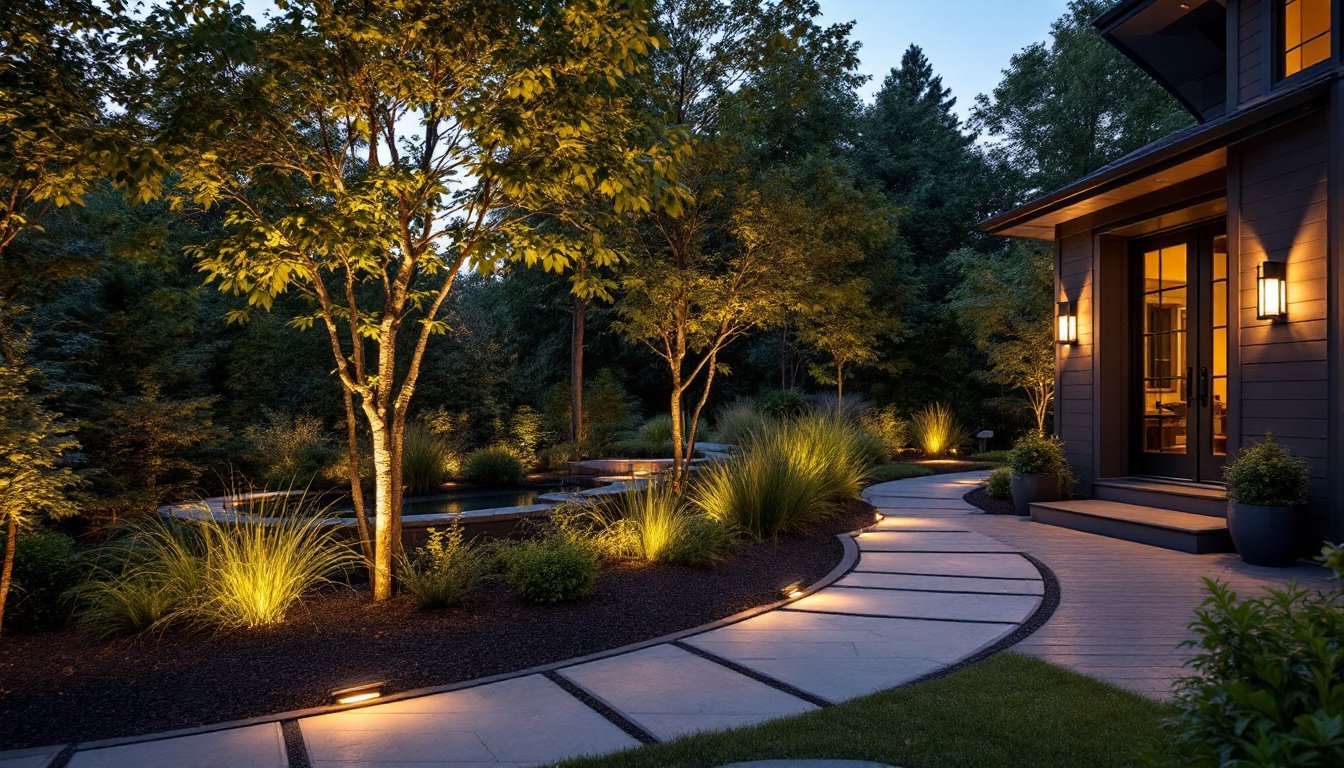
Outdoor lighting has moved beyond the floodlights and string bulbs of yesteryear. Contemporary landscape lighting balances form and function, turning yards into sophisticated extensions of the home. Whether it’s a subtle uplighting on a tree or a seamlessly integrated smart system that adjusts to the season, modern landscape lighting serves multiple purposes: it enhances safety, highlights architectural features, and creates ambiance. For homeowners looking to invest in their outdoor spaces, understanding contemporary landscape lighting means knowing which fixtures work best, how to position them, and what technology options exist. This guide walks through the essentials of modern outdoor lighting design and implementation.
Table of Contents
ToggleKey Takeaways
- Contemporary landscape lighting uses layered, purpose-driven illumination combining ambient, task, and accent lighting rather than relying on a single bright fixture.
- Modern landscape lighting fixtures feature clean lines, minimal daytime visibility, and warm-toned materials like matte black and brushed stainless steel that prioritize the light effect over the hardware itself.
- LED technology is now the standard for contemporary landscape lighting, consuming 80% less energy than older bulbs while lasting 25,000 to 50,000 hours, making sustainability a core design principle.
- Smart landscape lighting systems integrate with home automation platforms to adjust color temperature, brightness, and scheduling remotely, with motion sensors preventing wasted illumination.
- Uplights, path lights, and wall sconces are the most popular contemporary fixture types, with a typical residential system requiring a 300–600-watt transformer and costing $1,000–$3,000+ for full-yard installation.
- Effective contemporary landscape lighting design starts with mapping focal points and determining whether each area needs task or accent lighting to enhance safety, architectural features, and curb appeal.
What Defines Contemporary Landscape Lighting
Contemporary landscape lighting isn’t just about brightness, it’s about intentionality. Unlike traditional outdoor lighting, which often relied on a single bright fixture to flood an entire yard, modern landscape lighting uses layered, purpose-driven illumination. This approach typically combines ambient lighting (general visibility), task lighting (focused on pathways or seating areas), and accent lighting (highlighting plants, water features, or architectural elements).
The key shift is from “one light does it all” to “multiple fixtures working together.” Contemporary design emphasizes clean lines, minimal visual clutter during daylight, and fixtures that either blend into the landscape or become architectural statements themselves. Materials have evolved too, warm-toned LED fixtures in matte black, brushed stainless steel, or powder-coated aluminum dominate the market, replacing chunky brass or plastic housings. Fixtures are often smaller and more refined, letting the light’s effect take center stage rather than the hardware itself.
Key Design Principles and Trends
Minimalist Aesthetics and Clean Lines
Contemporary landscape lighting embraces subtlety. Fixtures are low-profile, often mounted at ground level or recessed into hardscaping, so they disappear during the day. Think in-ground uplights rather than pole-mounted area lights, or pathway lights that are barely taller than a garden boot. The aesthetic goal is for the light itself, not the fixture, to be the focal point after sunset.
Designers favor neutral tones and simple geometry. A linear LED strip along a deck edge, a small cylinder wall sconce, or barely-visible well lights integrated into steps all follow this principle. The trend also includes asymmetrical layouts rather than symmetrical rows: instead of matching lights at regular intervals, contemporary schemes vary fixture height, spacing, and intensity to create visual interest and depth. This requires more planning but pays off with a sophisticated, curated look.
Sustainability and Energy Efficiency
LED technology is now the baseline, not a premium option. Contemporary fixtures universally use LEDs rated for outdoor use (typically 25,000 to 50,000-hour lifespan), which consume 80% less energy than halogen or incandescent bulbs. Solar-powered landscape lights have also matured: early versions were dim and unreliable, but current models offer genuine task lighting suitable for pathways and accent work.
Beyond LEDs, contemporary design emphasizes smart controls, timers, dimmers, and motion sensors that prevent wasted illumination. Many systems now tie into home automation platforms, allowing users to adjust color temperature and brightness remotely. This combination of efficient fixtures and intelligent controls aligns with eco-conscious homeowner values while reducing electricity costs year-round.
Popular Fixture Types and Applications
Uplights remain the workhorse of contemporary landscape design. Mounted low to the ground or at the base of plantings, they cast light upward onto trees, shrubs, or building facades. A single 7–15-watt LED uplight can create dramatic shadow play: homeowners often space them 2 to 3 feet apart along a hedge or tree line. They’re versatile, relatively inexpensive (typically $40–$150 per unit), and hide easily in mulch or beneath plantings.
Path and step lights ensure safety while contributing to design. Contemporary versions are typically 2 to 4 inches tall with a low-color-temperature LED (warm white, 2700K) to avoid harsh glare. They’re spaced roughly 4 to 6 feet apart along walkways. Recessed deck step lights are also popular: these mount flush into the tread of outdoor stairs and require routing or mortising, so plan this during deck construction or renovation.
Wall sconces and architectural spotlights frame entries and focal points. A pair of 12–18-inch matte-black cylindrical sconces flanking a front door reads as instantly contemporary. For accent work, narrow-beam spotlights (sometimes called bullets or pin lights) target specific trees or water features. These typically draw 10–20 watts and offer adjustable beam angles, usually 15 to 40 degrees.
Linear and panel lights are increasingly popular for modern homes. LED strips integrated into pergolas, fascias, or fence tops provide ambient light and visual interest. Recessed linear well lights set into patio edges work similarly. These require low-voltage wiring and careful installation during construction or during major hardscape work.
All landscape lighting systems use low-voltage (12V or sometimes 24V) transformers rather than standard 120V mains power, which increases safety and reduces shock hazard. A typical residential system starts with a 300–600-watt transformer, allowing enough capacity for 6–10 fixtures with room to expand.
Smart Lighting Integration
Smart landscape lighting has crossed from novelty to practical standard. Systems that integrate with Alexa, Google Home, or Apple HomeKit let homeowners control outdoor lights via smartphone or voice. Schedules can shift seasonally, turning on later in winter when dusk comes earlier, without manual adjustments.
Dimmers and color temperature controls add sophistication. Most contemporary systems allow users to dial in warm white (2700K) for relaxing evenings or cooler white (4000K) for task-heavy entertaining. RGB color-changing lights exist but lean toward novelty: they read as tacky in contemporary design except in very specific entertainment contexts.
Motion sensors paired with smart controls prevent the “lights on all night” problem. Many systems use occupancy sensors that detect presence within a specific zone and activate task lighting only when needed. This cuts energy use and discourages unwanted foot traffic.
Installation requires running low-voltage cable from a transformer mounted on the house or in a nearby weatherproof enclosure. Cable can be buried (use burial-rated cable and bury at least 6 inches deep to avoid damage from digging or frost heave) or run above ground along hardscaping. Smart hubs and wireless modules eliminate the need for new hardwiring per fixture, so retrofitting existing landscapes is feasible. Budget $1,000–$3,000+ for a whole-yard smart system, depending on fixture count and control sophistication.
Conclusion
Contemporary landscape lighting succeeds by prioritizing intentional design over brute-force illumination. Choosing the right mix of uplights, path lights, and accents, paired with efficient LEDs and smart controls, transforms an outdoor space into a functional, visually compelling extension of the home. Start by mapping your yard’s focal points and determining what needs task lighting versus accent light, then select fixtures that align with your home’s architectural style. The investment pays dividends in curb appeal, usability, and property value.