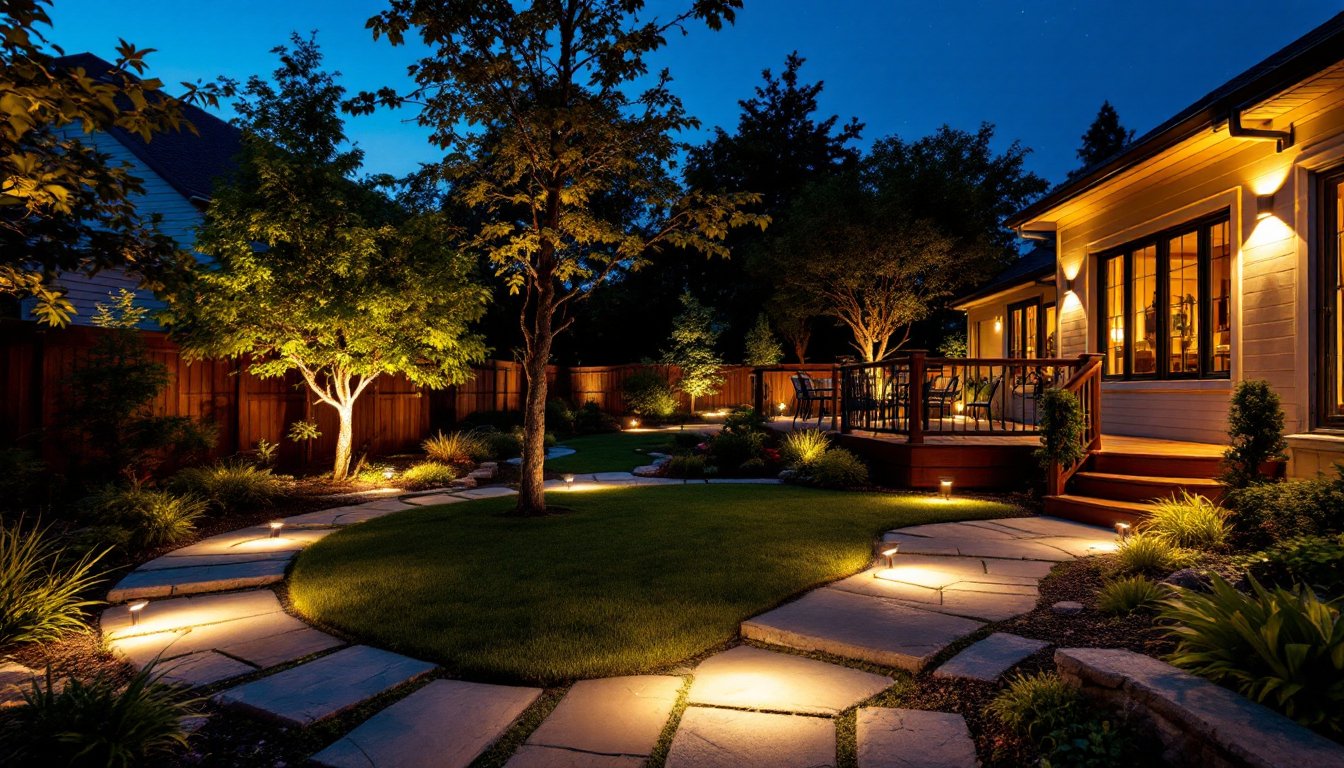
A well-lit landscape transforms a backyard from an unusable dark space into an inviting outdoor room after sunset. Outdoor lighting landscape design isn’t just about aesthetics, it’s about safety, functionality, and extending the seasons when families actually use their yards. Homeowners who invest in thoughtful outdoor lighting see immediate returns in property value, usability, and curb appeal. The good news: modern fixtures are affordable, installation is DIY-friendly for most projects, and energy-efficient LED technology has made running costs negligible. Whether you’re lighting a path, highlighting architectural features, or creating ambiance for entertaining, understanding the fundamentals of landscape lighting will help you avoid costly mistakes and get professional results.
Table of Contents
ToggleKey Takeaways
- Outdoor lighting landscape design improves safety, functionality, and property value by transforming dark yards into inviting evening spaces using affordable, DIY-friendly modern fixtures.
- Layered lighting combining ambient, task, and accent light creates natural, inviting results, while avoiding single bright fixtures that produce harsh shadows and glare.
- Lumen output (brightness) matters more than wattage: LED technology delivers equivalent brightness at 75–80% lower energy consumption and lasts 25,000–50,000 hours versus incandescent bulbs.
- Low-voltage 12-volt transformer systems are safer, cheaper to operate, and ideal for DIY installation without requiring a licensed electrician for most residential projects.
- Strategic fixture placement—spacing path lights 6–8 feet apart, lighting 30–40% of the landscape, and layering foreground, middle ground, and background—prevents over-lighting and maintains visual depth.
- Smart outdoor lighting systems with motion sensors, timers, and home automation integration offer flexible control and further energy savings compared to traditional hardwired fixtures.
Understanding Outdoor Lighting Fundamentals
Landscape lighting works on a few core principles: layering, fixture placement, and appropriate lumen output. Layering means combining ambient light (general illumination), task light (for specific areas like patios or paths), and accent light (highlighting plants or architectural details). A single bright fixture creates harsh shadows and glare: layered lighting feels natural and inviting.
Lumen output matters more than wattage. A 60-watt incandescent bulb produces about 800 lumens, while a modern LED equivalent delivers the same brightness at 8 watts. For outdoor work, lumens tell you actual brightness: watts just show energy consumption. Path lights typically run 100–300 lumens, while spotlights range 300–1,200 lumens depending on throw distance.
Transformer-based systems use 12-volt low-voltage wiring (standard in residential landscape lighting) rather than 120-volt household current. Low-voltage systems are safer to install, cheaper to run, and perfect for DIY work since you won’t need a licensed electrician for most setups. A transformer steps down standard household voltage to 12 volts, then distributes power through buried or concealed cable to individual fixtures.
Understanding color temperature is also essential. Warm white (2700K) creates an inviting, intimate feel and is ideal for patios and gathering spaces. Cool white (4000K–5000K) works better for security and task lighting because it mimics daylight and enhances visibility. Mixing color temperatures in the same landscape looks jarring: choose one temperature family and stick with it.
Types Of Landscape Lighting Fixtures
Choosing the right fixture types makes the difference between a cohesive design and a hodgepodge look. Each fixture type serves a specific function, and most landscapes use a combination of three to four types.
Path And Accent Lights
Path lights are short (12–18 inches), stake-mounted fixtures that line walkways, driveways, and garden borders. They cast downward light to illuminate the ground and prevent trips, and they’re the easiest fixtures for DIYers to install, just push the spike into soil. Look for fixtures with a frosted lens or built-in diffuser to avoid harsh glare. Most run 100–150 lumens and consume 3–5 watts per bulb.
Accent lights (also called uplights or well lights) sit at ground level and shine upward to highlight plantings, statuary, or architectural features. Well lights are recessed into the ground or landscape bed and are less visible during the day. Accent lights add drama and draw the eye to your best features. Choose fixtures with adjustable beam angles (15°–40° is typical) so you can direct light precisely. Accent lights usually run 300–500 lumens.
Soft-edge or filtered lens accents minimize light spill into neighbors’ yards and look more professional than bare bulbs. Avoid uplighting trees straight up unless you want a Halloween effect: offset the light 2–3 feet from the trunk and angle it to graze the canopy. This creates shadow and texture, not a flat wash of color.
Uplighting And Spotlights
Spotlights are narrow-beam fixtures (15°–30° beam angle) that throw light 20–50 feet. They’re ideal for highlighting distant features, signage, or architectural detail from across the yard. A spotlight with a 3,000-5,000 lumen output can illuminate a large house facade or tall tree convincingly. These fixtures need more power and are best wired to a dedicated transformer circuit.
Silhouetting is a dramatic technique: place a backlight behind a tree or shrub and a softer foreground light in front, so the plant appears as a dark outline against the lit background. It’s simple but visually striking.
Wall-mounted fixtures and soffit lights mount directly on the house, fence, or structure. These are practical for security and general area lighting. Use fixtures rated IP65 or higher (ingress protection rating) to ensure they handle rain and moisture. Look for sealed aluminum or stainless-steel housings to resist corrosion.
Design Strategies For Maximum Impact
A solid landscape lighting design plan prevents wasted fixtures and ensures the space looks intentional, not cluttered. Start by identifying focal points: the front entrance, a specimen tree, a seating area, or an architectural detail you want to emphasize. Light these features first, then fill in supporting ambient and task light.
Spacing path lights 6–8 feet apart is standard and creates a cohesive line without over-lighting. If your path curves, place lights on the outside of the curve so approaching traffic can see the turn. Avoid lighting both sides of a narrow path: it looks like a landing strip.
Create depth by layering foreground, middle ground, and background. Light a shrub in the foreground, a specimen tree in the middle, and perhaps a fence or house wall in the back. This draws the eye deeper into the landscape and prevents the flat, one-dimensional look of single-plane lighting.
Avoid uplighting everything. Light 30–40% of your landscape: the rest stays in shadow. Darkness is as important as light. Over-lit yards feel commercial and lose any sense of intimacy. Homeowners often over-estimate how bright they need to go, start conservative, and add fixtures if needed rather than pulling them out later.
Conceal light sources when possible. Hide uplights in planting beds, use fixtures with shields to prevent glare into windows or neighbors’ properties, and consider path lights with motion sensors in low-traffic areas to save energy and reduce light pollution.
For entertaining spaces, ensure task lighting is sufficient but not harsh. A patio or deck might need 300–500 lumens of general illumination (from overhead or wall fixtures), plus accent lighting on surrounding plantings. Dimmable fixtures give flexibility for different moods and times of evening.
Smart Lighting And Energy-Efficient Solutions
Modern outdoor lighting systems are smarter and more efficient than ever. LED fixtures use 75–80% less energy than incandescent and last 25,000–50,000 hours (versus 1,000–2,000 hours for incandescent). The cost per fixture has dropped significantly, making LEDs the obvious choice for any new installation.
Smart outdoor lighting systems integrate with home automation platforms (Apple Home, Google Home, Alexa) and let you control lights via smartphone, set schedules, or tie lighting to motion sensors and sunset/sunrise times. Systems like Philips Hue Outdoor or LIFX fixtures work with low-voltage transformers and offer RGB color options if you want to change moods seasonally. Setup is straightforward: install the fixture, add it to your app, and configure automations. These systems cost more upfront (often $50–150 per fixture) but eliminate the need for manual timers and can reduce energy use further through smart scheduling.
Solar path lights are tempting and work fine for purely decorative, low-traffic areas, but don’t rely on them for primary path lighting or safety. Solar fixtures dim over time, struggle in winter or cloudy regions, and battery quality varies wildly. If you use solar lights, buy from reputable manufacturers and test them for a season before committing to them as your main light source.
Timers and photocells are simple, affordable ways to automate lighting without smart home gear. A photocell (light sensor) automatically turns lights on at dusk and off at dawn, perfect for security lighting. Battery-operated or hardwired timers let you set specific on/off times. Most residential installations pair a transformer with a built-in timer or photocell for hassle-free operation.
Proper wire gauge and distance affect voltage drop. A low-voltage run longer than 50–75 feet needs thicker cable (10 AWG instead of 12 AWG) to maintain proper voltage at the far fixtures. Undersized wire means dim lights and potential transformer overload. When planning your system, sketch out wire runs and check the transformer spec sheet for maximum run length at your chosen cable gauge.
Conclusion
Outdoor lighting landscape design is achievable for DIY homeowners who follow a few core principles: layer your light, choose appropriate fixtures for each area, and resist over-lighting. Start small, install path lights and one accent fixture, then expand after you see how the landscape looks at night. Modern LED and low-voltage systems are affordable, safe to install, and deliver professional results. With thoughtful placement and energy-efficient technology, your yard will become an inviting evening retreat that adds both safety and value to your home.