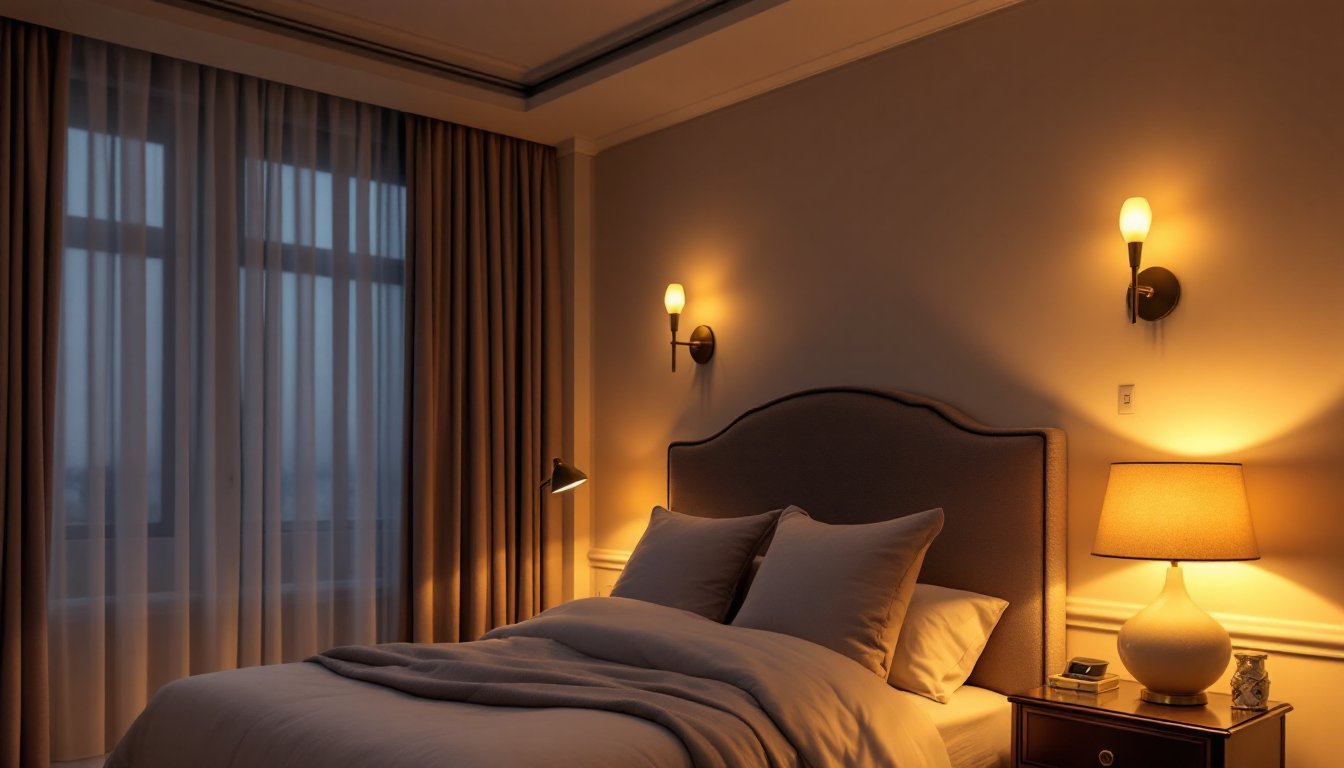
Getting quality sleep isn’t just about a good mattress, lighting plays a surprisingly powerful role in how well and how long a person sleeps. The wrong light can keep someone wired at bedtime, while warm lighting helps signal the body to wind down naturally. A bedroom lit with warm color temperatures creates an inviting retreat that feels personal and restful, not harsh or sterile. This guide walks through why warm lighting matters, how to measure it, which fixtures work best, and how to position them for maximum comfort. Whether upgrading existing fixtures or starting fresh, understanding warm lighting fundamentals makes the difference between a bedroom that feels like a hotel and one that truly feels like home.
Table of Contents
ToggleKey Takeaways
- Warm lighting at 2700K triggers melatonin production and signals the body that it’s time to sleep, making it essential for improving sleep quality and falling asleep faster.
- Layer your bedroom lighting with ambient overhead fixtures, task lighting like bedside lamps, and accent lights like wall sconces to create a balanced, adaptable space that feels personal and restful.
- Install dimmers on main ceiling fixtures to transition from bright light for getting dressed to soft, warm lighting for winding down without changing fixtures.
- Position warm lighting strategically by placing bedside lamps 18–24 inches above the mattress, mounting wall sconces at 60–66 inches from the floor, and avoiding bright lights directly above the bed to prevent glare.
- Consider smart bulbs or smart dimmer switches to automatically adjust warm lighting throughout the evening, with many systems offering sleep modes that gradually dim lights over 15–30 minutes to mimic a natural sunset.
- Avoid cool light above 3500K in bedrooms, as it suppresses melatonin and creates a clinical feel that interferes with relaxation and sleep.
Why Warm Lighting Matters for Your Bedroom
Bedrooms serve one primary function: rest. The quality of light in the room directly influences sleep onset and quality. When a person is exposed to cool, blue-tinted light in the evening, their body produces less melatonin, the hormone that triggers sleepiness. Warm, amber-tinted light does the opposite, it signals the circadian rhythm that night is approaching, allowing melatonin production to ramp up naturally.
Beyond sleep science, warm lighting creates psychological comfort. A bedroom bathed in warm tones feels intimate and calm, reducing the mental stimulation that keeps people awake. Cool light, by contrast, feels clinical and energizing, appropriate for a kitchen or office, but counterproductive in a bedroom. The difference isn’t subtle: many people report falling asleep faster and sleeping more deeply after switching to warm bedroom lighting.
Warm lighting also adapts better to evening routines. Reading, winding down on a phone, or preparing for bed all feel more natural under warm light. It’s forgiving on tired eyes and creates an atmosphere that mentally signals “time to relax,” not “time to work.”
Understanding Color Temperature and Kelvin Ratings
Light is measured in Kelvins (K), a scale that describes whether light appears warm (yellow/amber) or cool (blue/white). Lower Kelvin numbers mean warmer light: higher numbers mean cooler light. This scale runs from candlelight at around 1500K to bright daylight at 6500K and beyond.
For bedrooms, the goal is to stay on the warm end of the spectrum. Most warm bulbs fall between 2700K and 3000K, the same color temperature as traditional incandescent bulbs that many people grew up with. These feel cozy and natural without being so dim that they’re hard to see by.
The Ideal Kelvin Range for Sleep-Friendly Bedrooms
For bedroom main lighting, 2700K is the sweet spot. It’s warm enough to avoid melatonin suppression but bright enough for basic tasks like getting dressed or navigating the room safely. Some people prefer even warmer bulbs at 2200K for reading or winding down, which feels almost like candlelight.
But, context matters. A bedroom accent light over a dresser can go warmer (2200K) for ambiance. Main overhead fixtures typically work best at 2700K because they balance warmth with visibility. Avoid anything above 3500K in bedrooms, that’s already shifting toward cool and can interfere with sleep quality. Many smart bulbs let users adjust color temperature, which is helpful for transitioning from evening activities to sleep mode.
Best Types of Warm Lighting Fixtures for Bedrooms
Several fixture types work well for warm bedroom lighting, each suited to different needs.
Recessed ceiling lights (also called can lights or downlights) are common in modern bedrooms. They’re unobtrusive and provide even, overhead illumination. Use 2700K LED recessed trims to avoid the harsh quality of older halogen or incandescent versions. Four to six recessed lights typically work well in a standard bedroom, spaced evenly across the ceiling.
Bedside table lamps are essential for reading and creating localized warmth. A lamp with a fabric shade softens the light and prevents glare. Look for lamps rated 2700K with at least 40–60 watts equivalent (LED) so there’s enough light for reading without being overbright. Many people add a dimmer switch to their bedside lamp for extra control.
Wall sconces flanking the headboard or near the entry create layered, ambient lighting without overhead glare. They’re particularly useful for reading in bed and add a finished, designer-like touch. Brass, bronze, or nickel finishes work well with warm bulbs and match most bedroom décor.
Pendant lights hanging from the ceiling are less common in bedrooms but work nicely in larger spaces or as an alternative to a single overhead fixture. They should hang low enough to feel intimate but high enough to avoid head-bumping when making the bed.
Floor lamps in corners provide soft, indirect light and are easy to install without hardwiring. They’re great for renters or temporary lighting adjustments.
Avoid bare bulbs or harsh overhead dome fixtures. They create shadows, glare, and an uninviting feel. If replacing an existing fixture, look for models with diffusers or frosted elements that scatter light evenly.
Lighting Placement Strategies for Maximum Comfort
Good bedroom lighting requires layering, combining multiple sources at different heights and purposes so the room feels balanced and can adapt to different activities.
Start with ambient (general) lighting. A main ceiling fixture or recessed lights should cover the entire room at a moderate brightness level. This is the foundation, neither too bright nor too dim for navigating safely at night.
Add task lighting for specific activities. Bedside lamps are non-negotiable for reading. Mount them roughly 18–24 inches above the mattress on nightstands. If the bed is centered, place lamps on both sides for balance and so both occupants can read. For a desk in the bedroom, add a desk lamp at 2700K rated for task work, typically 40–60 watts equivalent.
Introduce accent lighting for mood and depth. Wall sconces near the headboard or dressing area add warmth and make the room feel larger and more intentional. Position sconces roughly 60–66 inches from the floor for even light distribution and to avoid glare when lying in bed.
Consider dimmers on the main ceiling fixture. Dimmers allow the room to shift from bright (getting dressed) to soft (winding down) without switching fixtures on and off. Install a quality dimmer rated for LED bulbs, not all dimmers work well with LEDs, and a cheap one may cause flickering.
Avoid placing bright lights directly above the bed where they create glare when lying down. Recessed lights should be positioned toward the perimeter of the ceiling or offset from the bed. Similarly, don’t aim a bright floor lamp directly at the bed.
Smart Lighting Solutions and Dimming Options
Smart bulbs and lighting systems add flexibility without major rewiring. A homeowner can install color-tunable smart bulbs (like Phillips Hue or LIFX) that shift from 2700K in the evening to slightly warmer tones as bedtime approaches. Many smart systems include a “sleep mode” that gradually dims lights over 15–30 minutes, mimicking a natural sunset.
Smart switches offer another approach: install a dimmer-capable smart switch that controls regular warm bulbs. These typically cost $30–$60 per switch and don’t require replacing every bulb. Popular options include Lutron Caseta and GE Enbrighten dimmers.
For renters or those avoiding installation, smart plugs work with table lamps and floor lamps, letting users dim and schedule them via phone or voice commands. They’re plug-and-play and require no wiring.
Automation is optional but useful. Programming lights to automatically dim at sunset or at a set time (say, 9 p.m.) reinforces the body’s natural sleep rhythm without relying on willpower. Some people set lights to gently brighten 30 minutes before wake time, easing the transition from sleep to morning.
When selecting smart bulbs, confirm they’re dimmable and actually deliver the rated Kelvin temperature. Not all smart bulbs are equal, test one before buying a full set. Always check compatibility with existing fixtures and hubs to avoid frustration at installation.
Conclusion
Warm lighting is one of the most practical upgrades a homeowner can make for bedroom comfort and sleep quality. By selecting 2700K fixtures, layering ambient and task lighting, and strategically positioning lights throughout the room, a bedroom transforms from a generic space into a true retreat. Whether using traditional dimmers, smart bulbs, or a combination of both, the goal remains simple: create light that signals the body and mind that it’s time to rest. The investment is modest, most upgrades cost less than $300, and the improvement in sleep quality often pays dividends immediately.