Smart lighting has moved beyond novelty status, it’s now a practical investment for homeowners who want convenience, energy savings, and control over their living spaces. Deako smart lighting stands out in a crowded market by offering a straightforward solution that replaces traditional wall switches without rewiring or major renovations. Unlike systems that require you to purchase new light fixtures, Deako modules fit into existing switch boxes, working with the bulbs and fixtures already in place. For DIYers tackling upgrades without hiring an electrician, that means fewer complications and faster installation. This guide walks through what Deako offers, how to install it, and whether it’s the right fit for your home automation goals.
Table of Contents
ToggleKey Takeaways
- Deako smart lighting replaces standard wall switches without rewiring or fixture replacement, making it a practical retrofit solution for existing homes.
- Installation is DIY-friendly and takes 15–30 minutes per switch, requiring only basic tools and electrical knowledge plus proper safety precautions.
- Deako smart lighting integrates seamlessly with Alexa and Google Assistant for voice control and supports custom automation scenes, scheduling, and occupancy simulation for security.
- Energy savings are measurable through automated scheduling and dimming capabilities, reducing power consumption in unoccupied rooms and lowering utility costs over time.
- The system avoids vendor lock-in by working with incandescent, LED, CFL, and halogen bulbs without requiring proprietary smart bulb purchases or a separate hub.
- Accessibility features like voice control and app-based dimming provide quality-of-life improvements for people with mobility challenges, making smart lighting more inclusive.
What Is Deako Smart Lighting?
Deako smart lighting replaces your standard wall switches with smart-enabled modules that control any connected light fixture without requiring bulb upgrades or new wiring. The system acts as an intermediary between your existing electrical setup and your lighting load, managing brightness and on/off commands via app or voice assistant.
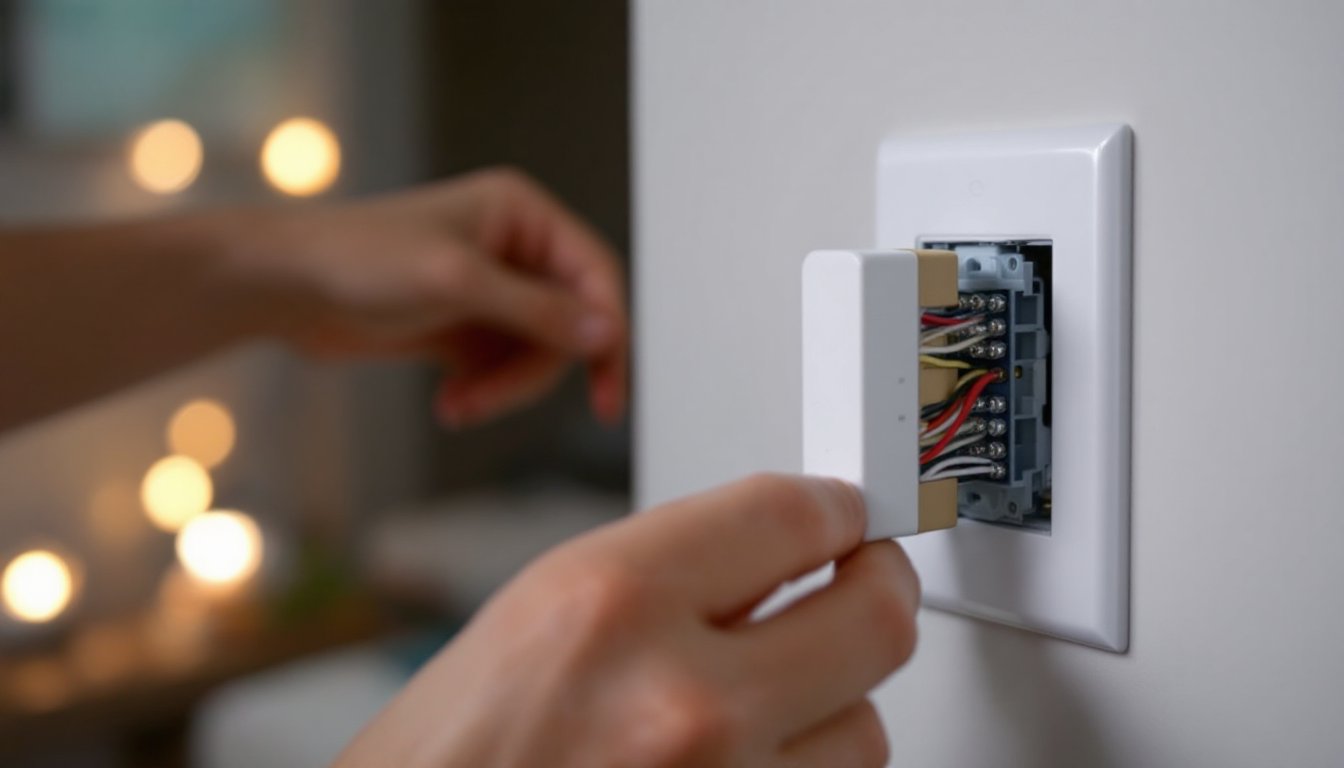
The core appeal is simplicity: you remove the old switch, snap the Deako module into the existing switch box, connect the wires to the terminal screws just as you would with a conventional switch, and you’re done. Unlike many competitors, Deako doesn’t force you into a proprietary ecosystem of expensive smart bulbs or hubs. A Deako smart switch module works with incandescent, LED, CFL, and halogen bulbs, giving you flexibility without vendor lock-in.
Deako modules come in single-pole and three-way variants, matching standard switch configurations. The devices communicate via WiFi, meaning you need a reliable home network but no separate hub to purchase. That said, network stability matters, a spotty connection defeats the purpose of remote control.
Key Features and Smart Capabilities
App Control and Automation
The Deako mobile app lets you control lights from anywhere on your home network. Brightness adjustment is incremental, not just on/off, so you can set mood lighting or task lighting without reaching the wall. You can create custom scenes, say, “Movie Time” dims all living room lights to 20%, or “Good Morning” brings bedroom lights to 80% over five minutes.
Automation rules let you set lights to turn on at sunset, off at a specific time, or respond to sunrise. If you’re away, you can trigger lights to simulate occupancy, a practical security measure. The app also logs usage, helping you spot patterns and identify which fixtures consume the most energy.
Voice Integration and Scheduling
Deako integrates with Amazon Alexa and Google Assistant, so hands-free commands work: “Alexa, dim the living room to 40%.” Setup requires linking your Deako account to the assistant’s ecosystem, straightforward but requires a few minutes of authentication. Voice control is genuinely useful for routine tasks like turning off lights when your hands are full.
Scheduling goes beyond simple timers. You can set different routines for weekdays and weekends, or create conditional rules, like lights turning on only if motion is detected after 10 p.m. Scheduling data syncs across devices, so changes made in the app appear everywhere.
Installation and Compatibility
Installation requires basic electrical comfort and adherence to safety practices. Always kill power to the circuit at the breaker before touching wires. Use a non-contact voltage tester to confirm power is off, don’t skip this step.
You’ll need a screwdriver (Phillips and flat-head), a voltage tester, and wire strippers if you’re preparing new connections. The Deako module fits in a standard single-gang or multi-gang switch box: if your box is overstuffed with other devices, you may need to relocate components or upgrade the box size, a job for a licensed electrician if you’re unsure.
Compatibility notes: Deako works with most standard switch setups but has limits. It doesn’t support low-voltage circuits (like many landscape or display lighting systems), and it’s not designed for 240-volt loads such as dryers or large HVAC systems. Dimmers can be dicey with certain LED bulbs: test compatibility before assuming flicker-free operation. If you’re replacing a three-way switch (controlling one light from two locations), you’ll need a Deako three-way module, not two single-pole units.
The wiring process mirrors a traditional switch: line (hot) connects to one terminal, load (to the fixture) to another, and neutral to a terminal or wire nut depending on the module design. Most installations take 15–30 minutes per switch. If you’ve never worked with household electrical, hiring an electrician for the first switch removes risk and gives you confidence for future work.
Benefits of Making the Switch to Smart Lighting
Energy efficiency is concrete. Automated scheduling ensures lights don’t stay on in unoccupied rooms, and dimming capabilities reduce power draw, a 50% dim setting uses roughly half the watts of full brightness. Over months, this adds up, especially in homes with many fixtures.
Convenience addresses real friction points. No more walking to a far corner of the house to flip a switch, or fumbling for light switches in unfamiliar guest rooms. Guests appreciate intuitive app access instead of hunting for hidden three-way switches.
Home security improves through occupancy simulation. Automated schedules create the appearance someone’s home even during extended trips. Geofencing (if supported via app) can trigger lights when you arrive, a small comfort that also improves safety in dark entryways.
The retrofit approach is cost-effective compared to whole-system overhauls. You upgrade at your pace, prioritizing high-use spaces first. A single Deako module costs less than a complete smart bulb kit, and you aren’t locked into replacing bulbs every few years as technology shifts.
Accessibility matters. Voice control and app-based dimming help people with mobility challenges or arthritis. Hands-free lighting is a practical quality-of-life improvement, not just a luxury.
Conclusion
Deako smart lighting delivers practical home automation without the complexity of rewiring or fixture replacement. It’s a sensible entry point if you’re new to smart home upgrades or adding to an existing system. The installation is DIY-friendly, the app is intuitive, and the integration with Alexa and Google Assistant fits seamlessly into most modern homes. If you’re considering the jump to smart lighting, Deako removes the major barriers, cost, compatibility, and ease of installation, making it a solid choice for practical homeowners.