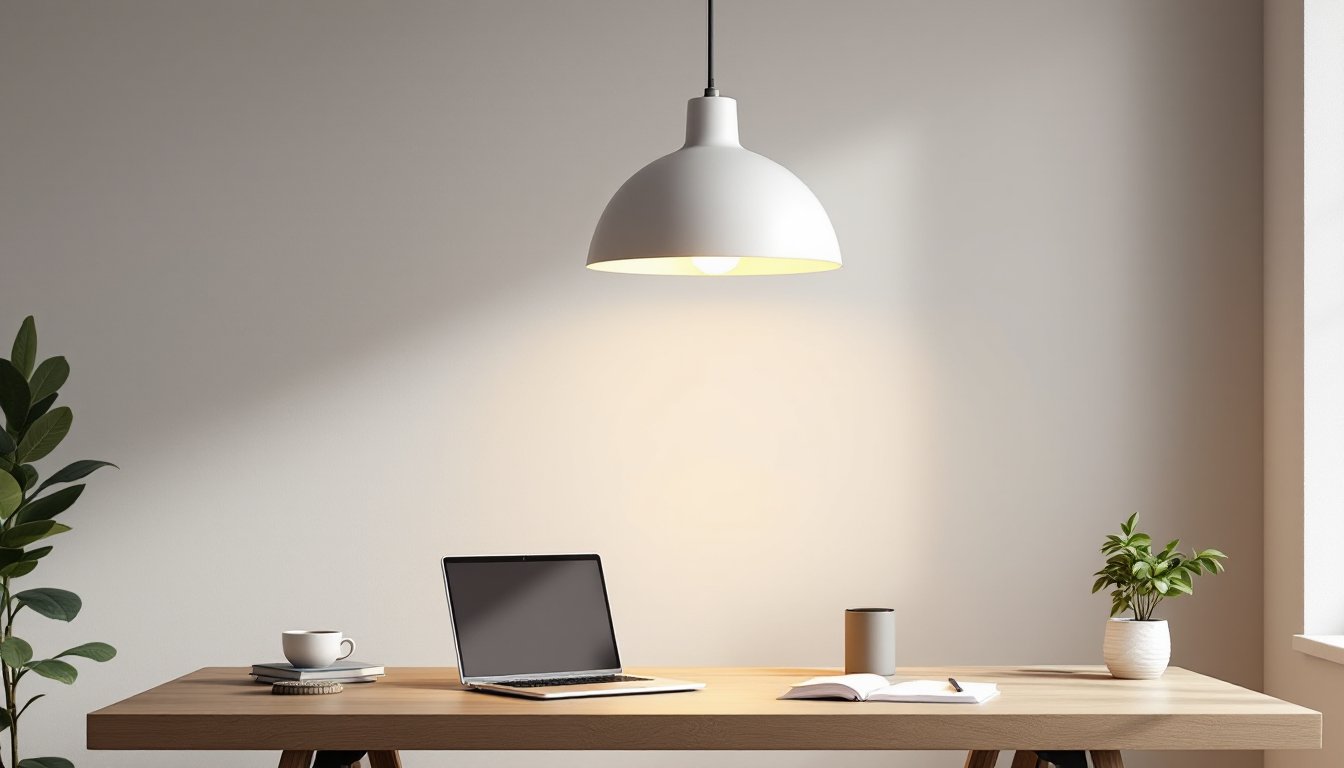
Pendant lighting has become essential for anyone serious about workspace design. Unlike overhead fluorescents that flatten the room with harsh light, office pendant lights deliver focused illumination while adding visual interest and definition to a workspace. Whether someone’s working from a home office, renovating a commercial space, or simply upgrading existing fixtures, pendant lighting offers practical brightness and aesthetic flexibility. The right pendant light doesn’t just illuminate a desk, it sets the tone for productivity, reduces eye strain, and ties together the room’s overall design. In 2026, pendant options range from sleek minimalist designs to industrial statements, and understanding the fundamentals helps anyone make the right choice for their specific work environment.
Table of Contents
ToggleKey Takeaways
- Office pendant lighting delivers focused task illumination while eliminating harsh glare from overhead fluorescents, improving focus and reducing eye strain in any workspace.
- Hang pendants 24–30 inches above work surfaces to optimize brightness and avoid shadows, with spacing of 48–60 inches between multiple fixtures in larger offices.
- Choose between minimalist designs for clean, budget-friendly aesthetics or industrial-style pendants for bold visual statements—both styles function well in modern offices.
- Verify brightness (450–900 lumens for task work), color temperature (4000K–5000K for focus, 2700K–3000K for relaxation), and LED compatibility with CRI 90+ to ensure optimal performance.
- Confirm electrical safety by turning off power and using a voltage tester, inspecting the ceiling box for weight capacity, and properly connecting wires before installation.
Why Pendant Lighting Transforms Office Environments
Pendant lights hang from the ceiling on a cord, chain, or stem, positioning light exactly where it’s needed without consuming valuable desk or floor space. For office work, this directional control matters. A pendant suspended 24–30 inches above a work surface delivers task lighting without the glare and shadow problems that come with recessed or ambient-only fixtures.
The psychological impact is real too. Pendant lighting breaks up visual monotony and makes a workspace feel intentional rather than institutional. Workers in spaces with mixed lighting, pendants plus ambient light, report better focus and less fatigue than those under uniform overhead lighting. Pendant fixtures also offer flexibility: a single pendant over a desk creates a dedicated work zone, while multiple pendants spaced across a larger office define activity areas and improve visibility in areas that might otherwise feel dim.
From a practical standpoint, pendant lights are easier to install than many built-in alternatives and work in both residential and commercial settings. They retrofit into existing ceiling boxes, require no special framing, and swap out quickly if tastes change or performance needs shift.
Selecting the Right Pendant Light Style for Your Office
Style isn’t just about aesthetics, it influences how light disperses, how much heat the fixture produces, and how easily it cleans. Office pendants fall broadly into two categories that balance form and function.
Modern and Minimalist Designs
Minimalist pendants favor clean lines, simple geometric shapes, and neutral finishes like matte white, black, or brushed metal. These fixtures work especially well in compact or open-office layouts because they don’t demand visual attention: the light does the work. Popular shapes include dome, globe, or cone designs, often in aluminum or frosted glass shades that diffuse light evenly and hide the bulb glare that can cause eye discomfort during extended work.
Why choose minimalist? They’re budget-friendly, easy to mount, and pair seamlessly with modern furniture and décor. A simple dome pendant in matte white above a desk in a contemporary home office reads clean and professional without distraction. These fixtures also tend to be lighter, which simplifies installation in drywall or plaster ceilings and reduces strain on ceiling boxes over time.
Industrial and Contemporary Options
Industrial-style pendants feature exposed bulbs, metal cages, Edison-style filaments, or raw materials like bare metal and reclaimed wood. They make a bolder visual statement and work well in spaces with exposed brick, concrete, or modern industrial aesthetics. Cage pendants with open sides improve air circulation (important in warm climates) and create dramatic shadow patterns that add character to a room.
Industrial fixtures excel in converted lofts, modern offices with high ceilings, or spaces that lean into contemporary design. They’re also durable, bare metal and glass hold up to warehouse-style environments and high-traffic areas. The trade-off: exposed bulbs may cause glare if brightness is high, so pairing them with a warm-toned or dimmable LED bulb is essential. Reclaimed wood elements look striking but require occasional cleaning to prevent dust buildup.
Key Features to Consider Before Purchasing
Before clicking buy, confirm these specifications. A poorly chosen pendant creates shadows, wastes energy, or fails to mount safely.
Brightness, Color Temperature, and Energy Efficiency
Brightness is measured in lumens, not watts. A typical office task light should deliver 450–900 lumens depending on desk size and ambient light. Underestimate brightness and eyestrain sets in fast: overestimate and the bulb glares. Check the product spec sheet, reputable manufacturers list lumen output clearly.
Color temperature is measured in Kelvin (K). Warmer light (2700K–3000K) suits residential offices and creative spaces, promoting relaxation. Cooler light (4000K–5000K) simulates daylight and sharpens focus for detailed tasks, spreadsheets, drafting, coding. Many DIYers overlook this: the wrong temperature makes a well-designed fixture feel off even though perfect brightness.
LED bulbs are standard now and save 75–80% energy versus incandescent. When shopping, confirm the fixture accepts standard E26 or E27 socket bulbs (most common) rather than proprietary cartridges. Also verify CRI (Color Rendering Index), a CRI of 90+ is ideal for office work because it renders colors accurately and reduces visual fatigue.
Check the fixture’s wattage rating. If it’s rated for 60W max and someone installs a 100W equivalent LED, heat builds up and shortens the bulb’s life. Dimmers add another layer: confirm the fixture and bulb are dimmable-compatible if dimming is desired. Not all LEDs dim smoothly, so read reviews before pairing them.
Placement and Installation Best Practices
Installation requires basic electrical knowledge. If there’s no existing fixture box or if the electrical work involves running new wire, hiring a licensed electrician is the right call, especially in commercial spaces where permits apply.
Placement principles: Hang pendants 24–30 inches above the work surface for comfortable overhead light without obstruction of sightline. Over a dining table that doubles as a desk, this means measuring from table height, not from the floor. Multiple pendants in a larger office should be spaced 48–60 inches apart to avoid dark zones. Above a workbench, consider a pendant slightly higher (32–36 inches) to minimize shadow on the work itself.
Pre-installation steps: Turn off power at the breaker and use a voltage tester to confirm the circuit is dead, never skip this. Remove the old fixture if replacing one. Inspect the ceiling box: it must be rated for the fixture’s weight. Most pendants weigh 3–8 pounds: standard ½-inch drywall boxes hold 35 pounds, so weight isn’t usually the issue, but a damaged box fails. Use a adjustable ceiling bracket that fits the box type (old-work vs. new-work boxes have different mounting mechanisms).
Wiring: Connect black wire to black (hot), white to white (neutral), and ground wire (bare copper or green) to ground. Use wire nuts rated for the wire gauge, typically 18/2 or 14/2 for pendant circuits. Wrap connections with electrical tape for extra security. The shade, canopy, and base cover all connections, so neat work prevents future headaches.
Final checks: Confirm the pendant hangs plumb (use a level on the canopy). Tighten all fasteners: a loose connection hums or flickers. Install the bulb, flip the breaker back on, and test. If the light flickers or dims unexpectedly, check the dimmer compatibility or suspect a loose neutral connection.