A kitchen island is more than just counter space, it’s the visual anchor of a modern kitchen, and the right pendant lighting makes all the difference. Pendant lights hung above a kitchen island serve dual purposes: they illuminate the work surface and establish the room’s design tone. Whether a homeowner is renovating an existing kitchen or designing from scratch, selecting the right modern kitchen island pendant lighting requires thoughtful decisions about style, scale, and function. This guide walks through current trends, practical sizing rules, and installation considerations to help make confident choices.
Table of Contents
ToggleKey Takeaways
- Modern kitchen island pendant lighting serves both functional task illumination and visual design purposes, making it essential to contemporary kitchen aesthetics.
- Pendant size should be proportionate to island width—aim for 12–15 inch shades for 36-inch islands and three fixtures for islands wider than 48 inches.
- Hang pendants 30–36 inches above the countertop with 24–30 inch center-to-center spacing to balance visibility, safety, and design impact.
- Select LED fixtures rated for 300–400 lumens with dimmable capabilities and flexible bulb compatibility (standard A19 or PAR20) for optimal functionality and future-proofing.
- Choose between minimalist metal, industrial, or organic materials (rattan, wood, ceramic) based on your kitchen’s design direction and acoustic needs.
- Always hardwire kitchen island pendant lighting through a proper circuit with local electrical code compliance and permits—avoid plug-in solutions for clean aesthetics and lasting durability.
Why Pendant Lighting Matters for Kitchen Islands
Pendant lights create focused illumination directly over the island workspace, reducing shadows where food prep and cooking happen. Task lighting is non-negotiable in kitchens, general overhead fixtures alone leave dark zones that make working uncomfortable and unsafe. Beyond function, pendant lights anchor the island visually and communicate design intent. A homeowner’s choice of glass, metal, or mixed materials signals whether the kitchen leans modern, industrial, transitional, or eclectic. Pendants also hang at eye level when someone approaches the island, making them a prominent design statement that influences how the entire room reads. Skipping proper pendant lighting or settling for cheap fixtures undercuts an otherwise well-designed kitchen.
Popular Modern Pendant Styles and Materials
Minimalist and Industrial Designs
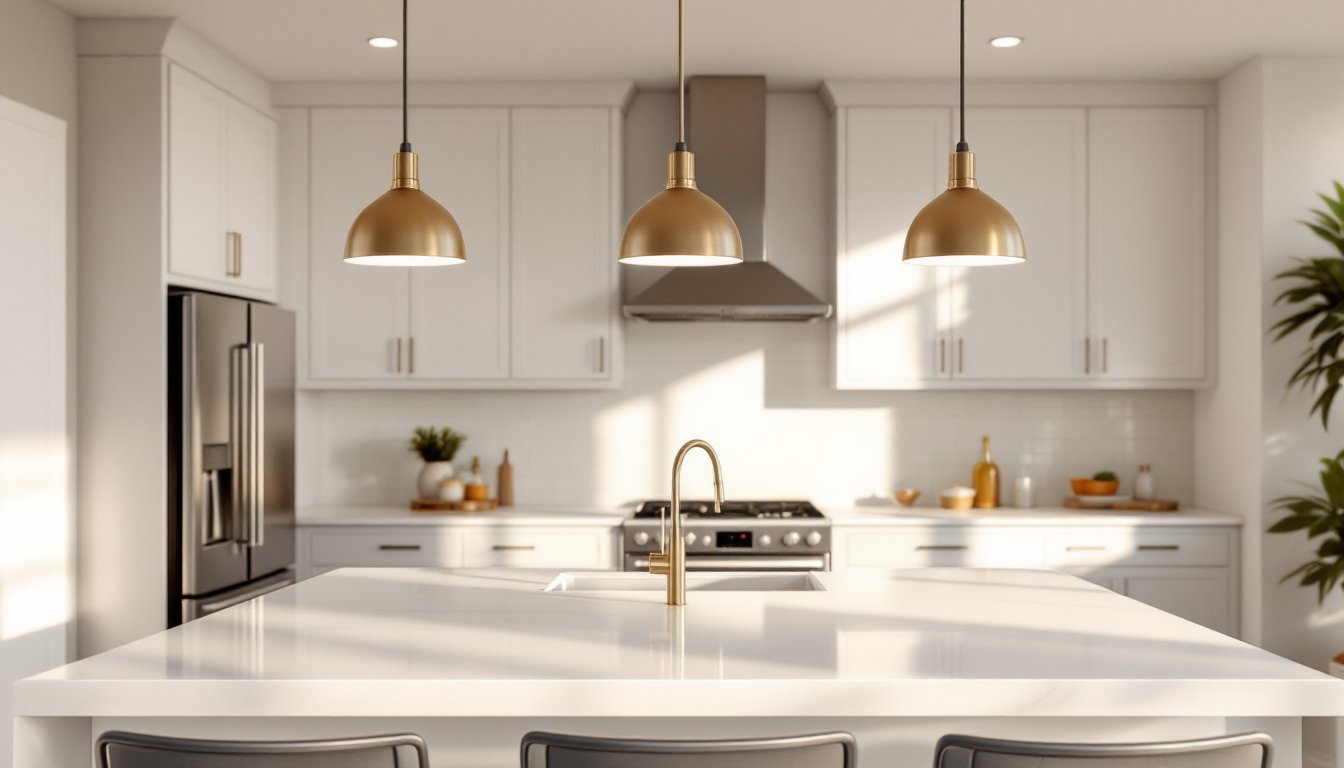
Minimalist pendants feature clean lines, limited ornamentation, and often a single geometric shape, think a dome, cylinder, or cone. Materials are typically brushed metal (nickel, brass, or matte black), frosted glass, or concrete. Industrial-style pendants showcase exposed Edison-type bulbs, metal cages, or visible hardware: they often pair steel or iron frames with tinted glass. Both styles work well in contemporary kitchens and complement open-concept layouts. A common approach is to hang three identical pendants in a row above the island, spacing them 24–30 inches apart (measured center-to-center) for visual rhythm without cluttering the space.
Natural and Organic Materials
Rattan, wood, and ceramic are increasingly popular in modern kitchen design, softening the hard edges of stainless steel and stone. Pendants made from woven rattan or seagrass add warmth and texture: they pair well with warm metal finishes like brushed gold or natural brass. Wooden frames, often from walnut, oak, or teak, work in Scandinavian-influenced and transitional kitchens. Ceramic or blown glass in natural colors (ivory, soft gray, warm amber) brings organic appeal without feeling rustic. These materials are functional and aesthetic: they absorb some sound in an open-plan kitchen, which reduces echo from hard surfaces. When selecting organic-material pendants, verify they’re rated for damp/kitchen environments and check manufacturer guidance on moisture resistance.
Sizing, Spacing, and Installation Tips
Pendant size should proportion to the island. A rough rule: if the island is 36 inches wide, each pendant shade should be 12–15 inches in diameter. For islands wider than 48 inches, use three pendants instead of two: for smaller islands under 36 inches, one larger pendant or two smaller ones work. Pendant height matters equally, hang them 30–36 inches above the countertop, which positions the bottom of the shade around eye level and avoids blocking sightlines. If there are bar stools under the island, aim for 36 inches to provide adequate leg clearance.
Spacing between pendants should feel balanced. For three lights, center the middle one on the island’s centerline and position the outer two symmetrically (typically 24–30 inches apart center-to-center). Electrically, most kitchen islands require a hardwired circuit, not a plug-in pendant. Older homes may need an electrician to run new wiring from the panel or an existing junction box above or beside the island. Check local electrical codes (typically governed by the National Electrical Code, NEC) for rough-in height and junction box placement. Some jurisdictions require permits for new circuits: don’t skip this step. If the home doesn’t have existing ceiling structure suitable for mounting (for example, a vaulted or cathedral ceiling), a qualified electrician can install a recessed canopy or dropped soffit to hide wiring and anchors. Pre-fab pendant kits with plug-in cords exist but provide less clean aesthetics and flexibility, only use them if hardwiring isn’t an option.
Lighting Functionality and Brightness Considerations
Pendants for kitchen islands should deliver task lighting: typically 300–400 lumens per fixture for a standard-size island. This assumes LED bulbs, which are now the standard. Older incandescent or halogen pendants often required higher wattage: LEDs are more efficient and run cooler. Check the product’s lumen rating (not wattage) to confirm adequate brightness. If the kitchen has dark countertops or cabinetry, additional lumens help prevent shadows. Many modern pendant fixtures accommodate dimmable LED bulbs, which allow homeowners to adjust brightness for cooking versus ambient evening lighting, a smart investment if the budget allows.
Color temperature (measured in Kelvin, or K) shapes how the kitchen feels. Warm white light (2700K) feels inviting and suits transitional or organic-material pendants. Cool white or daylight (4000K–5000K) is clinical and ideal for focused task work, though some find it harsh in a living space. A compromise: 3000K pendant light paired with ambient overhead lighting at 2700K creates layers and flexibility. Verify the pendant fixture accepts the desired bulb type and wattage equivalent: some designer fixtures limit options, which can make future replacement costly. A pendant that accepts standard A19 or PAR20 bulbs offers more flexibility than a proprietary design.
Conclusion
Choosing modern kitchen island pendant lighting is a balance of style, scale, and function. Start with the island’s dimensions, select pendants proportionate to the space, and ensure they deliver adequate task lighting. Whether leaning toward minimalist metal, industrial glass, or warm organic materials, the right pendants illuminate the workspace while reinforcing the kitchen’s design narrative. Plan the electrical infrastructure early and don’t skip permits or professional installation if hardwiring is required. With these fundamentals in place, homeowners confidently invest in lighting that looks as good as it works.