Outdoor garden lighting does more than extend daylight hours, it redefines how a property looks, feels, and functions after sunset. Whether a homeowner is creating an inviting patio retreat, lighting a pathway for safety, or highlighting landscape features, the right lighting transforms a garden from invisible to unforgettable. The difference between haphazard string lights and a well-planned system comes down to understanding fixture types, placement strategy, and energy efficiency. This guide walks through the essentials of garden lighting, from fixture selection to design principles that deliver professional results without requiring a degree in landscape architecture.
Table of Contents
ToggleKey Takeaways
- Garden lighting outdoor systems improve safety, extend usable living space into evening, and enhance security while transforming the aesthetic value of a property.
- LED fixtures consume 75–85% less energy than incandescent bulbs and pay for themselves within 2–3 seasons, making them the most economical choice for regular outdoor use.
- Effective garden lighting outdoor design uses layered lighting—combining ambient, task, and accent fixtures—to create visual depth and a polished, intentional appearance.
- Low-voltage systems (12V) are safer for DIY installation and ideal for path and accent lighting, while line-voltage fixtures (120V) suit larger areas but require permits and professional installation.
- Warm color temperatures (2700K–3000K) create intimate, relaxing atmospheres, while cooler tones (4000K–5000K) work better for security and task areas.
- Concealing fixtures and testing placements before permanent installation prevents an amateur appearance and ensures lighting performs effectively from dusk through full darkness.
Why Outdoor Garden Lighting Matters
Outdoor garden lighting serves multiple purposes beyond aesthetics. It improves safety by illuminating steps, uneven terrain, and entryways where trips and falls commonly occur. A well-lit garden also extends the usable hours of outdoor space, patios, seating areas, and dining zones become functional well into evening. Security lighting deters trespassers and makes entries clearly visible, while accent lighting draws the eye to prized plants, water features, or architectural details.
Beyond practicality, lighting sets mood. Warm white tones (2700K–3000K color temperature) feel intimate and relaxing, while cooler tones (4000K–5000K) read more clinical and work better for task lighting around entryways or work areas. Strategic layering of light, combining ambient, task, and accent fixtures, creates depth and visual interest that daylight alone cannot achieve. A garden lit thoughtfully looks larger, more intentional, and significantly more valuable.
Essential Types of Garden Lighting
Path and Accent Lighting
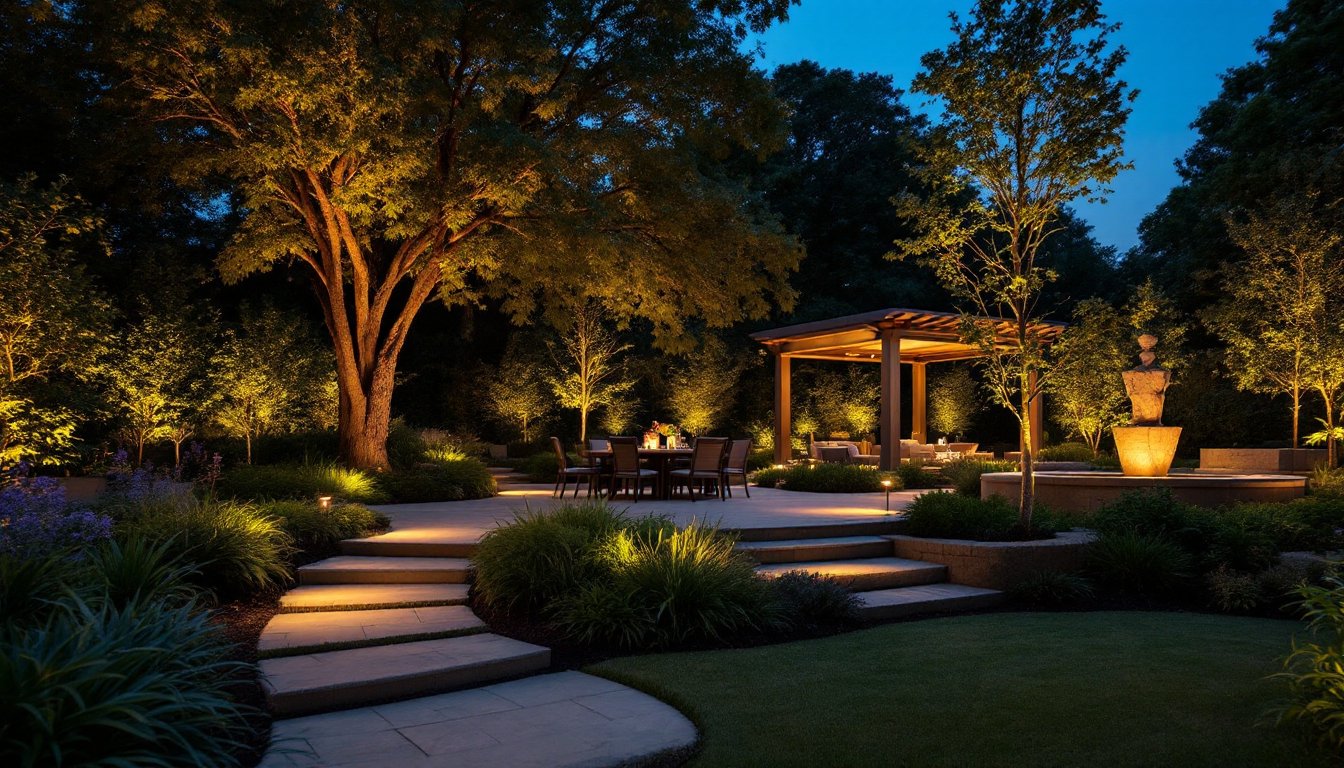
Path lighting marks walkways, steps, and transitions, serving both safety and wayfinding. Low-voltage LED path lights (typically 1–3 watts) are spaced 4–6 feet apart along edges and are energy-efficient enough to run nightly without significant utility impact. Uplighting and spotlighting are accent techniques that illuminate specific plants, sculptures, or architectural features from below or to the side, creating dramatic shadow and depth. A moonlight effect, directing light downward through tree canopies to mimic natural moonlight, is a subtle, sophisticated accent strategy that doesn’t require focal-point fixtures.
Accent fixtures come in various styles: adjustable spotlights, well lights (recessed into ground), and stake lights. Stake lights work well for perimeter definition, while uplights hidden at the base of shrubs or trees create drama without visible hardware. Path lights should be spaced consistently and, where possible, set back slightly from walking surfaces so they don’t interfere with traffic or become trip hazards themselves.
Ambient and Task Lighting
Ambient lighting provides overall illumination for outdoor rooms, think patio overheads, pergola-mounted fixtures, or hanging pendants above dining areas. This is the foundational layer that lets people see and move safely. Task lighting focuses on specific activities: grilling, food prep, reading, or detail work. A grill area might need 50–100 foot-candles of direct light, while a lounge seating area functions well at 10–20 foot-candles.
Fixture choice depends on the setting. Patio canopies and pergolas suit recessed downlights, adjustable spotlights, or linear track systems. Dining areas benefit from pendant lights hung 60–72 inches above table height, creating pools of light without blinding diners. Motion-sensor fixtures work well for ambient backup lighting around utility areas or garage entries, turning on only when needed and conserving energy.
Choosing the Right Fixtures for Your Garden
Fixture selection hinges on voltage, material durability, and aesthetic fit. Low-voltage systems (12V) are safer for DIY installation, require no special permitting in most jurisdictions, and are ideal for path, accent, and landscape lighting. Line-voltage fixtures (120V) deliver more power and suit larger ambient or task areas but require proper wiring, GFCI protection, weatherproof junction boxes, and often a permit. When in doubt, consult local building codes or hire a licensed electrician to avoid costly mistakes.
Material matters in harsh climates. Stainless steel and powder-coated aluminum resist rust and corrosion far better than bare metal. Polycarbonate or tempered glass lenses tolerate temperature swings better than cheaper plastics that become brittle or fog over time. Sealed gaskets prevent water ingress, extending fixture life in wet conditions.
Budget also influences decisions. LED fixtures now cost less upfront than they did five years ago and pay for themselves within 2–3 seasons through energy savings. Halogen and incandescent options remain cheaper initially but consume 5–10 times more power and require frequent bulb replacement. For a garden that will be lit regularly, say, 5+ nights weekly, LEDs are the only economical choice. A homeowner lighting a small accent area twice monthly might justify cheaper halogen fixtures: someone lighting a large patio nightly should prioritize LEDs without hesitation.
Energy-Efficient Lighting Solutions
LED technology has transformed outdoor lighting economics. LEDs consume 75–85% less energy than incandescent bulbs, last 25,000–50,000 hours (compared to 1,000 hours for incandescent), and produce minimal heat, reducing cooling loads on enclosed patios. Color temperature options range from warm 2200K (amber, relaxing) through neutral 4000K (balanced) to cool 5000K (alerting).
Low-voltage LED systems paired with timers or smart controls multiply savings. A 12V LED path light running 8 hours nightly costs roughly $2–5 per season in electricity, while a comparable incandescent fixture costs $15–25 annually. Over a decade, LED savings easily exceed $500 per fixture. Solar path lights and spotlights eliminate electricity costs entirely and require zero wiring, though they perform best in consistently sunny climates and may underperform in cloudy regions or northern latitudes.
Timers (mechanical or smart) prevent fixtures from running during daylight and allow scheduling for security or ambiance. Motion sensors reduce ambient runtime while maintaining safety. Dimmers let homeowners adjust brightness for different moods without wasting energy on full-output unnecessary brightness. Modern smart systems integrate with home automation platforms, letting users control outdoor lighting from phones or voice commands, a convenience that often prompts people to optimize schedules and save further.
Design Tips for Maximum Impact
Layering is the cornerstone of professional-looking garden lighting. Combine ambient (overall), task (functional work areas), and accent (feature highlights) tiers. A patio at night might include recessed overheads for ambient, a spotlight on a water feature for accent, and a floor-level sconce near the entry for task safety. Each layer serves a purpose: together, they create visual complexity that reads as intentional and upscale.
Color temperature consistency prevents the space from feeling chaotic. Mixing warm-toned (2700K) accent lights with cool-toned (5000K) task fixtures fragments the composition. Stick to one dominant temperature (usually warm for residential gardens) and use cooler tones sparingly for security or utilitarian areas.
Brightness placement follows a hierarchy: don’t illuminate the entire garden uniformly. Bright task zones contrast with softer ambient areas and moody accents. A lit dining area might be 30–50 foot-candles while a lounge reads at 5–15 foot-candles, and accent spotlights peak at 20–40 foot-candles on their target. This variation guides the eye and makes spaces feel intentional.
Conceal fixtures whenever possible. Visible bulbs, cords, and transformer boxes read as amateur. Tuck path lights into plantings, hide uplights at the base of trees, bury wire runs in shallow conduit or alongside mulch lines, and mount transformers in inconspicuous corners or indoor-mounted boxes. Backlighting plants and structures instead of frontlighting them creates silhouettes and depth while hiding the source.
Test placements before committing to permanent installation. Stake temporary uplights, hang provisional pendants, and observe how light falls at dusk and full night. A feature that glows beautifully at twilight may become jarring in total darkness: a light that seems subtle initially might prove insufficient after sunset. Spend an evening assessing before installing low-voltage wiring or, especially, before running line-voltage circuits.
Balance hardscape and softscape lighting. Pathways and step edges prevent accidents, but over-lighting driveways and entryways reads as institutional. Prioritize human-scale lighting around stairs and seating, and let some edges fade into shadow for mystery and visual rest.