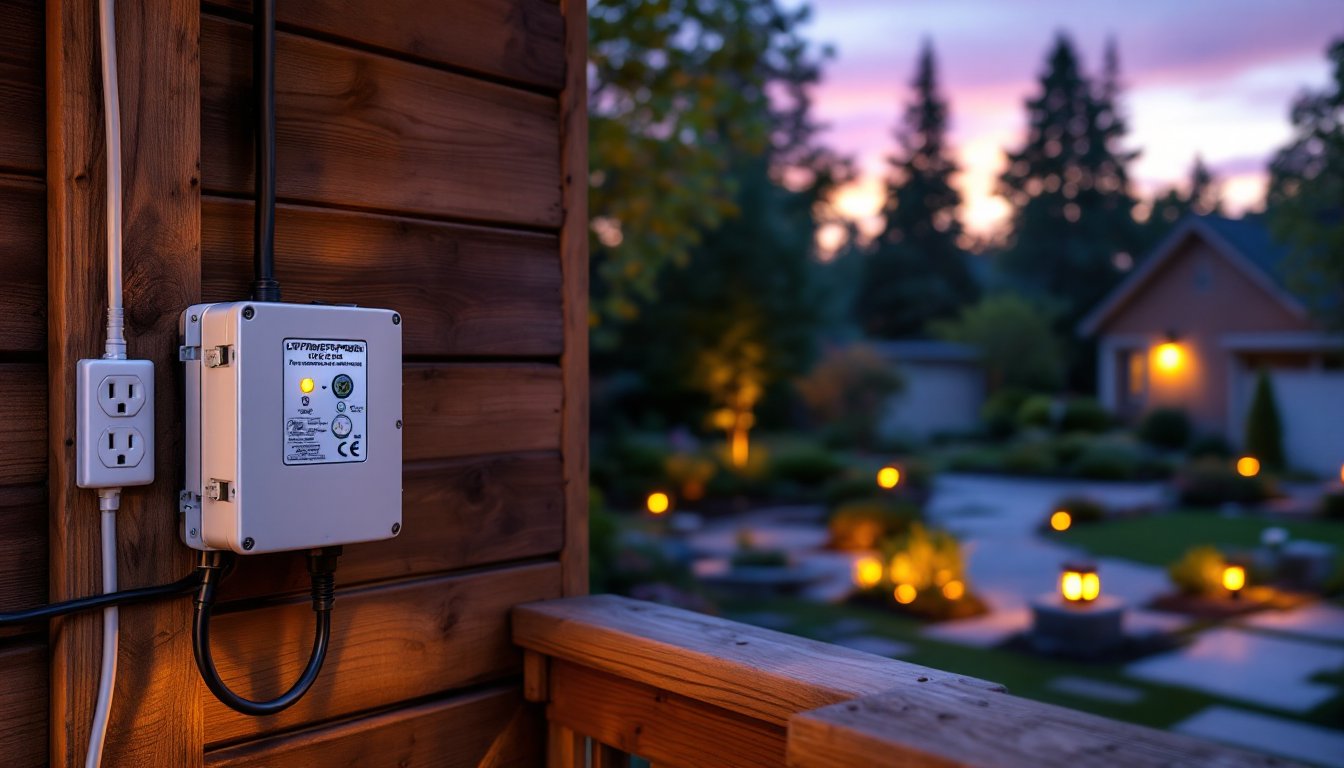
Adding accent lighting to a deck, pathway, or landscape doesn’t require burying conduit or hiring an electrician. A 12V outdoor lighting transformer is the workhorse behind most low-voltage landscape lighting systems, stepping down standard 120V household current to a safe, manageable 12 volts. The right transformer ensures reliable operation, protects fixtures from voltage fluctuations, and handles expansion as a homeowner adds more lights over time. This guide covers what to look for, how to size one properly, and how to install it safely, so you can add professional-looking outdoor lighting without the professional-level complexity.
Table of Contents
ToggleKey Takeaways
- A 12V outdoor lighting transformer safely converts standard 120V household current to 12 volts, eliminating shock hazards and the need for a licensed electrician in most DIY landscape projects.
- Properly size your outdoor lighting transformer by calculating total fixture wattage and adding a 20–30% safety margin to accommodate future expansion without stressing the unit.
- Look for transformers with IP65 or better weather protection, NEMA 3R/4X rated enclosures, and thermal overload protection to ensure durability against rain, temperature swings, and UV exposure.
- Choose between plug-in transformers ($60–$250, easier DIY installation) and hardwired transformers ($150–$400, cleaner appearance but requiring professional electrical work).
- LED fixtures draw significantly less power than halogen, allowing roughly four times more LED lights on the same 12V transformer capacity, making LED upgrades a smart energy and cost-effective choice.
What Are 12V Outdoor Lighting Transformers?
A 12V outdoor lighting transformer is a step-down electrical device that converts standard household current (120V in the US) to 12 volts direct current (DC) or alternating current (AC), depending on the transformer type. It acts as the control center and power distributor for low-voltage landscape and accent lighting systems.
Think of it this way: a 12V transformer makes the job safer for a homeowner and simpler for installation. There’s no shock hazard on the output side, no need for deep burial of wiring, and no requirement for a licensed electrician in most jurisdictions (though always check local codes). The transformer sits between a standard outdoor outlet or hardwired connection and the landscape lighting fixtures, supplying only the modest power those lights need.
The difference between AC and DC transformers matters. Most halogen and LED landscape lights run on AC 12V, which is delivered through standard low-voltage cable. DC transformers are less common in landscape applications but appear in some smart or Wi-Fi-controlled systems. For nearly all DIY outdoor lighting projects, an AC transformer is the standard choice.
Key Features to Look for in a Quality Transformer
Power Output and Load Capacity
The transformer’s wattage rating determines how many lights it can run simultaneously. A 300W transformer will power roughly 20 to 25 standard halogen landscape lights (12W each) or 40 to 60 LED fixtures (5W each), though those numbers assume typical layouts and no other devices on the circuit.
Calculate total load by adding the wattage of every fixture the transformer will supply. If planning expansion, buy a transformer rated 20 to 30 percent above the calculated load. A homeowner running 200W of lights on a 300W transformer leaves comfortable headroom for future additions without stressing the unit.
Common wattage ratings are 150W, 300W, 600W, and 1200W. Smaller yards rarely need more than 300W: large landscapes with multiple zones or heavy fixture counts may demand 600W or higher.
Weather Resistance and Durability
Outdoor transformers face rain, temperature swings, UV exposure, and sometimes accidental water submersion. Look for NEMA 3R or NEMA 4X rated enclosures, which offer rust resistance and protection from wet conditions. Plastic or powder-coated metal housings both work well: plastic won’t rust, while quality metal with proper coating resists impact better.
The transformer should carry an IP (Ingress Protection) rating of at least IP65, meaning protection against low-pressure water jets and dust. This matters especially in humid climates or where the transformer sits near irrigation lines.
Thermal management also counts. A quality transformer includes internal fuses or thermal overload protection, features that prevent meltdown if the circuit runs continuously in high heat or if wiring gets pinched. Check the manufacturer’s specifications for operating temperature range: most should handle 40°F to 120°F comfortably, with some rated to broader extremes.
Installation and Safety Considerations
Where and how a transformer is mounted directly affects performance and safety. Mount it on or near an exterior wall close to the power source to minimize voltage drop on supply lines. Many DIYers place the transformer in a weatherproof cabinet attached to a garage wall, deck post, or garden shed.
The transformer outlet should connect to a Ground Fault Circuit Interrupter (GFCI) protected receptacle, a requirement in most jurisdictions for outdoor circuits. If hardwiring instead of using a plug-in transformer, the circuit should include GFCI protection via a GFCI breaker in the panel. Check local electrical code: some areas demand a licensed electrician for permanent installations.
When running low-voltage cable from the transformer to fixtures, bury it at least 6 inches deep in a landscape, or run it along the surface if it won’t become a tripping hazard (mark it with small flags during installation). Avoid placing cable under heavy foot traffic or vehicle paths. Low-voltage cable isn’t as dangerous as mains power if nicked, but a severed wire means dark lights and troubleshooting headaches.
Wear safety glasses when working with outdoor outlets or hardwired connections. If cutting or stripping wire, use insulated tools and ensure the circuit is off. The 12V output side is inherently low-risk, but respect the mains input side just as you would any household circuit. Don’t assume an outdoor outlet is GFCI protected without checking, test it with a GFCI tester (under $15) or press the test/reset buttons on the outlet itself if it has them.
Comparing Transformer Types and Wattage Options
Transformers come in two broad categories: plug-in (portable) and hardwired (permanent).
Plug-in transformers are the DIY favorite. They plug into any outdoor GFCI outlet, require no wiring modifications, and cost $60 to $250 depending on wattage and features. The downside: an outlet must be nearby, and the cord is visible (though it can run behind planters or along the house). Plug-in units work great for renters or anyone hesitant about permanent installation.
Hardwired transformers mount directly to an outdoor panel or junction box and require running conduit and wire to the location, a task best left to a licensed electrician unless the homeowner has significant electrical experience. They cost $150 to $400 but look cleaner and free up an outlet. They’re permanent installations, so suitable for long-term landscapes.
Wattage selection depends on system scope. A small deck with 8 to 12 lights fits comfortably on a 150W transformer. Medium yards with pathways, uplighting, and accent zones need 300W to 600W. Large estates or commercial properties use 1200W and above, sometimes with multiple transformers feeding different zones.
LED versus halogen also shifts the math. LEDs draw far less power, a 5W LED replaces a 20W halogen, so an older landscape designed for halogen can add roughly four times as many LED fixtures on the same transformer. If considering an upgrade, LEDs are the sensible choice for cost and lifespan, though they’re slightly more expensive upfront.
Conclusion
Choosing the right 12V outdoor lighting transformer boils down to three decisions: size (wattage), protection rating, and installation method. Start by calculating total fixture wattage, add a 20 to 30 percent safety margin, and pick a wattage class slightly above that figure. Ensure the transformer carries IP65 or better weather protection, includes thermal overload safeguards, and connects to a GFCI circuit. A plug-in transformer takes one afternoon to install: hardwiring demands professional help but offers a permanent, cleaner result. With the right transformer in place, a homeowner can expand outdoor lighting gradually and confidently without rewiring, or calling an electrician.