An oven rarely fails without warning. Food taking twice as long to bake, a cake staying raw inside, or an unpredictable control panel can indicate a faulty component. Heating problems deserve attention because elements, igniters, thermostats, sensors, wiring and controls must work together. For Denver homeowners, recognizing these signs early can prevent a minor issue from becoming a larger failure. Professional oven repair Denver services focus on finding the underlying cause. FixMaster works with gas and electric ovens, provides on-site diagnostics and repairs, and serves Denver and surrounding areas with a local, same-day approach.
Table of Contents
ToggleOven Is Not Heating
An oven that stays cold is an obvious sign of trouble, but the cause varies. Electric models may have a damaged heating element, faulty connection, thermostat or power issue. Gas ovens can develop ignition problems involving the igniter, electrode, burner or gas valve.
Sometimes the oven heats but never reaches the required temperature. Continuing to use it can result in poorly cooked food and place extra strain on other components. A technician can test the relevant circuits and parts instead of replacing components based only on symptoms. FixMaster handles heating, ignition, electrical and control problems and tests the appliance after repair.
Food Cooks Unevenly
Uneven cooking is easy to blame on a recipe, but persistent differences can indicate a technical problem. If one side of a pizza browns while the other stays pale, the oven may not be distributing or regulating heat properly.
Several issues can cause this:
Denver’s altitude can influence gas oven performance, but persistent temperature differences should not automatically be blamed on local conditions. Professional inspection can determine whether the behavior is normal or requires repair.
Oven Temperature Does Not Match the Setting
Setting an oven to 375°F does not mean its internal temperature will remain exactly there throughout the cycle. Some fluctuation is normal, but a significant or repeated difference may indicate a problem.
A faulty temperature sensor can send incorrect information to the control system, causing the oven to underheat or overheat. A thermostat or electronic control board can create similar issues. Calibration may also be needed when the oven consistently runs hotter or cooler than expected. However, recalibration should not replace diagnosis if a sensor, thermostat or control system is damaged.
Oven Door Does Not Close Correctly
A door that does not close firmly can let heat escape, forcing the oven to work harder and making temperature control less reliable. Cooking times may increase and energy use can rise.
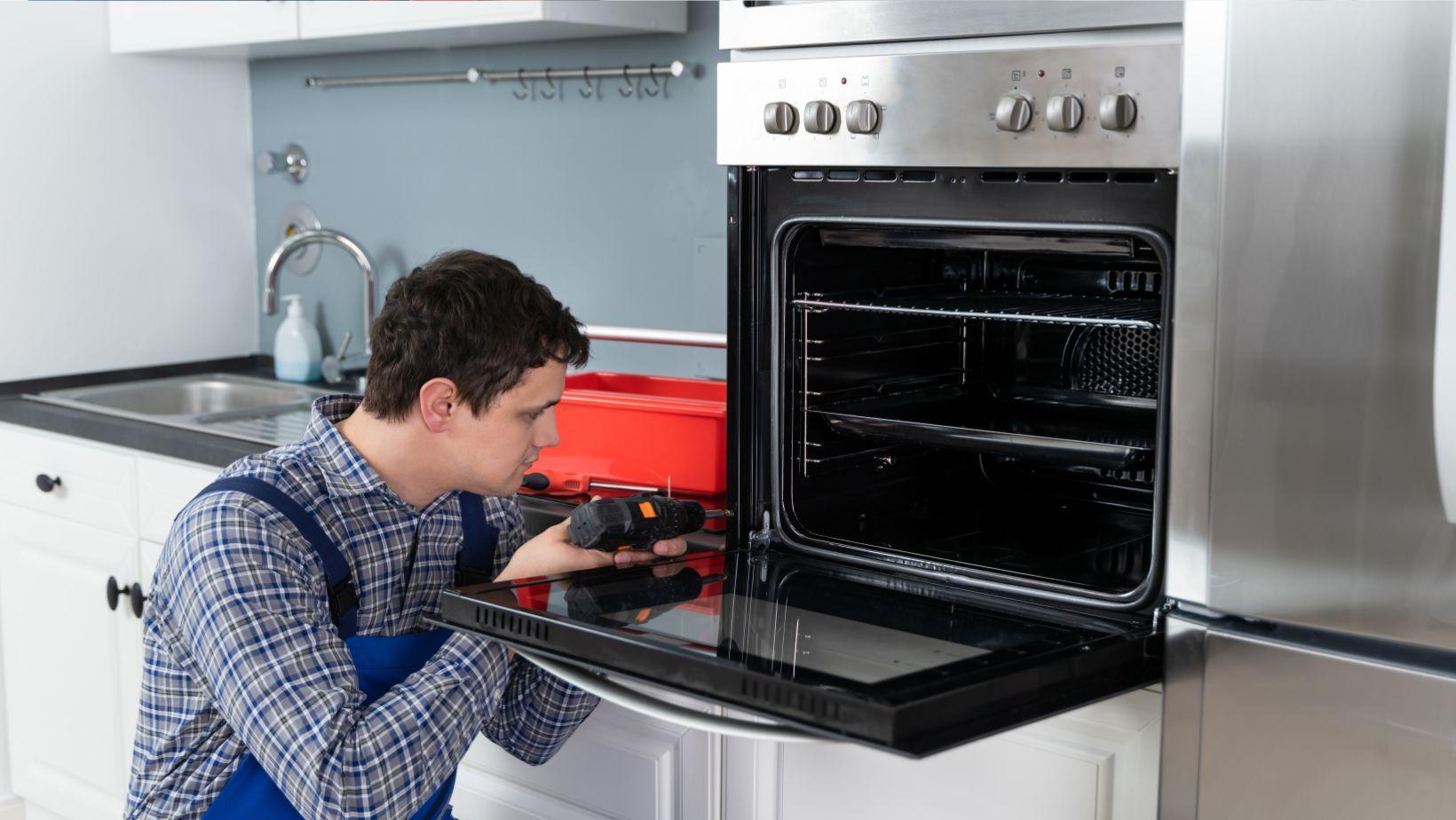
Worn hinges are a common cause, while the gasket may become damaged, compressed or detached. Door glass or surrounding hardware can also be responsible. A cracked door deserves immediate attention because damaged glass can create safety risks.
A technician can inspect the entire door assembly instead of simply replacing the visible seal.
When to Call an Oven Repair Technician
Some problems allow simple checks, such as confirming power or the selected cooking mode. Repeated faults require professional diagnosis, especially with gas appliances and electrical systems.
A professional visit is appropriate when:
FixMaster’s service includes diagnostic visits, repair and testing. Its technicians are certified and insured, with same-day service available depending on parts and repair complexity. Repairs include a three-month parts and labor warranty, and the service call is free when the customer proceeds with the repair.
An oven that heats poorly, cooks unevenly, struggles to maintain temperature or fails to close properly needs attention. Ignoring these symptoms can allow a sensor, ignition or heating issue to affect other components and may create additional safety concerns with gas or electrical faults.
Timely oven repair can restore reliable temperature control and extend the appliance’s useful life without immediately requiring replacement. For Denver homeowners, professional diagnosis helps identify the actual fault among several possible components and determine whether repair is the practical solution.